
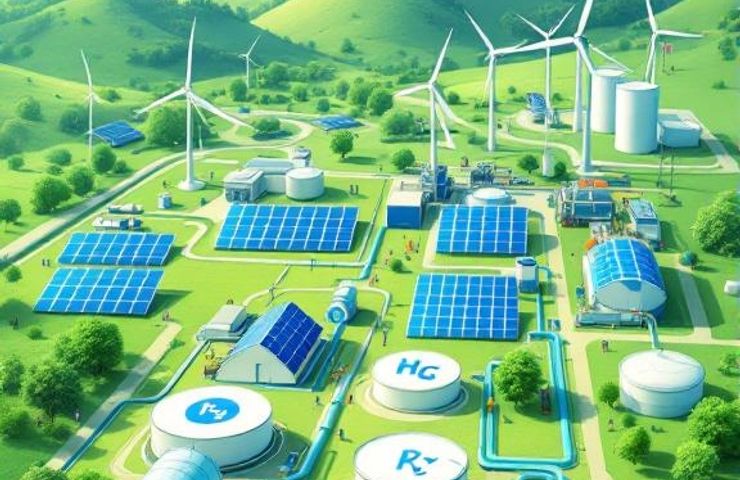
Hydrogen Production’s Sustainability Depends on Grid Decarbonization, Study Finds
March 12, 2026Everyone’s been hyped about green hydrogen as the cornerstone of sustainable energy and net zero strategies—after all, it holds out the promise of decarbonizing some of the toughest sectors, from steelmaking giants to deep-sea shipping. But a fresh analysis from the University of Sheffield rings an alarm bell: without a big push to clean up electricity grids, our hydrogen production could come with a carbon bill that outstrips some good-old fossil-based alternatives.
This month, Professor Lenny Koh and Dr. Moein Shamoushaki at the university’s Management School rolled up their sleeves and examined 20 different scenarios across 14 hydrogen markets—from the UK and US to Japan, China and Europe’s major industrial hubs. They plugged region-specific energy data into lifecycle assessment models, tracking carbon intensity through every stage—electrolysis, transport and end use. Here’s the kicker: about 96% of global hydrogen today is made with power from coal and gas plants, which totally undercuts the “green” in green hydrogen unless grids switch over to renewables in a big way. And unless we invest in proper hydrogen infrastructure for storage, pipelines and export terminals, those lofty net zero targets will stay out of reach.
Quantifying the Opportunity
Looking out to 2050, the Sheffield team’s crystal ball shows that if we seriously double down on renewable-heavy grids—and pair them with strategically placed electrolyzers—we could slash lifecycle greenhouse-gas emissions by over 90% compared to today’s averages for hydrogen production. That dream scenario depends on hitting aggressive targets for solar farms, wind parks and energy storage installations, yes, but also on smoother, faster permitting processes for grid upgrades. We’d need clear transmission corridors to link remote renewables with big industrial clusters, plus new interconnectors between regions. Essentially, it’s about knitting together power generation, hydrogen production and distribution so that every electron feeding an electrolyzer is as clean as possible.
Technical Pathways Evaluated
The report zeroes in on two flagship routes for green hydrogen. First, proton exchange membrane (PEM) electrolysis—it uses a solid polymer electrolyte to split water when it’s fed with low-carbon electricity. Its quick start-up times and modular design make it a perfect match for the ups and downs of solar and wind farms, so you can ramp up or dial down production on demand. The second route taps biomass-based hydrogen, where things like agricultural residues or forestry waste get gasified at high temperatures to yield hydrogen, often paired with co-generation of heat or power. But biomass can be a double-edged sword: its true climate impact hinges on where you source the feedstock, complications around land-use change, and the emissions baked into transporting heavy organic materials.
Why Historical Context Matters
Flash back to the early 2020s, and most electrolysis plants were slurping up electricity from grids still dominated by coal and gas. No surprise, that led to some of the highest carbon footprints ever attached to so-called green hydrogen. Even though global electrolyzer manufacturing capacity exploded between 2020 and 2023—driven by flashy announcements and government pledges—the renewable generation and transmission infrastructure lagged far behind. That mismatch actually nudged up the average carbon intensity of “clean” hydrogen. Sure, production capacity technically doubled, but on the scale needed for meaningful industrial decarbonization, it’s still just a drop in the bucket.
Positive and Negative Ripple Effects
On the sunny side, a well-orchestrated transition could give birth to resilient, low-carbon trade routes—picture a UK-US corridor bristling with deepwater ports, hydrogen bunkering facilities and transatlantic R&D partnerships. Clean hydrogen could then power shipping lanes, heavy-duty trucking fleets and long-duration energy storage using ammonia carriers or synthetic fuels, slashing emissions across multiple sectors. But if we drag our feet on grid modernization, watch capital costs spiral or face wobbly demand commitments, those shiny new assets risk becoming stranded. And if green hydrogen doesn’t win the numbers game, markets might lean heavily on blue hydrogen with carbon capture—which the study warns could represent over 90% of regional production by 2030 if we’re not careful.
Policy and Market Realities
Governments worldwide have earmarked more than USD 222 billion for hydrogen incentives, tax breaks and R&D over the past five years. But with fiscal pressures rising and other clean technologies jostling for attention, that pool of money has shrunk by roughly 20% in recent budget rounds. Without clear, long-term signals—like robust renewable portfolio standards, reforms to capacity markets that reward electrolyzer flexibility, or targeted feed-in tariffs for hydrogen production—investors are left jittery. The fallout? A string of project delays, downsized scopes or outright cancellations, even as industries across Europe, North America and Asia face mounting deadlines to slash carbon footprints.
Supply Chain Considerations
No matter how slick your electrolyzers are, a thriving hydrogen economy needs far more: robust hydrogen infrastructure featuring high-pressure storage tanks, specialized pipeline networks and export terminals optimized for either liquid hydrogen or ammonia. Sure, you can piggyback on existing natural gas pipelines, but retrofitting them involves tricky materials compatibility tests, extensive safety upgrades and hefty capex. And if your electrolyzer capacity outpaces transport and storage, you end up with underutilized assets and logistical bottlenecks that seriously eat into returns on investment. In short, it’s a high-stakes puzzle of production, distribution and storage, all of which have to click into place.
Lessons from China’s Energy Parks
China is already testing an alternative route via integrated renewable energy parks that soak up excess solar and wind power and channel it into hydrogen, ammonia and even synthetic natural gas. These hubs not only stabilize grid operations but also weave local value chains for renewables, acting like living labs for scaling up clean fuels. Although many projects are still pilots, they’re teaching us critical lessons about balancing power system flexibility with industrial demand, optimizing co-production streams and setting up export-ready infrastructures. They offer a blueprint for blending sustainable energy generation with hydrogen production at scale, showcasing both the gains and the pitfalls along the way.
Aligning Strategy with Execution
If you’re steering a corporate ship or building hydrogen projects, here’s the no-fluff takeaway: technical readiness is only piece one of the puzzle. You’ve got to map out the full lifecycle of electrons and molecules—locking in long-term sustainable energy power purchase agreements, collaborating closely with grid operators on capacity expansions, and hammering out offtake deals that include strict emissions benchmarks. Layer in energy storage—whether that’s standalone batteries, power-to-ammonia buffering or even pumped hydro—and you’ll smooth out the intermittency of solar and wind, but at the cost of extra complexity and capital. The bottom line? A piecemeal approach won’t cut it; you need an integrated plan that ties together grid upgrades, clean power inputs, state-of-the-art electrolyzers and a resilient logistical framework.
Looking Forward
As green hydrogen shifts from pilot phase to big-ticket investment decisions, the mid-2020s are shaping up as a make-or-break window. Markets that can synchronize their renewable build-outs, grid reforms and hydrogen deployment will grab a serious competitive edge, branding themselves as premier suppliers of truly low-carbon fuels. Meanwhile, regions that drag their feet risk locking in high-carbon hydrogen assets, wasting billions on retrofits or backtracking to more polluting alternatives. Ultimately, the sector’s momentum hinges on consistent policy backing, smart infrastructure rollouts and a shared vision that treats hydrogen production as a cornerstone of the sustainable energy landscape. Anyone still on the sidelines might soon find they’ve missed the boat.
At the end of the day, the promise of green hydrogen rests on the carbon intensity of the electricity that powers it. If every electron going into an electrolyzer isn’t genuinely clean, we’re really just papering over the same old problems. Getting to a low-emission baseline isn’t a nice bonus—it’s the linchpin of any credible net zero journey, and one that energy executives, policymakers and investors simply can’t afford to sidestep.

 With over 15 years of reporting hydrogen news, we are your premier source for the latest updates and insights in hydrogen and renewable energy.
