Hydrogen Propulsion: AECC’s AEP100 Liquid Hydrogen Turboprop Engine Passes Ground Tests
April 1, 2026Milestone in Zero-Emission Aviation
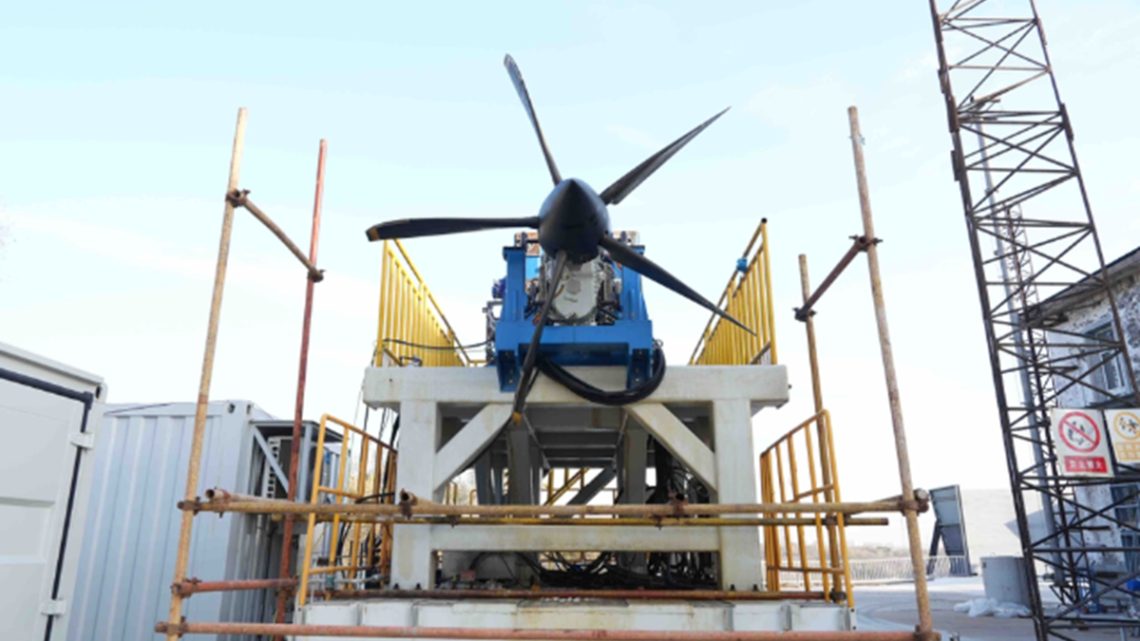
This month, China’s AECC Hunan Aviation Powerplant Research Institute wrapped up full ground tests of the AEP100, a megawatt-class liquid hydrogen turboprop engine. Held in Zhuzhou, Hunan, these trials didn’t just tick boxes—they proved stable ignition, consistent thrust, and solid performance across every operating mode. Since 2016, this subsidiary of the state-owned Aero Engine Corporation of China (AECC) has been bent on driving sustainable aviation with homegrown hydrogen propulsion solutions.
The multi-day campaign ran in a custom engine cell outfitted with cryogenic fuel handling, automated controls, and advanced sensors. Engineers monitored temperature, pressure, combustion stability, and vibration data, confirming that liquid hydrogen can slot into modern turboprop designs—whether you’re supporting regional passenger services or unmanned logistics missions—hitting every internal benchmark on the path to real-world zero-emission technology.
Technical Overview of the AEP100
As China’s first independently developed liquid hydrogen turboprop in the megawatt range, the AEP100 packs several standout features:
- Cryogenic Fuel System: –253°C tanks and pipelines with automated vaporization and pressure controls for a steady hydrogen feed.
- Hydrogen-Optimized Combustion: Redesigned injectors and flame holders for a fast burn and only water vapor exhaust.
- Adapted Turbine Materials: High-strength alloys built to shrug off hydrogen’s intense thermal swings.
- Digital Control Suite: Real-time tracking of fuel flow, combustion health, and turbine status for smooth startups and throttle transitions.
During trials, the engine cycled through idle, takeoff-equivalent, and cruise-equivalent modes with rock-solid thrust curves. Fuel-burn projections even rival conventional turboprops—proof that hydrogen propulsion at scale isn’t just wishful thinking.
Strategic and Environmental Implications
These ground tests aren’t merely a technical win—they’re a major leap for industrial decarbonization and cleaner skies. Here’s why they matter:
- Zero-Emission Operations: Banishes CO₂, NOₓ, and particulates right at the source.
- Extended Range Potential: Liquid hydrogen’s high energy density outclasses batteries, opening up longer routes.
- UAV Logistics: Heavy-lift UAVs (up to 10.8 tonnes) can now fly longer missions, boosting remote supply chains.
- Economic Growth: Spurs markets for hydrogen production, cryogenics, and specialized aerospace components.
- Energy Security: Cuts jet-fuel imports and nurtures domestic liquid hydrogen ecosystems.
Of course, rolling this out hinges on building refueling networks, training maintenance crews, and locking down cryogenic safety protocols.
China’s Aviation Engine Development Journey
The groundwork for this breakthrough began in the early 2010s. After unveiling the AES100 series at Airshow China 2024, researchers moved on to liquid hydrogen trials with eVTOL prototypes in 2025. Setting up the Aero Engine Corporation of China in 2016 unified major state-owned engine groups, knitting design, manufacturing, and testing into one streamlined powerhouse.
National Policy and Market Drivers
Under the 14th Five-Year Plan, hydrogen is a strategic emerging industry—key to China’s goal of peaking carbon emissions by 2030 and hitting carbon neutrality by 2060. Pilot zones for electrolysis and refueling stations now dot several provinces, with Hunan named among eight flagship regions. These policies de-risk investments and turbocharge domestic liquid hydrogen production.
Supply Chain Dynamics and Infrastructure
Scaling liquid hydrogen aviation depends on a tight-knit supply chain:
- Electrolyzers & Renewables: Green hydrogen hubs co-located with wind and solar farms.
- Cryogenic Storage & Pipelines: Engineered for sustained ultra-cold operation.
- Precision Valves & Sensors: Certified and foolproof for hydrogen service.
- Maintenance & Training: Facilities and programs teaching crews the ropes of cryogenic safety.
Hunan’s industrial base—pressure vessels, precision machining, and advanced materials—gives the region a head start. But public-private partnerships and unified safety standards will be critical to meet future aviation demand.
Industry Response and Partnerships
No official partner list is out yet, but the institute says it’s in talks with UAV manufacturers and regional airlines eyeing hydrogen retrofits or new builds. Pilot programs in remote or island regions—where roads can’t reach—could be the ideal showcase for this breakthrough zero-emission technology. Expect OEMs and service providers to form consortiums, sharing certification costs and infrastructure rollout.
Global Context and Competitive Landscape
Hydrogen propulsion is gaining momentum worldwide. In Europe and North America, aerospace groups are sketching out zero-emission turbofan and fuel-cell systems. While it’s tough to confirm if the AEP100 is the first megawatt-class liquid hydrogen turboprop globally, its smooth trials certainly put China in the fast lane. As this technology matures, clear benchmarking and data-sharing will be mission critical.
Looking Ahead
Next stop? Flight demos. They’re aiming to get hydrogen-powered UAVs airborne by 2025, with regional manned flights to follow. Certification will be a team effort with the Civil Aviation Administration of China (CAAC) and global bodies like ICAO. Building refueling hubs at airports, upskilling maintenance crews, and nailing down cryogenic safety rules are all on the roadmap.
With nations racing toward net-zero targets, hydrogen propulsion could become the backbone of future flight. The AEP100 ground tests show one thing: combine high energy density, long range, and zero-emission technology, and you’ve got a recipe to reshape air transport as we know it.

 With over 15 years of reporting hydrogen news, we are your premier source for the latest updates and insights in hydrogen and renewable energy.