Hydrogen Storage Advances: BMW’s Flat Tank System Boosts iX5 Hydrogen Range
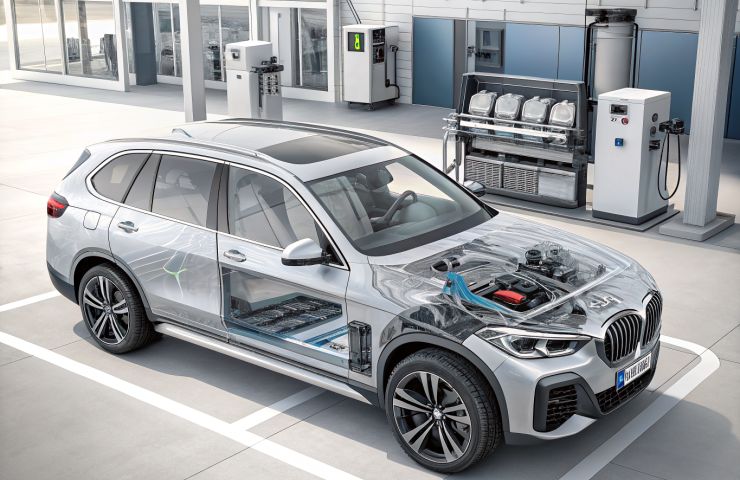
April 13, 2026When you’re shopping for a zero-emission SUV, you probably obsess over acceleration and styling—but one critical stat often flies under the radar: how much juice you can pack in and how fast you can top it up. On April 9, 2026, BMW Group pulled back the curtain on its latest breakthrough: the BMW Hydrogen Flat Storage setup in the new iX5 Hydrogen. According to BMW, this slick tank design is good for up to 750 km of WLTP range and can be fully refueled in under five minutes at a 700-bar station. Spearheaded by Dr. Joachim Post, the project is on track for series production by 2028, underlining BMW’s belief that hydrogen storage will be a cornerstone of its zero-emission technology lineup.
Key Features of the Flat Storage System
- Two carbon-fiber-reinforced plastic tanks holding 7 kg of hydrogen at 700 bar
- Central main valve for smooth, safe fuel discharge
- Up to 750 km per fill under WLTP standards
- Refuels in less than five minutes at certified 700-bar stations
- Works hand-in-hand with the latest Gen3 fuel cell technology
- Pairs with a Gen6 high-voltage battery for extra energy buffering
- Delivers 295 kW (401 hp) through BMW’s “Heart of Joy” software-driven drivetrain
- Weighs roughly the same as the plug-in hybrid X5 (~2,540 kg)
How the Flat Storage Integrates with Fuel Cell Propulsion
At its core, the Flat Storage system is all about marrying clever hydrogen storage with BMW’s third-generation hydrogen fuel cells stack. Here, hydrogen meets oxygen to crank out electricity, with nothing but water vapor leaving the tailpipe. A high-revving compressor and turbine setup—complete with intercoolers—optimizes air intake so efficiency doesn’t dip, whether you’re tooling around town or hammering the freeway. If you stomp on the accelerator, the Gen6 battery kicks in to smooth power surges and harvest brake energy, while the fuel cell keeps a steady supply going. It’s all orchestrated by BMW’s “Heart of Joy” software, which juggles inputs to deliver a seamless drive every time.
Decades of Hydrogen R&D at BMW
BMW’s fascination with zero-emission technology didn’t start yesterday. Back in 2005, the automaker rolled out the Hydrogen 7 luxury sedan, powered by a gas turbine chugging high-pressure hydrogen. That experiment paved the way for projects like the i8 Hydrogen and a fuel-cell-driven 5 Series Gran Turismo demo in 2015, each one fine-tuning tank placement and further refining fuel cell technology. Then, in 2012, BMW teamed up with Toyota to co-develop fuel cells and hydrogen systems—marrying Japanese expertise in stack design with German prowess in integration. Fast forward to 2023, and a pilot fleet of iX5 Hydrogen SUVs, packing 6 kg tanks, clocked around 504 km of WLTP range in real-world tests. All these learnings feed straight into the 2026 Flat Storage concept. By flattening the tanks to hug the chassis, BMW boosted capacity by over 15 % without shrinking cabin or cargo space. It shows the industry that clever packaging is just as crucial as pressure ratings or cutting-edge materials when it comes to practical hydrogen storage.
Business and Strategic Implications
BMW’s Flat Storage reveal arrives as every carmaker charts its own route to zero-emission technology. Alongside battery-electric models, fuel-cell SUVs offer a fast-refuel option for drivers craving long-range hauls with minimal pit stops. By aiming for 750 km per fill and sub-five-minute refuels, the iX5 Hydrogen stakes its claim against both diesel and pure-EV rivals in the premium segment. And there’s another upside: swapping some battery mass for carbon-fiber tanks takes the pressure off critical minerals like cobalt and nickel. As green hydrogen production scales up, the economics of hydrogen fuel cells and batteries could finally level out, making a diversified powertrain lineup more feasible. BMW’s decade-long partnership with Toyota is a reminder that collaboration is key to driving down costs and cranking up volumes on complex systems such as fuel cell stacks and high-pressure tanks.
Of course, the real ace up the sleeve will be robust hydrogen infrastructure—without it, even the best-packed tanks can’t fill up. Public policy in the European Union and beyond is waking up to hydrogen as a strategic decarbonization tool. Incentives and public–private partnerships are popping up to support station build-out, so early adopters won’t be left stranded between big cities. For BMW, that means syncing up with energy suppliers and hydrogen infrastructure developers to make sure production, logistics and pump capacity keep pace with vehicle roll-out plans.
Challenges and the Road Ahead
- Patchy hydrogen refueling network in much of the world
- Carbon-fiber tank costs still on the high side
- Green hydrogen supply needs to hit consistent, affordable levels
- Rules for transporting and storing hydrogen are still catching up
Even with the Flat Storage’s clever packaging and solid range, BMW and its partners have their work cut out for them when it comes to rolling out new hydrogen infrastructure stations and ramping up supply chains. Right now, making green hydrogen is generally pricier than plugging into the grid, but large-scale electrolyzer deployments and more renewables in the mix should start driving prices down over the next decade.
What to Watch Next
The big date to circle is 2028, when BMW plans to kick off series production of the iX5 Hydrogen. In the meantime, the pilot fleet will rack up miles around the world, stress-testing durability, safety and overall user experience in everything from scorching deserts to icy roads. On the other side, hydrogen infrastructure players will be crunching the numbers to see if luxury SUVs can spark a faster pace of station roll-out.
As you scope out the future of clean driving, remember that hydrogen storage is just one arrow in the quiver of zero-emission technology. Still, if BMW’s Flat Storage design shows anything, it’s that smart engineering can turn what once felt niche into something ready for the mainstream. Keep an eye on how quickly production scales and how wide the hydrogen infrastructure network spreads—those will be the real telltales of whether hydrogen fuel cells can move from early adopter gimmick to everyday reality.


 With over 15 years of reporting hydrogen news, we are your premier source for the latest updates and insights in hydrogen and renewable energy.