
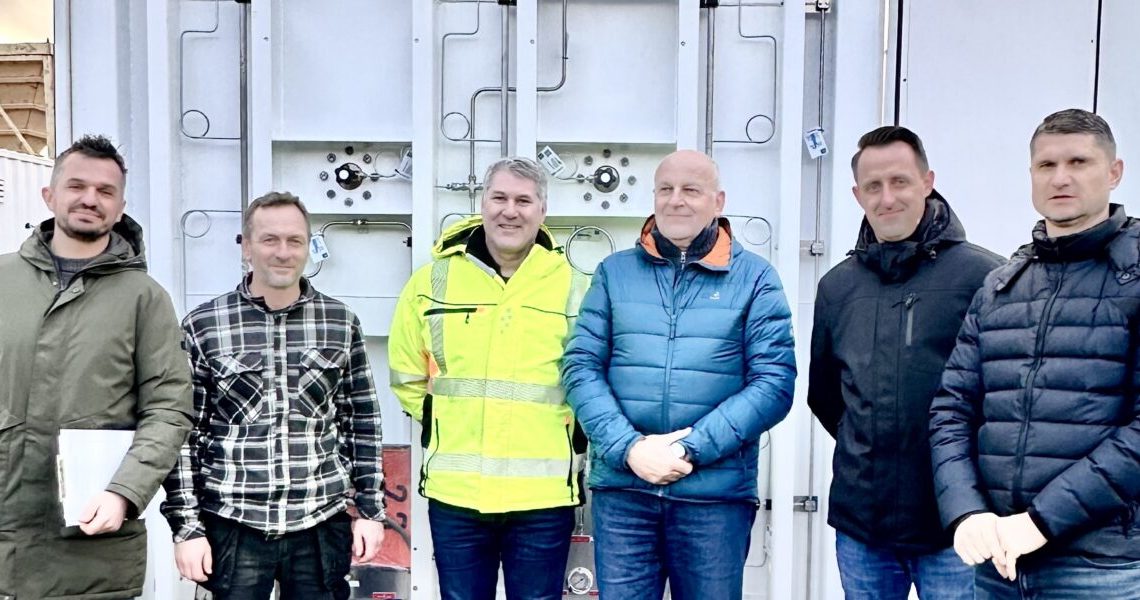
Hydrogen storage: UMOE Advanced Composites to supply 20-foot containers for Vilnius refueling station
February 5, 2026You could say Europe’s journey to net-zero emissions is riding on the back of hydrogen—but making that a reality, especially for heavy-duty transport, shipping and industrial feedstock, hinges on one thing: secure, scalable hydrogen storage. Enter UMOE Advanced Composites, a Norwegian outfit that knows a thing or two about big glass-fiber tanks. On February 3, 2026, they announced they’ll be shipping four 20-foot hydrogen storage containers to a brand-new refueling station in Vilnius, Lithuania—proof that Lithuania’s push for clean energy under EU decarbonization targets is picking up steam. This isn’t a one-off deal, either: Europe’s been snapping up modular composite systems like these all over the place as confidence in them grows.
According to UMOE, these modules use type IV composite pressure vessels—basically a polymer liner wrapped in layers of glass fiber—to safely hold hydrogen at high pressure. Compared to old-school steel tanks, they can be up to 30% lighter and haul two to three times more gas in the same space. Less weight and modularity also mean easier installs and simpler permits versus bulky, fixed steel infrastructure. And because the vessels fit into standard 20-foot container frames, you can move them by truck, rail or ship using gear you already have—no costly retrofits required.
Lithuania’s green energy context
With its flat landscape, scant domestic fossil fuels and a long history of relying on outsiders for energy, Lithuania has been chasing renewables since breaking free in 1991. Vilnius—founded in 1323, rebuilt through centuries of occupations—is now casting itself as a hub for sustainable energy transport. Lithuania’s National Energy Independence Strategy points to hydrogen as a way to ditch pipeline gas imports, and Vilnius city planners see refueling stations as vital stepping stones toward wider decarbonization. While we’re still waiting on the station’s operator and an exact timeline, UMOE’s order makes one thing clear: hydrogen refueling stations for buses, trucks and even Baltic shipping routes are top of mind.
Inside type IV composite vessels
At the core of UMOE’s solution are those type IV composite pressure vessels. A tough plastic liner keeps the hydrogen in check, slashing permeability—one of the biggest headaches in gas storage. Around that, multiple glass fiber layers bear the mechanical load, giving you high strength without the heavyweight tag. No more worrying about metal embrittlement that steel tanks suffer under pressurized hydrogen, and it’s more cost-effective than going full carbon fiber. Safety’s baked in, too, with burst-containment features and controlled permeability that meet strict regs. The glass fiber winding pattern is dialed in to handle the regular fill-and-drain cycles you get at refueling stations.
Strategic impact on hydrogen infrastructure
Across the EU, governments have set lofty targets for hydrogen growth—yet you can’t fill trucks and buses without a solid network of refueling stations. In the Baltics, commercial stations are still few and far between. Dropping four high-capacity storage modules in Vilnius could be the catalyst logistics firms and transit agencies need to give hydrogen vehicles a real shot. With dependable on-site storage, stations can stock up on green hydrogen from electrolysis plants during off-peak hours when it’s cheapest, then dispense it around the clock. And it’s not just about wheels rolling—stored hydrogen can power small industrial processes or even stabilize the grid when hooked up to fuel cells or combustion turbines, broadening the appeal of sustainable energy systems.
UMOE’s evolution and global scale
UMOE Advanced Composites didn’t spring up overnight. Founded in 2006 in Kristiansand as part of Umoe Group, it first made its name with composite cylinders for CNG in marine and offshore settings. By 2008, it was supplying pressure vessels to oil rigs, and in 2014 it pivoted to hydrogen and biogas transport modules. Since then, its gear has proven itself in harsh Nordic climates for players like AGA (now part of Linde).
To keep pace with booming demand, UMOE has gone global. In May 2023 it formed a joint venture in China with Yield Capital and Befar Group, backed by a conditional USD 60 million order to build a plant that can crank out up to 12,000 vessels a year—quadrupling its Kristiansand capacity. That facility is due to start rolling mid-2024, with early units bound for domestic refueling sites and hydrogen-powered port equipment. Then in 2024, UMOE teamed up with US-based Celly H2 LLC to break into North America. Between Europe, Asia and the Americas, UMOE’s poised to supply modular hydrogen infrastructure across the globe.
Collateral benefits
There’s a lot more on the line than just cutting carbon. Take the Vilnius station: the China JV is already creating engineering and manufacturing roles in Jiaxing, and back in Norway, the Kristiansand plant is gearing up for expanded output. Glass fiber and liner suppliers, transport companies and station installers all stand to gain. Local training programs are popping up to teach people how to safely operate and maintain hydrogen systems—building a new skilled workforce in the process. And, by boosting regional refueling capacity, Europe can lean less on imported fossil fuels and better integrate variable renewables into the grid.
Outlook and next steps
Sure, we’re still waiting on the final sign-off for the Vilnius station’s operator and commissioning date. But the equipment order itself sends a clear message: momentum is building. As more containerized storage units like these land across Europe, station operators can scale up faster—no lengthy civil works or complex site prep needed. Neighbors in the Baltics and Central Europe will be watching closely—if Vilnius takes off, it could spark a wave of similar projects, knitting together a true cross-border hydrogen corridor.
Looking ahead, UMOE Advanced Composites isn’t stopping at tanks. The next generation of modules will feature digital monitoring and smart metering, giving station owners live data on pressure, temperature and usage. That real-time insight can fine-tune supply chain planning and asset utilization, driving down costs and keeping operations running smoothly. Operators are even talking about remote and mobile station setups—where the plug-and-play, containerized approach can really shine.
At the end of the day, if hydrogen is going to earn its spot in the future clean energy mix, nailing hydrogen storage is non-negotiable. With UMOE scaling up modular composite pressure vessels and expanding its global footprint, Europe just might have the sustainable energy backbone it needs to hit those net-zero goals.

 With over 15 years of reporting hydrogen news, we are your premier source for the latest updates and insights in hydrogen and renewable energy.