Hyundai’s Saemangeum Investment Spurs Hydrogen Production and AI Expansion
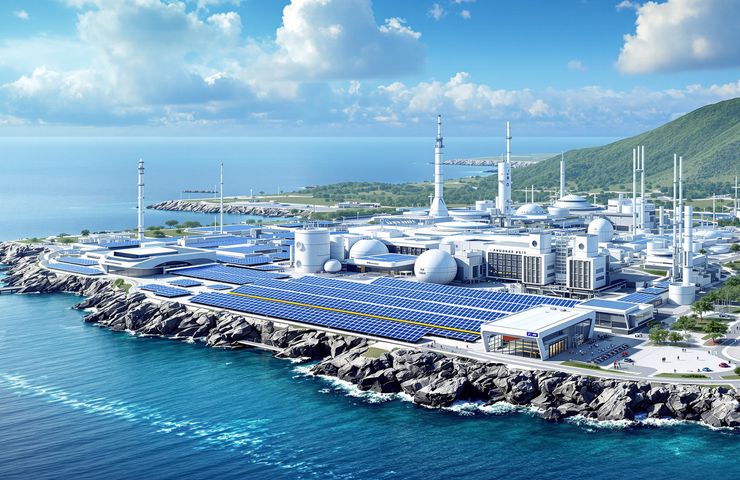
February 24, 2026Imagine walking along a vast, sun-soaked stretch of reclaimed land in western South Korea, where row upon row of solar panels soak up the rays and feed power to an on-site AI data center and a bustling hydrogen plant. Hyundai Motor Group’s venture in Saemangeum is where green hydrogen production, cutting-edge AI and next-generation robotics all come together on land that was literally pulled from the sea.
From Tidal Flats to a Sustainable Energy Hub
What used to be tidal marsh has been transformed over the past 30 years into a sprawling coastal plain ready to host solar farms, electrolyzers and data centers. Hyundai is putting roughly 10 trillion KRW on the table over five years—part of its bigger 125.2 trillion KRW plan for South Korea through 2030. This is their first regional showpiece, cementing Saemangeum as a beacon of sustainable energy and high-tech innovation.
Harvesting Sunlight: Solar-Powered Electrolysis
At the heart of the site, massive solar arrays feed electricity straight into water-splitting units that turn H₂O into hydrogen and oxygen. By doing electrolysis on the same patch of land where the panels sit, they cut down on transmission losses and keep everything running on clean, local juice. It’s a neat fit with South Korea’s push for a hydrogen-based economy, helping lay the groundwork for future hydrogen infrastructure in North Jeolla Province.
Onshore AI Data Center and Edge Computing
Right next door, a dedicated AI data center—powered by a partnership with NVIDIA—is gearing up with tens of thousands of GPUs. It’ll handle everything from autonomous vehicle training to factory wearables, all fueled by the same renewable power generated on-site. By pairing data processing and energy generation in one place, Hyundai’s building a low-carbon model for tomorrow’s compute-heavy applications.
Building Robots by the Sea
Hyundai’s also carving out space for a coastal robotics factory, drawing on demos like Atlas and its MobED platform. Here, they’ll roll out humanoid, mobile and wearable robots that tap into the local AI resources and even run on hydrogen fuel cells. It’s all about tightening up the supply chain and speeding innovations from the drawing board to the assembly line.
Revitalizing the Region and Boosting the Economy
The local government and the Saemangeum Development Agency have teamed up with Hyundai to drive growth in the area. They’re banking on thousands of construction, operations and R&D jobs to stem the tide of young people leaving rural towns. With hydrogen vehicle plants popping up in nearby Jeonju, Saemangeum could soon be a buzzing tech corridor that supports South Korea’s decarbonization goals.
Teaming Up: Public-Private Collaboration
Hyundai plans to sign an MOU with national ministries and local authorities to lock in land use, infrastructure support and policy perks. The Ministry of Trade, Industry and Energy and the Ministry of Climate, Energy and Environment have already pledged to streamline regulations—showing how this venture dovetails with the country’s green hydrogen and digital transformation agendas.
Plugging into the National Hydrogen Playbook
South Korea aims to crank out 6.2 million tonnes of green hydrogen each year by 2040, and Saemangeum’s facilities slot right into that roadmap. From refueling stations to industrial feedstocks, the project bolsters the nation’s broader hydrogen production and hydrogen infrastructure ambitions. Plus, real-time AI tools will optimize energy flows and scheduling, making the whole operation smarter and greener.
Remembering Saemangeum’s Reclamation Roots
The story began in 1991, when a 33-kilometer seawall was built to turn 409 sq km of mudflats into usable land for farming and fishing. Fast forward to today, and that same ground is hosting pilot projects for solar power and water electrolysis—proof that reclaimed terrain can fuel tomorrow’s clean-tech breakthroughs.
Bridging Sectors: Cross-Industry Partnerships
Hyundai’s also tapping local universities for research in hydrogen catalysts and robotics, while working with tech giants like NVIDIA for cutting-edge GPUs. The Saemangeum Development Agency brings logistics know-how, and Jeonbuk province offers land-use expertise. It’s a textbook example of private investment, academia and government pulling in the same direction.
Preparing for Sunlight Swings: Risk Mitigation and Growth
To keep the electrolyzers and servers humming when the sun dips, Hyundai will add battery storage and grid connections as backup. Future phases might introduce offshore wind or desalination plants for pure water supply. By phasing investments over five years, they can match spending with tech readiness and regulatory sign-offs.
Looking Ahead: What’s Next?
Hyundai’s Saemangeum experiment isn’t just another greenfield project—it’s a blueprint for weaving together reclaimed land, renewable power and high-tech R&D. If all goes to plan, this coastal cluster could become the go-to model for zero-emission industrial zones and a launch pad for hydrogen innovation worldwide.
About the Company
Hyundai Motor Group, founded in 1967, has grown from a carmaker into a multi-pillar technology firm focused on electrification, green hydrogen, AI and robotics. With a 125.2 trillion KRW pledge for domestic future businesses through 2030—and partnerships spanning NVIDIA to Samsung Electronics—the group is steering toward a software-defined, low-carbon future.


 With over 15 years of reporting hydrogen news, we are your premier source for the latest updates and insights in hydrogen and renewable energy.