
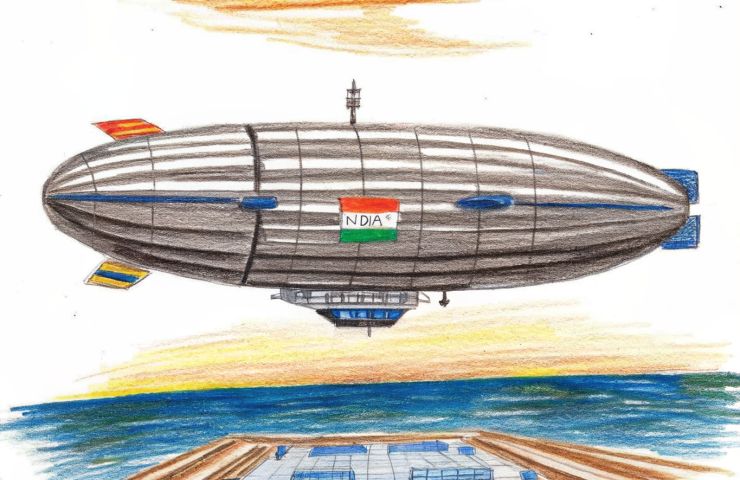
IAF Seeks Partners for Hydrogen-Powered Airship to Boost Long-Endurance Surveillance
April 7, 2026It’s a pretty exciting time for defence indigenization in India, as the Indian Air Force just put out an Expression of Interest (EoI) calling on homegrown industries to team up on a hydrogen-powered airship that runs fully on hydrogen for lift and propulsion—no pilot onboard required. This autonomous airship is envisioned to float at around 30,000 feet, stay aloft for at least ten days, and haul up to 5,000 kg of gear for surveillance, reconnaissance or even strike missions. All of this comes straight from the Atmanirbhar Bharat playbook, tapping hydrogen’s high energy density, low running costs and zero-carbon exhaust to champion hydrogen propulsion.
India’s big push to build a hydrogen economy—from ramping up production to getting storage and end-use just right—provides the backdrop for this bold mission. By blending aerospace know-how, hydrogen infrastructure smarts and unmanned-systems expertise, the IAF hopes to write the playbook for rolling out hydrogen at scale across defence and civilian sectors.
Core Capabilities and EoI Requirements
The EoI doesn’t mess around—it lays down some pretty tough specs to make sure this airship delivers on its long-range promises:
- Endurance: At least 10 days at 30,000 ft, thanks to a hybrid propulsion mix of hydrogen, solar panels, batteries or fuel cells.
- Payload: A hefty 5,000 kg capacity for advanced sensors, comms relays, electronic warfare suites, drones or even in-flight-launched missiles.
- Communication and Control: Line-of-sight data links up to 250 km, extendable via satellite relays, with built-in autonomy.
- Launch and Recovery: Fully automated take-off and landing on unprepared terrain to slash ground-support needs.
- Indigenous Content: At least 50% of design, materials, subsystems and assembly must come from Indian suppliers.
Bidders will need to prove they’ve got solid in-house design and manufacturing chops, a track record in aerospace or hydrogen systems, plus the financial muscle to back it up. Proposals are due by April 30, 2026—after that, a handful of teams will move on to detailed design.
Engineering the Hydrogen Propulsion System
What makes this hydrogen-powered airship tick is hydrogen’s dual role as a lifting gas and a fuel. Since hydrogen packs about three times the energy of gasoline by weight, you end up with a lighter craft and longer missions. The plan calls for either high-pressure or cryogenic tanks tucked into the hull, feeding fuel cells or combustion engines.
In fuel-cell mode, hydrogen reacts with oxygen to generate electricity that spins electric motors for thrust and fine control. On tougher phases, optimized hydrogen-fueled combustion engines can kick in. Solar panels and lithium-ion batteries chip in when sunlight is scarce.
Safety’s front and center: automated leak detection, pressure regulation and inert-gas purging systems keep flammability risks in check. Flight-control software juggles hydrogen flow, power distribution and mission profiles so the ship can keep going without mid-mission refueling.
Strategic Value and Cost Considerations
Platforms that can loiter high for days on end are gold for maritime patrol and border security. Compared to satellites, a hydrogen-powered autonomous airship means you can deploy for way less cash and reposition in hours. And because there’s no crew to tire out, it’s a perfect match for long-endurance surveillance, real-time imagery, comms relay and electronic warfare roles.
When you run the numbers, operating costs per flight-hour should be far below turbojets or turboprops. Hydrogen’s relatively cheap, and the airship’s design is super energy-efficient for extended loiters. Over its lifecycle, it could deliver constant coverage at a fraction of satellite costs, all while kickstarting a domestic aerospace boom.
Historical and Global Context
You might think lighter-than-air craft are yesterday’s news—early 1900s zeppelins proved the concept but safety scares put the brakes on. Fast forward to today, and advances in materials, avionics and digital controls have sparked a global airship revival. The IAF’s extended aerial refueling runs with Rafale and Su-30 MKI jets over the Indian Ocean in 2023 showed why persistent air presence pays off. A hydrogen-powered autonomous airship slots right into that playbook—minus the drama of mid-air hookups.
Collateral Benefits and Civilian Spin-offs
This project isn’t just about military might. It could supercharge India’s hydrogen infrastructure from production to storage and distribution. Aero-grade hydrogen tanks, fuel cells and autonomous-control tech could spin out into disaster relief, remote connectivity and environmental monitoring. And let’s not forget the jobs—skilled roles in manufacturing, R&D and systems integration, plus plenty of collabs between research institutes and private firms.
Risks, Evaluation, and Next Steps
Of course, hydrogen’s flammability means you need rock-solid engineering safeguards. The IAF’s already laid down defence-grade safety standards and automated monitoring. On top of that, hitting the 50% indigenous-content target adds some supply-chain gymnastics as Indian firms qualify their materials to military specs.
When proposals land, they’ll be judged on technical maturity, risk mitigation, lifecycle costs and self-reliance metrics. The exact buy-numbers are under wraps, but the goal is a multi-vendor lineup to spark innovation. Selected partners will move on to detailed designs, prototyping and flight trials, hitting milestones tied to performance and local-content targets.
Outlook
Hit all the marks, and we could see the IAF’s hydrogen-powered autonomous airship in service within the decade—reshaping long-endurance surveillance and strike ops. As hydrogen adoption picks up steam globally, India’s initiative could put the country at the forefront of clean aerospace innovation, bridging defence needs and civilian applications in one strategic sweep.
 With over 15 years of reporting hydrogen news, we are your premier source for the latest updates and insights in hydrogen and renewable energy.
