
India’s Green Hydrogen Price Closer to $2/kg goal
March 25, 2026India has just reset the bar for Green Hydrogen Price, landing a jaw-dropping ₹279 per kilogram (around $3.08/kg). This record emerged from a high-stakes tender to deliver 10,000 tonnes per year to Numaligarh Refinery Limited in Assam, and it’s more than just a headline—it proves green hydrogen is shedding its premium tag. Industry veterans are calling it no small feat, and ex-Niti Aayog chief Amitabh Kant reckons it’s India’s best shot at cracking that coveted ₹165/kg ($2/kg) barrier that could rewrite global energy economics.
How the Green Hydrogen Price Was Revealed
Back in late March, the Solar Energy Corporation of India ran a transparent reverse auction to secure green hydrogen supply. Firms from across the country bid on electrolysis setups powered by both solar and wind farms, pushing each other to deliver leaner, meaner price points. When the dust settled, the winning offer pegged the rate at ₹279/kg—roughly half of what early pilot contracts fetch. Best of all, this isn’t just a theoretical plant-gate figure; it covers delivery to the refinery door, giving off-takers real cost visibility.
The Secret Sauce: Cheaper Renewable Electricity
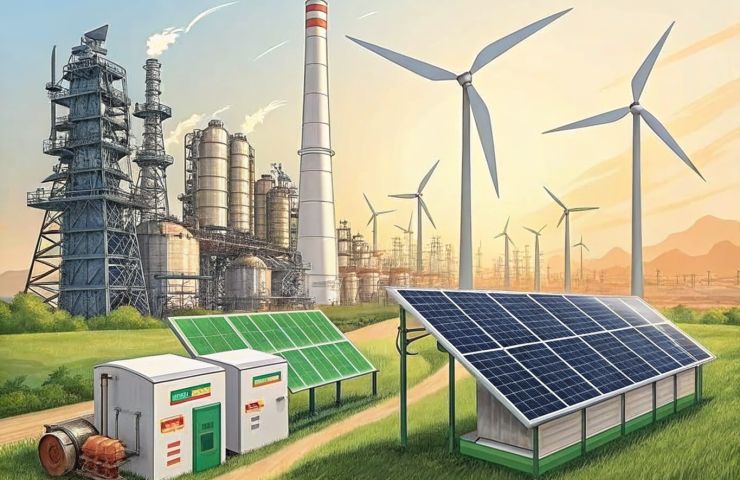
The real game-changer here is the plunge in Renewable Electricity tariffs. Across auctions in India, solar rates have tumbled to as low as ₹2 per unit, with wind not far behind. Hooking electrolyzers directly to these bargain-priced sources—and bolstering them with battery storage—lets projects run round-the-clock. That means higher capacity factors, more hydrogen out the door, and a smoother spread of capital costs. In short, economies of scale are kicking in hard, flipping green hydrogen from a niche play into a mainstream contender.
Setting the Stage: National Green Hydrogen Mission Goals
Launched in January 2023, the National Green Hydrogen Mission came armed with a ₹197 billion (USD 2.2 billion) kitty to seed the ecosystem. The aim? Hit 5 million metric tonnes per annum by 2030. Before this mission, India’s green hydrogen scene was a patchwork of pilots and R&D experiments. Now, with firm policy signals, financial incentives, and clear-cut auctions, developers have the confidence to move from blueprints to steel in the ground.
Tech at Work: Electrolysis, Green Ammonia & More
- Electrolysis: Uses renewable power to split water into hydrogen and oxygen. The latest PEM and alkaline systems are pushing efficiencies north of 60%.
- Green Ammonia: Combines H₂ with nitrogen in a Haber-Bosch reactor to produce fertilizer that’s carbon-neutral at every turn. This opens export avenues where ammonia is easier to ship than pure hydrogen.
- Renewable Integration: Giant solar parks and wind farms feed the electrolyzers via grid or direct lines. Hybrid setups with batteries smooth out the power swings.
Scaling Up: Incentives and Ecosystem Building
NGHM isn’t just about production subsidies—it’s about kickstarting a full hydrogen ecosystem. So far, 18 companies have bagged a total 862,000 tonnes per annum of capacity. On the demand side, refineries locked in 20,000 tonnes per annum of green hydrogen, and SECI’s green ammonia tender underwrites 724,000 tonnes per year for fertilizer plants. There’s also a pilot at V.O. Chidambaranar Port testing coastal import-export hubs that could reshape trade routes.
Ripple Effects: Jobs, Security & Emissions
- Jobs & Investment: The mission could create over 600,000 new jobs across manufacturing, construction, and operations, and attract more than ₹8 trillion (USD 90.5 billion) in private capital.
- Energy Security: Producing domestically could slash fossil fuel imports by over ₹1 trillion, cushioning India from volatile global prices.
- Emissions Avoidance: Swapping grey for green hydrogen may cut nearly 50 million tonnes of CO₂ each year—a massive win for climate goals.
- Renewable Expansion: Reaching 5 MMT/year of hydrogen requires roughly 125 GW of new solar and wind, driving renewable costs down even further.
Industrial Decarbonization: Cutting Carbon Without Missing a Beat
Hydrogen is the workhorse of heavy industry—used in refining, steelmaking, and chemical processes. Locking in green hydrogen lets these sectors slash their carbon footprints without mothballing vital assets. The Numaligarh deal is proof that off-takers can secure clean supply at scale. Plus, green ammonia chains are overhauling fertilizer making, and heavy transport—trucks and ships—could pivot to ammonia or H₂ fuels for near-zero emissions.
Beyond Borders: India’s Green Hydrogen Exports
With green hydrogen nearing cost parity, India is eyeing export lanes. Global players in heavy industry and shipping are hunting for low-carbon feedstocks, and they could turn to India’s competitive pricing and policy support. That export boost would not only diversify markets but also cement India’s role in the clean energy economy.
Looking Ahead: Innovation and the $2/kg Frontier
The sprint isn’t over. Studies from RMI and IEEFA highlight next-gen electrolyzer designs, cutting-edge storage solutions like liquid organic carriers, and AI-based smart grids to tame renewables’ ebb and flow. As capex falls and system lifespans extend, that once-dreamy $2/kg mark is looking more like an imminent milestone than a distant mirage.
Hydrogen Hubs and Infrastructure
Going big means more than standalone plants—it needs hydrogen hubs. That means clustering production, pipelines, storage, and end-users to share infrastructure and slash capex. Imagine steel mills, chemical parks, and ports all linked by an H₂ highway—that’s the kind of regional ecosystem that can sustain itself and scale fast.
Challenges on the Horizon
It’s not all smooth sailing. Integrating gigawatts of renewables demands new grid lines and storage solutions. Water access for electrolysis can be tight in arid zones, so closed-loop systems and recycling are essential. And regulators must stay nimble, updating codes and incentives so investors keep the faith. These challenges are real, but none are insurmountable with the right playbook.
Bottom line: Nailing ₹279/kg is a game-changer for India’s green hydrogen journey. Smart auctions, plunging renewable tariffs, and a maturing ecosystem have converged to make green molecules affordable. With this momentum, India is set to lead the charge on industrial decarbonization—at home and across the globe.


 With over 15 years of reporting hydrogen news, we are your premier source for the latest updates and insights in hydrogen and renewable energy.