
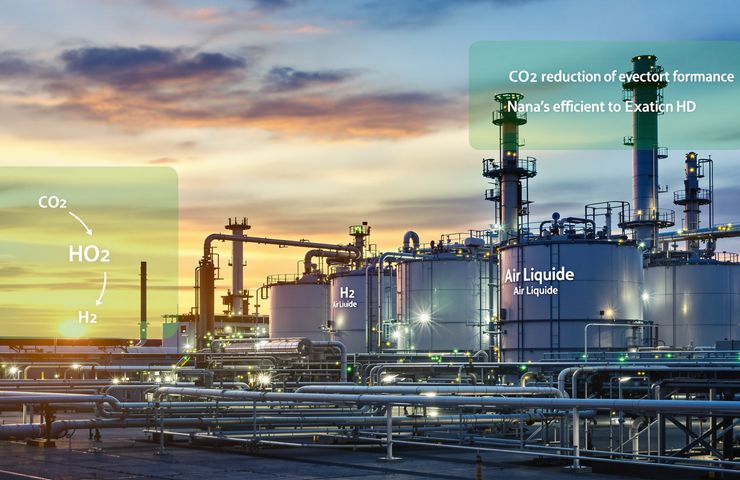
Industrial decarbonization: Air Liquide completes ADVANCE plan with 13% CO₂ reduction
April 7, 2026A breakthrough in everyday terms
Picture this: you cut your household energy bills by double digits, slap on some solar panels, upgrade every appliance to the newest Energy Star model, and still have enough cash left over to throw that long-awaited family reunion—without taking out a loan or pushing back your weekend plans. Sounds like an ad for something too good to be true, but that’s the real-deal story of Air Liquide and its ADVANCE strategic plan. Over four intense years, they gave their entire operation a turbocharged makeover, trimming 13% off their absolute CO₂ emissions compared to 2020 levels and driving down carbon intensity by 46% since 2015—all while hitting record highs in revenue, profit, and overall efficiency. It’s a mix of boardroom vision and nuts-and-bolts engineering coming together in a big way.
Why decarbonization matters
We’ve all seen lofty green pledges—net-zero by 2050, carbon neutral by 2030, or some vague promise to “do our part.” But if you ask operations leaders what really moves the needle, they’ll tell you it’s the everyday choices: which furnaces to swap out, where to recycle heat, how to secure low-carbon hydrogen, or fine-tune nitrogen circuits. For Air Liquide, serving 4.3 million customers and patients across 59 countries, industrial decarbonization isn’t a fancy buzzword. It’s a blueprint for action at massive scale. When your business runs on pipelines, tanks, and compressors, shaving off a double-digit percentage of your carbon footprint isn’t a side note—it’s the headline act.
The numbers you can’t ignore
Here’s where it gets really striking. In the last fiscal year, Air Liquide rang up €26.94 billion in sales—up 2% on a like-for-like basis—and net profits north of €3.5 billion. Their operating margin sailed past the 20% mark, a feat few rivals can boast. But even more eye-opening are the environmental stats: 13% fewer CO₂ emissions against the 2020 baseline and a 46% cut in carbon intensity (that’s kilos of CO₂ per euro of EBITDA) since 2015. These aren’t one-off tweaks or asset divestitures; they’re hard-wired improvements across everything from oxygen and nitrogen supply to specialty gases and hydrogen infrastructure. In short, the entire Gas & Services division—accounting for 97% of group sales—pulled together to push those metrics in the right direction.
Efficiency as the secret ingredient
So how do you rack up gains like that without building a brand-new greenfield plant at every turn? It boils down to squeezing more out of what you’ve already got. In 2025 alone, Air Liquide booked €631 million in operational efficiencies, a 27% jump over the previous year. Think of it as a site-by-site, nut-and-bolt audit: swapping in better compressors, tweaking control systems, recovering more waste heat, and making hundreds of small improvements that add up quickly. The beauty here is that these gains feed both the bottom line and emissions targets—turning what many see as competing priorities into a powerful one-two punch.
Backing it up with cash and growth
A strong cash flow—more than €6.8 billion before working-capital tweaks—gave them room to make bold moves. Case in point: the €3 billion takeover of DIG Airgas, which supercharged their North American footprint and bolstered a project backlog valued at €4.9 billion. That pipeline of future work shines a light on rising demand for industrial gases, hydrogen production units, and related services. At the same time, shareholders weren’t left out: the board recommended a €3.70 dividend per share, up 12.1%, aligning payouts with the company’s cash-generation story. It’s rare to see growth and capital discipline dance so well together.
Tying strategy to sustainability
With François Jackow at the helm, the ADVANCE plan made sustainability a core business pillar, not just a side project. Every big investment came tagged with both financial and environmental KPIs. The goal? A recurring ROCE north of 10%, hit a year ahead of schedule by end-2022, and nudged up to 11.2% by 2025—even as they ramped up low-carbon hydrogen projects and other clean-tech ventures. It’s a reminder that when you weave sustainable energy goals into your capital-allocation playbook, you don’t just shrink your carbon footprint—you also sharpen your competitive edge.
A clear line of sight
One of the most refreshing aspects of this turnaround is the straight-talk guidance. For 2026 and 2027, Air Liquide is aiming to boost its operating margin by 100 basis points each year, targeting a total 560-point lift from 2022 to 2027. In an industry often buffeted by commodity swings and regulatory changes, having that kind of roadmap is like a breath of fresh air. It shows confidence rooted in multi-year performance, not just a lucky quarter.
Implications for hydrogen and beyond
As a leader in hydrogen infrastructure, Air Liquide is well-placed to parlay its decarbonization playbook into market advantage. Streamlined operations mean faster roll-out of hydrogen production units, electrolyzer partnerships, and integrated supply chains for clean ammonia. For customers eyeing the switch to zero-emission technology—from refiners to steel mills—the appeal of a supplier that’s already walked the low-carbon talk is hard to overstate. That dynamic could accelerate the shift toward sustainable energy across heavy industries.
Key takeaways
So what’s the bottom line? First, big climate goals need rock-solid operational foundations. Second, industrial decarbonization can be a profit driver when you bake it into everyday operations. Third, real emissions cuts build trust in the zero-emission technology arena. And finally, clear, multi-year targets—both financial and environmental—set the stage for consistent performance, not just one-off peaks.
Looking ahead
By fusing environmental ambition with financial rigor, Air Liquide has raised the bar for industrial decarbonization. As other players grapple with investor expectations and tightening regulations, this case shows you can slash emissions and boost profits hand in hand. The big question now: who’ll be the next to up the ante, and can the rest of the industry keep pace?


 With over 15 years of reporting hydrogen news, we are your premier source for the latest updates and insights in hydrogen and renewable energy.