Jakson Green Secures $465M Green Ammonia Deal with SECI
April 9, 2026Think a $465 million deal is just a handshake? Think again. That’s roughly the commitment you’re looking at when Jakson Green inks a green ammonia supply pact with SECI under India’s flagship National Green Hydrogen Mission. It’s not a stunt—it’s a solid contract tying renewable electrons to industrial feedstock. And guess what? Clean ammonia—the low-profile star of the decarbonization show—just grabbed its moment in the spotlight.
Core Deal Unpacked
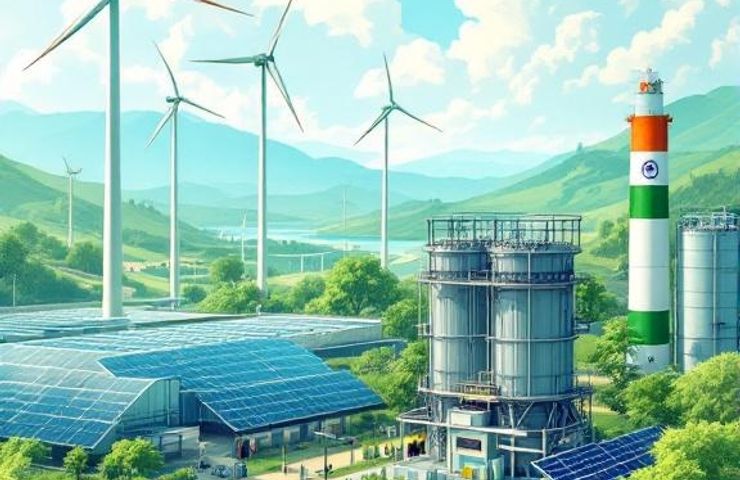
This month, Jakson Green—the clean energy offshoot of the century-old Jakson Group—locked in a $465 million supply deal with SECI. The goal? Hit 5 million tonnes of green hydrogen production a year by 2030. What’s on the table is clear: nearly half a billion dollars pouring into turning solar and wind power into zero-CO₂ ammonia. What’s still up in the air: exact annual volumes and rollout timelines. But one thing’s certain: this is one of the first long-haul off-take contracts for clean ammonia under this mission.
SECI, the government’s go-to for renewable energy and hydrogen tenders, plays the off-taker, guaranteeing demand and slashing perceived risk for banks and investors. On the flip side, Jakson Green brings its A-game in EPC and project know-how. Pair them up and you’ve got a working template for how private firms can dive into industrial decarbonization.
While they’ve kept production numbers under wraps, hints point to a multi-hundred-thousand-tonne-per-year operation once this ramps up—a serious scale play if they pull it off.
What It Means
On paper, it’s a textbook win for policy-meets-market. Deals this headline-worthy don’t always turn into real-world projects. Here’s the skinny:
- Anchoring Demand: SECI’s backing tells financiers that clean ammonia isn’t pie-in-the-sky.
- Supply Chain Buildout: Electrolysis units, reliable renewable power, water sourcing, storage—the whole ecosystem needs to spring up.
- Export Pathways: India’s got its eyes on Europe and Japan. This deal lays the groundwork—ports, logistics, off-take terms—that others can copy.
Government figures peg the mission at creating some 600,000 direct and indirect jobs by 2030, across manufacturing, construction and ops. Bottom line: you don’t hit 5 MMT on buzz alone.
Tech Snapshot
Let’s break down the hydrogen production process: Electrolysis + Haber-Bosch = Clean Ammonia. You feed renewable electrons—solar, wind—into electrolyzers that split water into hydrogen and oxygen. That green hydrogen then marries nitrogen from the air in the Haber-Bosch loop to churn out NH₃. No fossil feedstocks, no direct CO₂ emissions. Elegant? Absolutely. Easy? Not quite. Electrolyzer efficiency still hovers below 80%, and mass-producing stacks is just scaling up. Oh, and you need truckloads of pure water—a thorny issue in water-stressed areas.
Costs are trending down—you’ve seen roughly a 30% drop in electrolyser stack prices since 2020—but building gigafactories still runs into membrane and catalyst bottlenecks. Meanwhile, solar panels and wind turbines are proven, but stitching them into a steady, round-the-clock power supply demands smart grids or hybrid storage twists.
Strategic Stakes
India kicked off its National Green Hydrogen Mission in 2023 with a ₹19,744 crore (about $2.4 billion) war chest. Early on, the SIGHT program was all about bootstrapping domestic electrolyser manufacturing. Now, we’re shifting gears from subsidies to off-take contracts—a big test for whether made-in-India gear can compete on performance, not just price breaks.
Remember, ammonia fuels around 80% of India’s fertilizer use. Swapping grey ammonia for clean ammonia could slash millions of tonnes of CO₂ each year. And there’s more: the shipping industry is eyeing ammonia as a zero-emission bunker fuel. This pact builds on SIGHT’s momentum; electrolyser OEMs are lining up, ports are getting primed for ammonia handling, and logistics players are circling for a piece of the action.
Market and Risks
No sugarcoating: clean ammonia is pricey. Right now it runs two to three times the cost of grey ammonia made from natural gas. That price gap is a killer for adoption. Then there’s water—industrial-scale electrolysis guzzles distilled water, stretching supplies in thirsty regions. And let’s not forget renewable power’s fickle nature. Without battery buffers or hybrid setups, you risk downtime that eats into plant utilization.
On the plus side, carbon credit markets could help offset some of the cost delta. On the flip side, global ammonia price swings could squeeze margins if contracts lack floor pricing. Finally, policy continuity in India is never a given—past U-turns in energy policy have rattled investors. SECI’s stamp of approval helps, but long game success depends on steady regulations, robust transmission lines, and clear renewable energy tariffs.
The Maverick Take
Let’s keep it real: signing a big-ticket contract is one thing; pulling it off is another. We’re still waiting on specifics—when will Jakson Green break ground on electrolyser hubs? When do the power purchase agreements lock in? Land snafus, financing bumps, supply chain pinch points—any of these could knock that $465 million figure off-kilter. And pushing water-hungry tech into areas with dipping water tables? That’s a strategic gamble.
And here’s the elephant in the room: how do you finance this? Without clear off-take volumes or PPA tenures, banks might shy away from big loans. Still, seeing private players put skin in the game is a good omen. India needs marquee deals like this to build confidence—but don’t mistake a flashy headline for a fully mature project. We’re early in the innings.
Looking Ahead
This deal sketches a roadmap: more contracts, faster project rollouts and deeper collaboration between public and private players. We’ll be watching how green bonds, blended finance and other financial tools step up to support these ventures, and if the emerging supply chain helps India’s push to be a net exporter of clean ammonia.
The real cliffhanger? Can India keep its policy engine humming, speed up approvals and turbocharge grid upgrades? Nail those, and 5 MMT by 2030 shifts from a dream to a doable target. Miss the mark, and you’re scrambling to catch up—chasing goals instead of setting the pace for the sustainable energy world. Stay tuned: the next few quarters will show whether this pact is a springboard or just another line in the mission brief.


 With over 15 years of reporting hydrogen news, we are your premier source for the latest updates and insights in hydrogen and renewable energy.