KBR to Lead FEED for Amsterdam’s First Commercial LH2 and CO2 Import Terminal
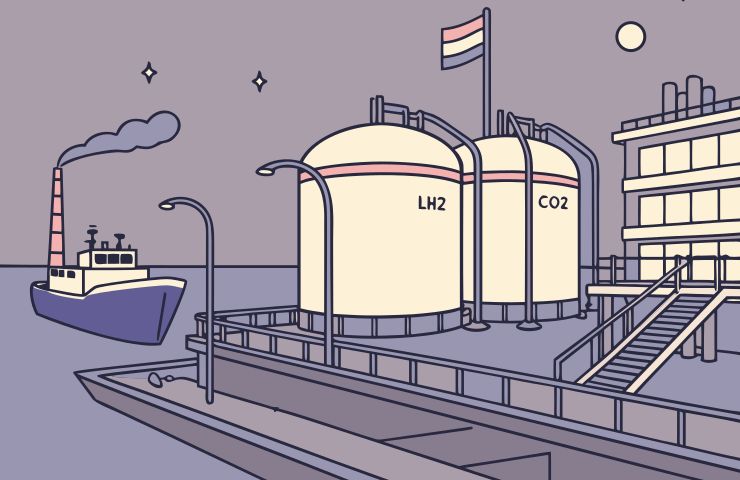
March 25, 2026EcoLog just tapped KBR to handle the front-end engineering design (FEED) for what’s shaping up to be Europe’s first commercial-scale liquid hydrogen (LH2) and liquid CO2 (LCO2) import terminal at the Port of Amsterdam. And with Mott MacDonald on board as the Owner’s Engineer, this dual-purpose setup is all about filling the last missing links in the EU’s hydrogen infrastructure and supercharging industrial decarbonization across Northwest Europe.
Why This Matters
You might wonder why one terminal can stir up so much excitement in the clean energy world. Here’s the scoop: until now, large-scale LH2 imports have been stuck in first gear because there simply aren’t enough handling hubs or cost-effective supply chains. By aiming for 200,000 tonnes of LH2 imports and 1.8 million tonnes of CO2 exports each year—scalable up to 600,000 tonnes and 4.25 million tonnes—the project tackles both ends of the value chain. Suddenly, industries from steel mills to data centers will have a steady, low-carbon feedstock at their fingertips.
Key Technical Highlights
- Cryogenic Storage & Regasification: LH2 rolls in at a bone-chilling –253 °C in specially designed carriers, gets tucked away in insulated tanks, then warms up and turns back into gas for delivery by pipeline, truck, barge or rail.
- Cold Energy Recovery: The bite of cold released during LH2 regasification is harnessed to chill captured CO2 into its liquid form—an elegant trick that slashes energy use and emissions.
Strategic Partnerships & Supply Corridors
This venture rides on two major supply routes. First, the Oman–Netherlands deal signed during Sultan Haitham’s 2025 visit will send LH2 from Duqm. Then there’s the Norway–Netherlands pact: LH2 from Gen2 Energy heads to Tata Steel in the Netherlands, while the captured CO2 travels back to Norway for permanent storage.
Business Implications
By decoupling industrial demand from domestic electrolysis output, the terminal offers a realistic path to near-term decarbonization. It dovetails neatly with the EU Hydrogen Strategy, which has been wrestling with grid congestion and permit holdups in hubs like Rotterdam. An open-access, third-party facility means new offtakers can jump in without being locked into a single pipeline, and multi-modal connections keep supply chains resilient.
Challenges Ahead
Breaking ground on a first-of-its-kind terminal isn’t a walk in the park. Developers still need to nail down permits, finalize ship designs and sync up with grid operators. Long-term offtake deals and shifting hydrogen prices will make or break the economics. That said, wrapping up FEED by next year and targeting operations in 2030 keeps everyone on their toes.
Looking Forward
Once it’s up and running, the Amsterdam hub could become the global gold standard for hydrogen storage and transport. By proving that cost-effective imports can complement homegrown green hydrogen, it might even trigger a new wave of electrolyser rollouts across Europe. Keep an eye on Brussels—policy tweaks and fresh investment could follow fast.
At the end of the day, this FEED award is a reminder that bold engineering and cross-border teamwork remain the secret sauce for unlocking sustainable energy breakthroughs. With KBR steering the design and EcoLog driving operations, Amsterdam is staking its claim as the nexus where hydrogen infrastructure meets industrial decarbonization head-on.

 With over 15 years of reporting hydrogen news, we are your premier source for the latest updates and insights in hydrogen and renewable energy.