
Kilogram-scale Circular Recovery Paves Way for Sustainable Hydrogen Fuel Cells
March 6, 2026What if the next generation of hydrogen fuel cells ran on precious metals and ionomers pulled straight from recycled waste? That’s exactly what Johnson Matthey and Syensqo are showcasing with their kilogram-scale demo of circular recovery—pulling platinum group metals and fluorinated ionomers out of industrial scrap catalyst coated membranes (CCMs) instead of letting them go to waste.
From Lab to Industry
This feels like a breakthrough in the hydrogen production value chain. By rolling out a purely chemical route dubbed HyRefine™, Johnson Matthey can strip out platinum group metals from used proton exchange membrane pieces without torching the polymer. At the same time, Syensqo taps its know-how in handling fluorinated ionomers to pull and polish Aquivion® back into fighting shape.
HyRefine and Aquivion in Action
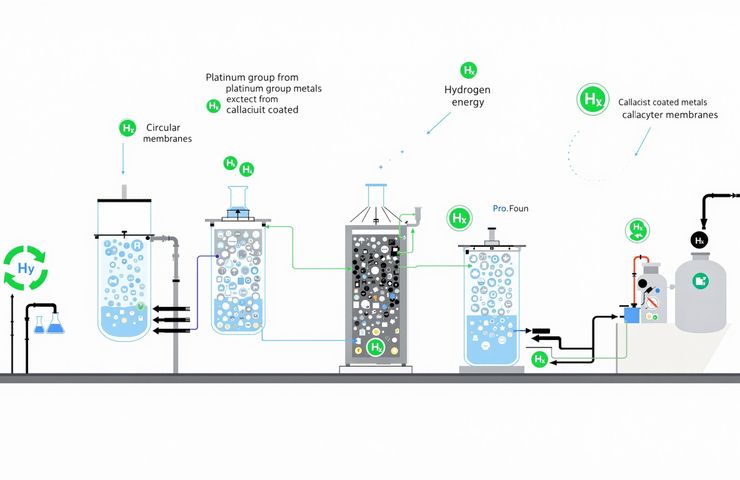
Here’s how it all goes down: first, the scrap CCMs get a quick mechanical sort. Then HyRefine™ soaks them in a carefully tuned chemical bath that leaches out the metals with impressive recovery rates—no damage to the ionomer. Once those PGMs are out, Syensqo steps in with its custom extraction and purification sequence to reclaim the fluorinated polymer. What you end up with is a pristine ionomer stream, ready to be recast into brand-new membranes.
So far, they’ve recycled over a kilogram in this demo. Better yet, the regenerated MEAs built with the recovered metals and ionomers performed just as well as ones made from virgin materials—no loss in activity, conductivity or durability.
Environmental and Supply Chain Impacts
Switching to recycled PGMs and ionomers could shrink the carbon footprint of PEM electrolyzers and fuel cell technology by up to 80% compared with digging up and processing fresh materials. That’s a huge win for sustainable energy and industrial decarbonization, especially as electrolyzer capacity ramps into the gigawatt scale.
On top of that, securing a steady, low-carbon pipeline of platinum, palladium and related metals helps guard against price swings and geopolitical headaches—two things that have haunted the green hydrogen market for too long.
Looking Ahead
Scaling this approach will need smarter policies around end-of-life PEM stack management and clearer rules for fluoropolymer recycling. Today, the infrastructure to collect and process spent membranes is still in its infancy, and regulators haven’t nailed down standards yet. But with this demo under their belt, Johnson Matthey and Syensqo are ready to team up with electrolyzer and fuel cell OEMs to push from pilot to full commercial throughput.
As renewable hydrogen cements its spot in net-zero roadmaps, a circular take on catalyst and polymer recovery could become a real differentiator—cutting costs while slashing life-cycle emissions in hydrogen fuel cells and electrolyzers alike.
About Johnson Matthey
Johnson Matthey, founded in the early 1800s, is a UK stalwart in sustainable energy innovations—from catalysts and precious metals to hydrogen production solutions. Their HyRefine™ platform is all about scalable recovery of critical materials from hydrogen gear, paving the way for a truly circular energy economy.


 With over 15 years of reporting hydrogen news, we are your premier source for the latest updates and insights in hydrogen and renewable energy.
