Linde Engineering to Lead Hydrogen Production EPC for WAH2 Blue Ammonia in Western Australia
April 6, 2026So, how does a place famous for fossil fuels rewrite its story as a low-carbon champion? Over in Western Australia, that’s exactly what’s happening. This month, NH3 Clean Energy handed the reins to Linde Engineering to tackle the engineering, procurement, and construction (EPC) design of its future WAH2 blue ammonia plant. Once up and running, it’ll crank out roughly 650,000 tonnes of clean ammonia every year from natural gas, complete with integrated carbon capture. The goal? Ship out a greener commodity to Asia. And with Linde’s deep background in hydrogen production and gas processing, this move feels like the spark Australia needed for its sustainable energy dreams.
At its core, this partnership is all about smoothing out bumps and being smart with capital. By tapping into Linde Engineering’s expertise—from front-end engineering design (FEED) to air separation units, hydrogen reforming, and carbon capture and storage (CCS)—NH3 Clean Energy is banking on nipping technology hiccups and performance worries in the bud. But it doesn’t stop at blueprints: Linde is also exploring build-own-operate (BOO) and operation & maintenance (O&M) models for the big-ticket items. Imagine them footing part of the bill, running the hydrogen trains, ASU systems, and CO₂ pipelines—giving NH3 Clean Energy a serious break on upfront costs.
Setting the Stage in the Pilbara
The Pilbara isn’t just a backdrop for iron ore; its natural gas fields have powered LNG exports and heavy industry since the 1960s. Now, this corridor is evolving into a hub for industrial decarbonization. Existing pipelines, upstream plants, and the Port of Dampier are getting a facelift for a new green export—clean ammonia. NH3 Clean Energy has already sealed an MOU with Pilbara Ports to lock in berth space and export setups. Over with the Australian Gas Infrastructure Group, they’re hashing out a CO₂ pipeline plan, tapping into local storage reservoirs to anchor blue hydrogen and ammonia production. Talk about giving legacy assets a second life.
Blue Ammonia Meets EPC Expertise
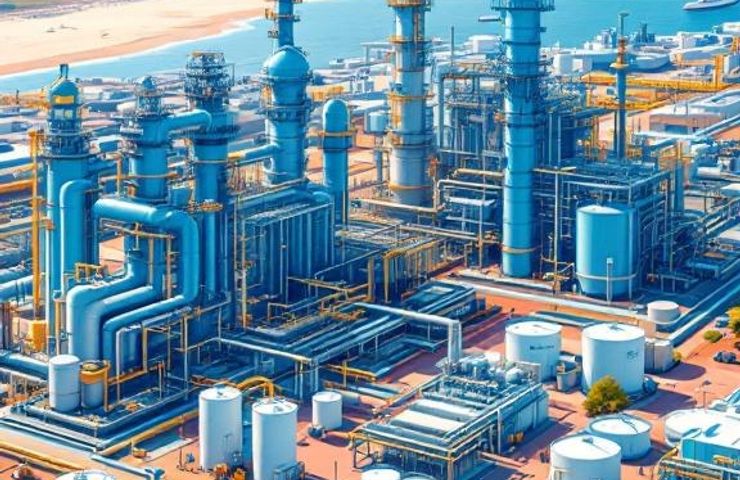
Here’s the play-by-play: natural gas goes into a reformer to spark off hydrogen, which then mingles with nitrogen from an air separation unit. The killer move? Capturing the CO₂ and squirreling it away underground. Linde Engineering has done the heavy lifting on air separation and cryogenic units for big projects like Perdaman’s urea plant and PsiQuantum’s hardware facility. Now, they’ll roll out full EPC designs for the WAH2 project—everything from process flow diagrams to picking catalysts and membranes, sizing pumps and compressors, and fine-tuning the ammonia loops to hit emission targets. It’s an all-in showcase of their engineering chops.
Business Model Shift: From EPC to BOO
Gone are the days when engineering firms just dropped off a set of drawings and waved goodbye. Linde is testing out BOO and O&M approaches, meaning they could bankroll and operate the hydrogen trains, air separation gear, and CCS arteries, while NH3 Clean Energy steers the ammonia production, sales, and overall project playbook. For developers, this kind of long-term partner takes a chunk of the tech risk, guarantees certain performance levels, and can fast-track construction timelines. No wonder investors are nodding: projects with solid off-takers and tight management are what the market loves right now.
Export Ambitions and Infrastructure
Japan and South Korea are on the hunt for low-carbon fuels to meet their decarbonization targets, opening the doors to Australian exporters. The WAH2 setup is built to tie directly into shipping lanes at the Port of Dampier, with tanks ready for bulk carrier loading. Behind all that is the partnership with the Australian Gas Infrastructure Group crafting a CO₂ trunkline—so the captured emissions get locked away safely. At the same time, that kind of pipeline backbone lays the groundwork for growing hydrogen infrastructure in the region.
Decarbonization and Regional Impact
WAH2 is more than just another plant; it’s a catalyst for industrial decarbonization in the Pilbara. By injecting CCS capacity and high-skill roles into the local job market, it broadens the economic mix beyond mining. Construction crews, operations teams, pipeline specialists—everyone stands to gain. On the national scale, it slots neatly into Australia’s “Future Made in Australia” hydrogen strategy, aiming to build export-heavy, low-carbon industries. Globally, blue ammonia might just be the bridge fuel we need, linking today’s gas base to tomorrow’s green hydrogen future.
Looking Ahead
With FEED kicking off now, all eyes are on offtake deals and nailing down the final investment decision. NH3 Clean Energy is chatting up Asian utilities and industrial players, though no binding buyers are on the books yet. If the stars align—funding, contracts, timing—WAH2 could be humming along by the end of the decade. It’ll be the real test of whether blue ammonia can scale up as a decarbonization tool—powering plants, fueling ships, even feeding fertilizer makers, all while trimming the carbon bill.
It’d be easy to file WAH2 under “just another industrial project,” but it’s really a signpost for how gas-rich regions can reinvent themselves for a clean, sustainable energy future. Firms like Linde Engineering are rewriting the rulebook—mixing deep technical know-how with innovative business models that stick around past the fence line. And developers like NH3 Clean Energy are banking on clean ammonia—once just a fertilizer ingredient—to become a cornerstone of the global hydrogen trade. If WAH2 delivers, you’ll see copycat ventures popping up from Qatar to North America, each one nudging the needle on global decarbonization, one pipeline at a time.
 With over 15 years of reporting hydrogen news, we are your premier source for the latest updates and insights in hydrogen and renewable energy.