Linking Regional Grids to Boost Hydrogen Production: EWE NETZ’s T-Piece on Nordsee-Ruhr-Link III
March 20, 2026In a quiet corner of Lower Saxony, you’ll find a humble T-piece that’s about to play a starring role in Germany’s push to scale hydrogen production. After sealing a deal with Open Grid Europe, regional operator EWE NETZ snagged a plug-and-play spot on the national high-pressure hydrogen infrastructure. Suddenly, local projects and industrial hubs can tap into low-carbon fuel without laying down new pipelines right away.
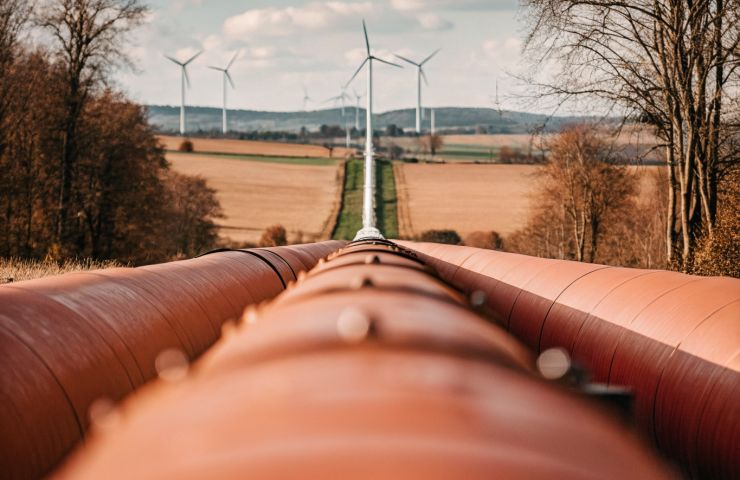
The agreement hinges on a physical interface along the Nordsee-Ruhr-Link III—a critical stretch of the planned core network. Nestled near Dörpen in the Emsland district, this T-piece sits ready for connection whenever demand kicks in, so EWE NETZ doesn’t have to commit to building extra capacity just yet. It’s a classic “wait-and-see” move that keeps all doors open as the main transmission line moves forward.
Bridging the Core and the Regions
Picture Germany’s hydrogen grid as two parts: a high-pressure trunk feeding industry and import hubs, and a lower-pressure web serving towns, factories, and heat networks. Until now, they’ve grown side by side but rarely touched. This T-piece is the first handshake between them—a direct tie-in on the main line, ready to plug into the regional network when the time is right.
A Key Link in the Hydrogen Core Network
Open Grid Europe’s Nordsee-Ruhr-Link III snakes about 122 kilometers from Bunde on the Dutch border down to Wettringen near the Ruhr. Under the watch of the Bundesnetzagentur, it repurposes existing gas pipes for green hydrogen at pressures up to 100 bar. The project was awarded in late 2024 and should be live by 2027, channeling wind-powered and North Sea imports straight into Germany’s heavy-industry clusters.
Why the T-Piece Matters
You might shrug at a single junction, but this little T-piece packs a punch. It gives EWE NETZ and its customers the freedom to choose later if—and when—to build spur lines. That could mean hydrogen-fired boilers warming up Dörpen or fresh feedstock flowing to nearby chemical plants. Best of all, existing electricity and gas assets—and the investments behind them—won’t sit idle as we switch to cleaner gases.
Local Impact and Industrial Decarbonization
Emsland, known for its breezy plains and agricultural flair, has already carved out a niche in renewables. Now, it’s primed to extend that green reputation into hydrogen infrastructure. Wind farms could funnel excess power into electrolysers, while manufacturers and waste-treatment facilities tap a new low-emission source. That spells jobs, strengthened local supply chains, and progress toward municipal climate targets.
Policy Backdrop and Strategy
Germany’s National Hydrogen Strategy envisions nearly 9,700 kilometers of core network by 2032. In earlier tenders, the Bundesnetzagentur handed out build-out roles to operators like Open Grid Europe, especially on north-south corridors. This T-piece deal is a downstream follow-up, making sure the trunk doesn’t become an isolated silo. It underscores a policy shift toward tighter integration—essential for true sustainable energy adoption.
Challenges and Next Steps
Securing a plug-in point is one thing; actually flowing hydrogen through it is another. EWE NETZ still needs permits for the branch lines, capacity bookings on the core network, and financing to build. On the regulatory side, operators must sort out tariffs, injection standards, and long-term slots. But having a physical connection reserved already eases many of those headaches.
Broader Benefits Across the Energy Transition
This modest T-piece embodies a grand vision: a flexible grid that can juggle different gases, pressures, and sources—from local electrolyzers to international imports. By stitching high-pressure highways to regional roads, it lays the groundwork for a robust hydrogen infrastructure that drives industrial decarbonization and beyond. It also strengthens Europe’s hydrogen corridor ambitions, linking North Sea volumes to industrial hubs across the continent.
Sure, we’re still in the early days: volumes on the Nordsee-Ruhr-Link III will ramp up over time, and final offtake agreements aren’t all penned yet. But this contract sends a clear signal that regional players like EWE NETZ are ready to roll. Locking in connectivity now is the smart play against tomorrow’s unknowns, keeping the door wide open for new uses—from district heating to sustainable chemical feedstocks.
We’ll be watching as shovels hit the dirt and blueprints turn into pipelines. The T-piece saga has only just begun.
 With over 15 years of reporting hydrogen news, we are your premier source for the latest updates and insights in hydrogen and renewable energy.