
Microbial Fuel Cells Unlock Self-Powered Underwater Sensors
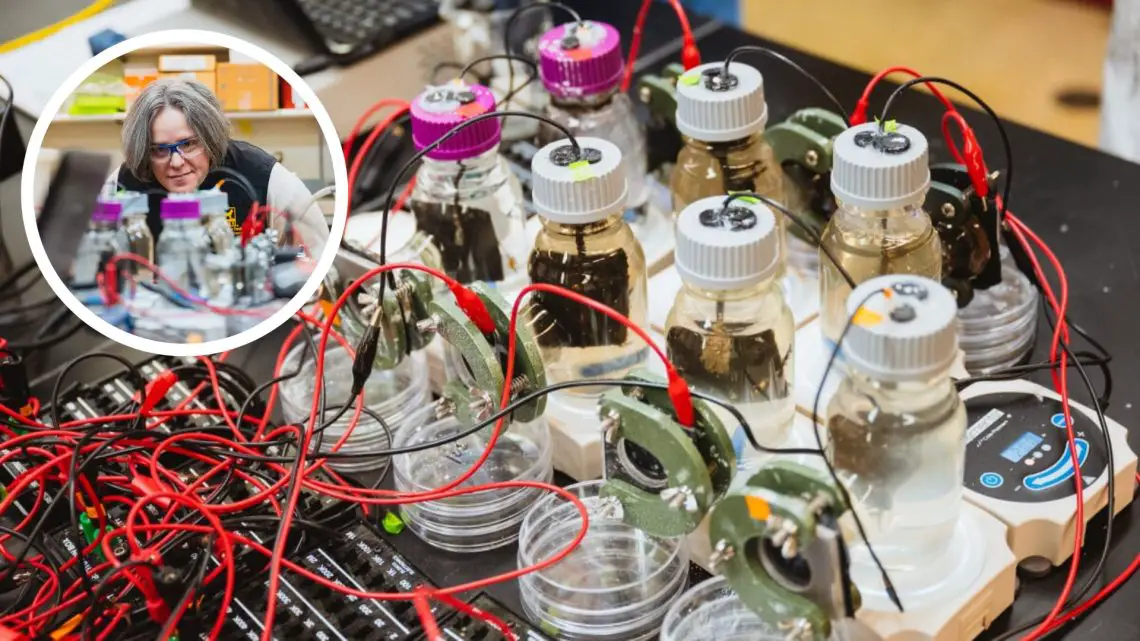
June 15, 2026In a groundbreaking move for ocean monitoring, DARPA’s BLUE program has teamed up with Michigan Technological University to test out some pretty cool tubular microbial fuel cells. These innovative devices are designed to generate electricity using organic matter found in marine sediments. The goal? To keep underwater sensors powered up indefinitely, which means no more costly battery swaps stressing out budgets for naval defense, climate research, and ecological monitoring.
Background: Meeting Undersea Power Needs
You know, underwater sensor networks have mostly relied on traditional chemical batteries, which need to be pulled up every few months. This can add up to a hefty price tag—think thousands per unit—and it interrupts the flow of important data. That’s why around 2024, DARPA kicked off the BioLogical Undersea Energy (BLUE) program. It aims to create self-sustaining power sources using the ocean’s own biomass. The best part? BLUE funds projects that are a bit of a gamble but have a lot of potential to take bioelectrochemical devices from lab experiments to everyday use.
Michigan Technological University, which has been around since 1885, is leading one of these efforts. The project is under the supervision of Professor Amy Marcarelli, who’s combining field tests, lab experiments, and remote-sensing techniques to figure out how to optimize microbial fuel cell performance in the real underwater world.
How the Technology Works
Now, here’s where it gets fascinating. Unlike the usual hydrogen fuel cells you’re probably familiar with, these microbial powerhouses get their electrons straight from bacteria as they munch on organic matter. Let’s break down the key features that make these cells tick:
- Granulated Activated Carbon Anode: This part attracts dissolved organics and provides a cozy home for dense bacterial colonies, especially in nutrient-poor waters.
- Oxygen-Resistant Tubular Design: This design ensures that certain areas stay free from oxygen, which is key for bacteria to thrive.
- Proton Exchange Membrane: A vital piece that allows protons to flow over to the cathode, where the final stage of the circuit takes place through oxygen reduction.
- External Circuit: This is what directs the electricity generated to low-power gadgets like acoustic modems and environmental sensors.
By tapping into the ocean’s natural biomass, this bioelectrochemical method eliminates the need for external fuel supplies—a huge win!
2026 Chesapeake and Galveston Bay Trials
Fast forward to early 2026: the team dunked some prototypes in Chesapeake Bay for a solid 30-day trial, and guess what? They managed to produce a steady current sufficient for basic sensor operations. A follow-up test in Galveston Bay saw three out of four units generating power in nutrient-rich waters. This marks a significant milestone as the first multi-week ocean trials under the BLUE initiative.
Looking ahead, there are plans for a deployment of ten units in Chesapeake Bay for a year-long evaluation. At the same time, they’re refining predictive models that use satellite and in-situ data to map coastlines and pinpoint areas with optimal biomass for future installations.
Historical Context and Parallel Efforts
Microbial fuel cells aren’t exactly new. The idea dates all the way back to M.C. Potter’s lab work in 1911 and Barnett Cohen’s scaling experiments in 1931. Renewed interest in the ’80s saw these cells find their footing in wastewater applications, and a notable deep-sea prototype emerged in 2015. Around 2025, the University of Maryland snagged DARPA funding for its PODPower team, which is aiming for higher outputs and paving the way for Michigan Tech’s ocean trials.
Strategic and Economic Impact
Imagine the savings if self-powered sensors can cut down on maintenance costs for underwater networks! This is essential for improving maritime awareness and environmental monitoring. Of course, any deployments will need to comply with regulations from the Environmental Protection Agency and the Department of Defense. It’s crucial to ensure that these biological devices don’t disturb sensitive habitats or skate around security measures.
Market analysts predict that by 2030, slashing battery logistics in marine sensor systems could save millions annually. With microbial fuel cells being eco-friendly—utilizing natural biomass and ditching toxic battery chemicals—they align nicely with global decarbonization efforts. This could attract partnerships across research institutions, naval contractors, and environmental agencies as well.
Outlook: Toward a Self-Fueling Ocean
Pushing past pilot trials will likely hinge on innovations in materials. Think platinum-free catalysts, advanced membranes, and modular designs that simplify maintenance. Researchers are also getting creative by integrating machine-learning models with remote-sensing data to forecast site-specific biomass availability and fine-tune their deployment strategies.
If everything falls into place, we could see underwater sensor networks that run on their own for years, continuously feeding us vital data about temperature, salinity, acoustic signals, and pollutant levels. This would not only bolster defense and climate science but also enhance resource management, transforming the ocean into a renewable power source as part of the emerging blue economy.


 With over 15 years of reporting hydrogen news, we are your premier source for the latest updates and insights in hydrogen and renewable energy.