Phase 3 Approval Advances Hydrogen Production and Green Methanol Synthesis at Goldwind’s Xing’an League Project
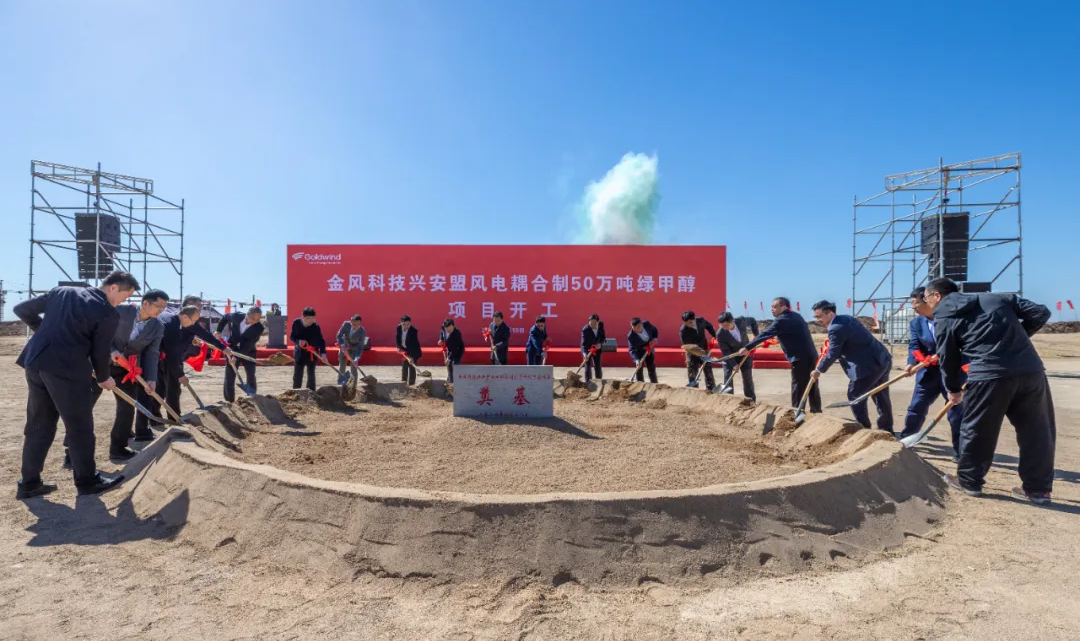
February 16, 2026Right on time, Phase 3 of the Goldwind Technology Xing’an League Green Hydrogen-to-Green Methanol Project got its official stamp this month. That approval means the once-distant dream of cranking out half a million tons of green methanol a year is now in sight. It’s the planet’s biggest venture to turn wind power into low-carbon fuel, marrying green hydrogen electrolysis with biomass gasification across a massive 2 GW wind farm in Inner Mongolia.
Core News in Brief
The national development authority just greenlit Phase 3 of this facility, managed by a few Goldwind Technology offshoots. Set smack in the heart of Inner Mongolia—where the winds won’t stop blowing and biomass feedstock is plentiful—it’s gearing up to hit 500,000 tons of green methanol annually. Phase 1’s electrolysis units are already humming, producing roughly 32,000 Nm³/h of hydrogen and about 10,000 tons a year. Over at the first 250,000-ton biomass-to-methanol line, operations kicked off back in October.
How It Works
This project is essentially a three-piece puzzle. First, 2 million kW of on-site wind power feed electrolyzers that split water—powering next-level hydrogen production. Next, an industrial-scale, water-cooled biomass gasification unit chews through corn stalks to churn out syngas. Finally, that syngas heads into a methanol synthesis train. By co-locating everything, the team squeezes out huge economies of scale, creating a self-contained “green loop” from juice to fuel. It’s a real win for industrial decarbonization and balance-sheet health alike.
Strategic and Commercial Angle
On the partnership front, Goldwind Technology inked a long-term offtake deal with shipping powerhouse Maersk to secure green methanol as marine fuel beyond 2030. That’s one of the first major international contracts for wind-driven green methanol, putting China on the map as a clean-fuel exporter. Plus, the NDRC tapped it as a national demonstration project, underlining its role in pushing heavy industry and hard-to-abate transport toward net-zero.
Regional and Historical Context
Xing’an League isn’t exactly a blank canvas—it’s long been an agricultural and pastoral center. With mountains of corn residues lying around and pretty consistent winds, it was a no-brainer for a “green ammonia-alcohol” hub. They broke ground in spring 2024, got Phase 1 hydrogen electrolysis approved by mid-2025, and hoisted that biomass gasifier soon after.
Implications for Decarbonization
From a money standpoint, the full build-out is about ¥13.7 billion and will generate dozens of local jobs—building a fresh rural supply chain from farm to fuel. Environmentally, swapping fossil-based methanol for a wind-and-biomass-derived alternative slices greenhouse-gas emissions and helps Maersk edge closer to its net-zero shipping goals. On the industrial side, the closed-loop setup drives down feedstock and power costs, offering a blueprint for regions hunting big gains in industrial decarbonization.
Looking Ahead
Phase 3 construction is slated to run over the next couple of years, targeting a late-2028 commissioning. But Goldwind Technology isn’t stopping at 500,000 tons—it’s eyeing a hike to 1.45 million tons of output by 2027. The takeaway? Packing large-scale fuel-to-chem complexes—fusing fuel cell technology, biomass gasification, and plenty of renewables—can tip the scales to make green chemicals truly competitive on the global stage.

 With over 15 years of reporting hydrogen news, we are your premier source for the latest updates and insights in hydrogen and renewable energy.