Port of Barcelona Awards SympH2ony Contract for Green Hydrogen Production Station
SympH2ony, the JV of Toyota Tsusho Europe and Messer, will build Spain’s first port-based green hydrogen production and refueling station at Barcelona’s ZAL Port, reinforcing the port’s CO₂ reduction targets and EU hydrogen strategy.
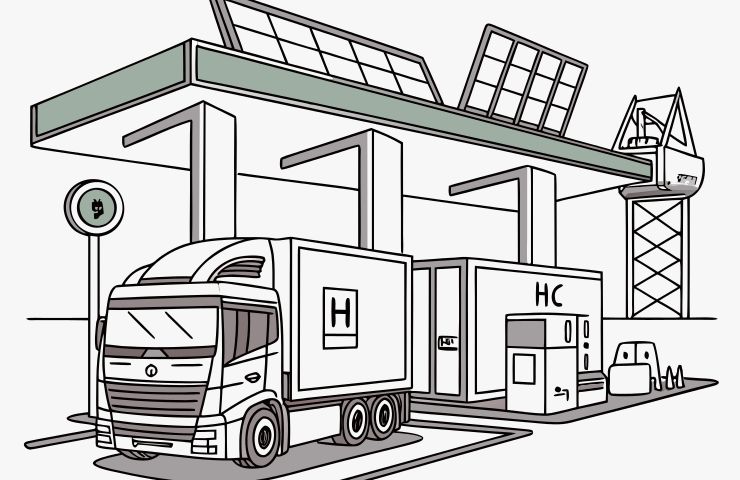
This month, the Port of Barcelona Authority picked SympH2ony GmbH to build Spain’s first-ever green hydrogen production station at a national port. It’s going up on a 7,000 m2 plot in the ZAL Port logistics hub—where nearly a quarter of Spain’s maritime cargo flows through. The facility will churn out low-carbon hydrogen using electrolysis and fuel heavy-duty trucks, buses, and port machinery. It’s a key move to slash CO₂ emissions by 85 percent by 2040, in step with Spain’s Hydrogen Roadmap and the EU’s REPowerEU targets.
Key takeaways
- It’s the first green hydrogen station in Spain’s national port network, reinforcing hydrogen infrastructure across the Mediterranean.
- The initial electrolyzer capacity is 3.1 MW, set to double to 6.2 MW for roughly 540 tonnes of H₂ per year by the early 2030s.
- SympH2ony, the JV between Toyota Tsusho Europe and Messer SE & Co. KGaA, will design, build, and operate the station under a contract north of €20 million.
- Services include on-site hydrogen production, high-pressure compression, and dispensing, with fleets billed on a per-kilometre basis.
- The project ties into Barcelona’s Hydrogenizing BCN initiative and the forthcoming H2MED pipeline, laying the groundwork for a regional hydrogen hub.
Technical deep dive
Under the hood, it’s a green hydrogen electrolysis setup powered entirely by renewables. Water splits into H₂ at the cathode and O₂ at the anode, with advanced membranes guaranteeing ultra-pure hydrogen. Once produced, the H₂ is compressed—typically to 350 bar or higher—and stored in rugged pressure vessels, ready for on-demand refuelling.
Phase one will deliver about 270 tonnes of H₂ annually, jumping to 540 tonnes when the electrolyzer capacity doubles. That’s fuel for dozens of heavy-duty trucks each day, plus buses and cargo handlers, all running on zero-emission technology. Multiple dispensing points mean minimal queuing and maximum uptime for port operations.
Strategic partnership and business model
Launched in mid-2024, SympH2ony GmbH combines Toyota Tsusho Europe’s logistics and trading expertise with Messer’s industrial gases know-how. Rather than simply selling equipment, the JV rolls out a full-service package: it invests in the hydrogen infrastructure, manages day-to-day operations, and even leases fuel cell vehicles, billing customers per kilometre. It’s a smart way to cut through hefty upfront costs and get haulage firms and transit agencies on board with fuel cell technology.
For the Port of Barcelona, outsourcing to SympH2ony transfers development and operational risks, delivering a turnkey rollout. It mirrors a broader shift in industrial decarbonization—full-stack partnerships that handle everything from hydrogen production to end use, rather than piecemeal contracts.
Implications for port decarbonization
Moving nearly 70 million tonnes of cargo each year, Barcelona’s port is a major source of CO₂ and NOₓ emissions. Diesel trucks and heavy machinery working the quays contribute to local air quality issues for over 5 million residents. Bringing in green hydrogen for landside transport and equipment will sharply cut those emissions and dovetail with the port’s planned 92–100 MW of solar PV and LNG bunkering experience.
This initiative also fits the EU’s goal of producing 10 million tonnes of renewable H₂ by 2030 and Spain’s vision of ports as hydrogen gateways. When the H2MED pipeline comes online, Iberian production can flow into wider European markets—strengthening the case for more electrolysis capacity across the region.
Economic and policy context
With a budget topping €20 million, the station taps EU funding streams like REPowerEU and IPCEI alongside national incentives. It builds on Barcelona’s 2020 Hydrogenizing BCN plan, which set an early target for a 20 MW hydrogen value chain. Beyond the green credentials, it’s set to create local jobs, boost the port’s €4.2 billion GVA, and send a strong signal to shipping lines seeking clean bunkering options.
By creating a reusable blueprint for hydrogen infrastructure in logistics hubs, SympH2ony strengthens the business case for large-scale industrial decarbonization at Europe’s ports and intermodal terminals.
Looking ahead
Of course, challenges remain—balancing renewable power supply with electrolyzer demand, securing long-term offtake agreements, and meeting safety regulations. But as more trucks, buses, and forklifts start sipping green hydrogen instead of diesel, and as hydrogen production and refuelling run smoothly, the proof will be in the pudding. This port-scale showcase could be the bellwether that shows zero-emission heavy transport is not just possible but practical, marking a big leap in industrial decarbonization.
About SympH2ony GmbH
SympH2ony GmbH sprang to life in mid-2024 as a joint venture between Toyota Tsusho Europe and Messer SE & Co. KGaA. Their mission is to deliver end-to-end hydrogen mobility solutions: from green hydrogen production and refuelling hubs to fuel cell vehicle leasing, all wrapped in a usage-based billing model that makes fleet conversions a breeze.