Scaling Hydrogen Production to Power California’s Data Centers
December 21, 2025Ever paused to think about how the data centers driving our AI obsession are shaking up the energy world? In California, where servers hum nonstop as they train machine-learning models, the electrical grid is starting to creak under the strain. Even with all that solar sunshine and coastal breezes, reliability can still be elusive. As generative AI projects leap forward, data centers are guzzling electricity at an unprecedented clip, pushing utilities to the brink. Without fresh fuel sources, rates could climb, and local grids might squeak at the seams. That’s why a new partnership is looking down—way down—tapping deep earth for clean, reliable hydrogen without a single wind turbine or solar panel in sight.
A Partnership Forged for AI-Driven Power Needs
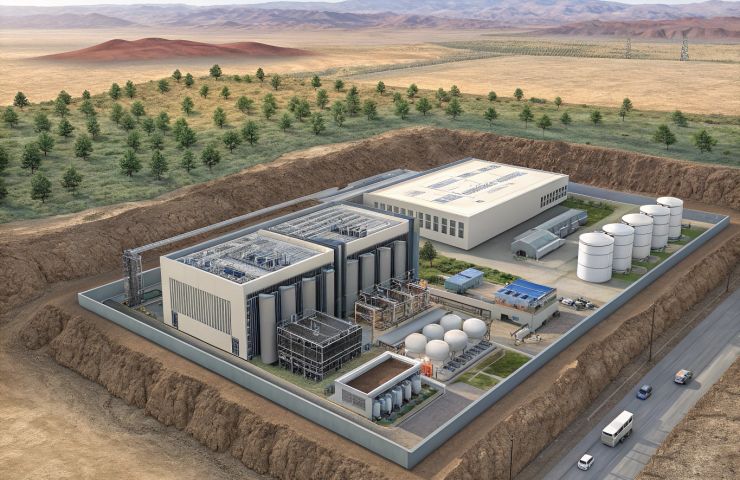
On December 16, 2025, Vema Hydrogen and Verne signed a game-changing 10-year purchase-and-sale agreement to deliver more than 36,000 metric tons of clean hydrogen each year. Starting as early as 2028, Verne plans to fuel its on-site power and cooling systems with what Vema calls Engineered Mineral Hydrogen (EMH). This isn’t your run-of-the-mill green hydrogen—EMH relies on geoscience wizardry to speed up natural reactions deep underground, yielding hydrogen straight from the rocks in gigawatt-scale quantities. It tackles two big challenges in one fell swoop: the need for massive scale and the unpredictability of traditional hydrogen production methods.
Data center operators have tried everything from battery backups to diesel generators, but those either pollute or struggle to keep pace. Industry insiders warn that you can’t keep leaning on the grid forever. Securing massive volumes is half the battle; locking in supply well before demand peaks is the real win. With AI workloads set to mushroom, operators need a baseload fuel that doesn’t vanish when the sun dips or the wind dies down.
Ted McKlveen, co-founder and CEO of Verne, drills down to the heart of the issue: “AI demand is off the charts, and the sector needs scalable solutions like Vema’s EMH to keep up.” By 2030, data center energy use could double globally, gobbling up as much as 8% of the world’s power. McKlveen sees zero-emission technology like deep-earth hydrogen as the linchpin for powering tomorrow’s servers without blowing through carbon budgets.
For Pierre Levin, CEO of Vema Hydrogen, the deal validates years of R&D and highlights the broader promise of sustainable energy. “This agreement shows that data centers can tap affordable, clean power without banking on ever-changing subsidies,” he says. Vema is poised to plug its EMH facilities into the state’s budding hydrogen infrastructure. FPH2’s program will link suppliers with end users across sectors—from hyperscale data centers to municipal fleets—accelerating adoption of clean fuels far beyond this initial pact.
How EMH Turns Rocks into Fuel
Imagine combining geothermal energy and fuel-cell technology. While conventional electrolyzers split water with electricity—leaving folks to question how consistent green hydrogen really is—EMH taps into chemical secrets hidden in subsurface rock formations. Vema injects bespoke fluids, adjusts pressure and temperature, then coaxes hydrogen out of mineral veins. It’s like inviting a genie out of a lamp, minus the fairy dust.
And there’s more: unlike large-scale electrolyzer farms that gulp down vast amounts of water and power, EMH has a smaller surface footprint and sidesteps volatile electricity markets. The outcome is a steady, round-the-clock flow of high-purity hydrogen, perfect for power generators that need to flip the switch on demand. Budgets become easier to forecast, and clients dodge those dreaded price spikes when temperatures soar.
Why California? Strain Meets Solution
California, home to close to 40 million people, has been a poster child for renewable energy but still wrestles with grid reliability. Wildfires, heat waves and drought-driven peak loads turn grid management into a high-wire act. Data centers, as the state’s new energy behemoths, can’t risk server downtime or overheating. Rolling blackouts and sky-high peaker-plant costs are very real threats.
Verne’s answer is straightforward: deploy modular power and cooling packages right on campus, decoupling critical compute from the shaky grid. By hosting EMH-fueled generators on-site, data hubs can slash their carbon footprints and lock in stable fuel costs—especially appealing when state policies or electricity tariffs do a sudden two-step.
And while California’s Low Carbon Fuel Standard and other clean-energy incentives could layer extra credits or rebates on hydrogen sales, Vema stresses its independence: “Our selling point is rock-solid production and stable costs, no matter how policy winds shift,” Levin explains. That kind of certainty could be a game-changer as markets and regulations evolve.
Beyond the Deal: Ripples in the Hydrogen Infrastructure
This partnership is more than a lifeline for data centers—it’s a real-world proving ground for sourcing hydrogen from deep underground. If EMH plants hit their targets for output and uptime, industries hungry for clean alternatives—like steelmaking, cement production and heavy-duty transport—could follow suit. Imagine steel mills tuning into the same deep-earth hydrogen playbook to slash emissions, or trucking fleets filling up in minutes instead of waiting hours for a battery charge.
For California’s nascent hydrogen infrastructure, the Verne-Vema deal signals serious momentum. FPH2’s endorsement of Vema highlights the state’s strategy to diversify its hydrogen supply—embracing green, blue and now “orange” hydrogen mined from rock. If EMH proves its mettle, expect other AI hubs—whether in Texas, Northern Europe or parts of Asia—to explore similar deep-earth projects.
Of course, the true test will be consistency over time. Vema needs to demonstrate that its wells can sustain promised volumes for years without geological hiccups. But if they pull it off, we could be looking at a new frontier in clean industrial energy—one literally mined from the ground up.
Backing the vision are investors like Collaborative Fund, Caterpillar VC, NextEra Energy Resources and United Airlines’ Sustainable Flight Fund, all watching Vema’s progress closely and hinting at more capital as hydrogen production ambitions scale globally.
Looking Ahead
So, what’s next? As AI surges ahead and data centers multiply, companies will hunt for steady, emissions-free fuel sources. With deep-earth hydrogen in their toolkit, players like Verne and Vema could literally redefine the future of sustainable energy. Combine that with ongoing advancements in renewable power and carbon pricing, and you’ve got a compelling hybrid model. In a world where every kilowatt-hour counts, the next big breakthrough might just be buried beneath our feet.


 With over 15 years of reporting hydrogen news, we are your premier source for the latest updates and insights in hydrogen and renewable energy.