
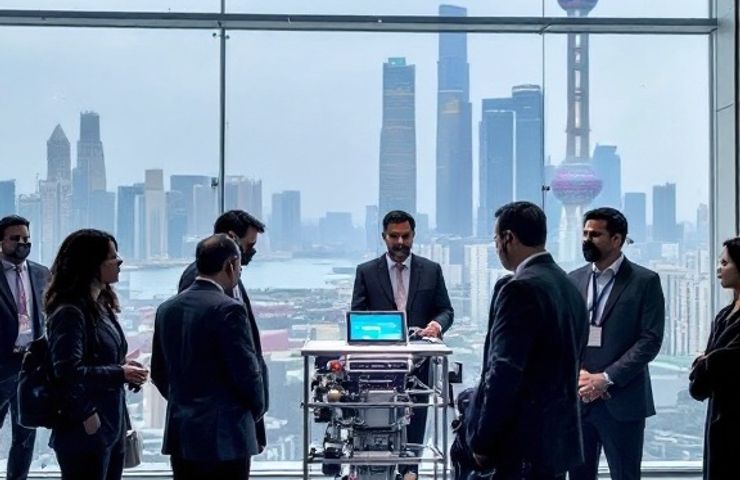
Shanghai’s SHPT Debuts Game-Changing M5X & P5X Platforms
June 22, 2026Right in the bustling heart of Shanghai, where towering skyscrapers mix with innovative industrial parks, something exciting is happening in the world of hydrogen fuel cell news. This city has been paving the way for hydrogen energy and infrastructure pilot programs for years, and now it’s stepping up again with some game-changing developments that could seriously shake up heavy-duty transport and more. This month, Shanghai Hydrogen Propulsion Technology Co., Ltd. (SHPT) introduced two flagship products—the PROME M5X fuel cell stack and the PROME P5X integrated system. They’re touting these as real game-changers for hydrogen vehicles and stationary power applications.
Dynamic Duo: M5X & P5X
The shiny new M5X stack boasts a peak power output of 328 kW, with a remarkable volumetric density of 7.1 kW/L and a mass density of 7.2 kW/kg. What’s even cooler? They’ve managed to cut down the platinum loading to just 0.215 g/kW, effectively tackling one of the biggest cost barriers in PEM fuel cell tech. Plus, this stack can handle a wide temperature range from –40 °C to 95 °C, making it one of the most robust self-humidified stacks out there. All these specs are pushing the envelope for lighter and more compact setups in heavy-duty trucks and industrial power systems.
Then there’s the P5X system, which packs compressors, cooling circuits, hydrogen delivery modules, and power electronics into a sleek 280 kW unit, tipping the scales at just over 1 kW/kg—the first of its kind in China! With a design life of 30,000 hours and an efficiency rating of 51% under real-world highway conditions for a 49-ton truck, fleets can expect real improvements in payload capacity and fuel economy. This is a big leap toward reducing the total cost of ownership for operators keen to transition from diesel to clean hydrogen.
Teamwork Makes the Dream Work
No significant advancement happens in a vacuum. SHPT is closely collaborating with its parent company, SAIC Motor, tapping into their expertise from traditional vehicle platforms to scale up fuel cell integration. Industry leaders from the China Society of Automotive Engineers and the China Association for Science and Technology highlighted how crucial these systems will be for meeting national decarbonization goals. Even folks from the Ministry of Finance made an appearance to see how these innovations align with subsidy frameworks within China’s hydrogen pilot programs. This collective momentum—combining insights from industry, academia, and government—is driving forward the region’s hydrogen project financing and policy support.
Making Waves in Shanghai
Shanghai has already shown how hydrogen vehicles can thrive in challenging urban logistics and public transit. There are over 300 hydrogen fuel cell buses and trucks cruising the city streets every day, all backed by a growing network of fast-fill hydrogen refueling stations. The P5X is ready to power these fleets, but the ambition doesn’t stop there. It’s also destined for hybrid energy storage in industrial parks, backup power for hydrogen data centers, and even remote mining equipment—really bridging the gap between mobility and stationary power. When combined with renewable electrolysis projects, the P5X could help balance peak load profiles and significantly cut down greenhouse gas emissions.
This isn’t just a win for hydrogen production and storage advocates. Picture this: You’ve got surplus wind and solar energy feeding an electrolyzer network, storing green hydrogen on-site, and then dispatching that energy back when the grid needs a little boost, thanks to the M5X or P5X units. It’s a peek into the future of integrated microgrids and resilient green data centers that keep running smoothly even when the lights flicker out.
Looking Ahead: Integration Across Industries
SHPT isn’t just focused on trucks and backup solutions; they’re also rolling out air-cooled, cathode-closed units—the F06 and R300—designed for drones and two-wheelers. This points to a diverse range of hydrogen fuel cell news extending into aviation and last-mile delivery. Through their Hydrogen Product Development Process (HPDP), the company aims to streamline quality across these platforms, making it easier for original equipment manufacturers (OEMs) in emerging sectors. By standardizing interfaces and validation procedures, HPDP could encourage fuel cell adoption in niche markets where battery alternatives fall short due to weight or runtime issues. That’s innovation at its finest, fostering an ecosystem where fuel cell stacks of all types share the same core design principles and testing protocols.
As China ramps up its hydrogen strategy, SHPT’s M5X and P5X series could set the standard for next-gen energy solutions globally. There’s growing interest from logistics companies eyeing zero-emission fleets, microgrid developers searching for long-duration storage options, and even inland shipping operators considering fuel cell generators. When these players come together around proven, high-power platforms, it opens the door to economies of scale that can drive down costs for green hydrogen production and distribution. This collaboration also sparks investment in hydrogen refueling stations, hydrogen storage facilities, and hydrogen project financing initiatives, creating a positive feedback loop. The effects stretch well beyond Shanghai, offering a model for industrial clusters from Europe to North America. It’s a vibrant glimpse into a future where decentralized energy networks use clean hydrogen to connect transport, industry, and power systems.
A Bright Future Ahead
As we witness Shanghai evolve into a major hub for hydrogen infrastructure, the launch of these powerful fuel cell platforms marks an important milestone. It’s a testament to how far the technology has forged ahead—from clunky prototypes to viable replacements for conventional power units. The upshot? Cities and industries are starting to see hydrogen not just as a niche experiment, but as a genuine pathway to cleaner air and more robust energy systems. This shift marks a pivotal moment in the global discussion around sustainable transport and energy generation.
With platforms like M5X and P5X leading the way, we’re getting a clear look at what clean heavy-duty transport and distributed energy storage can look like in action. High-density fuel cell stacks in heavy-duty trucks could reduce CO₂ emissions by tons over their operational lifespan. Industrial parks could use hydrogen-electric coupling to manage peak demand, potentially saving millions in grid upgrades. Data centers, often challenged by backup power issues, might turn to compact PEM systems for quick restarts post-outages. And beyond the figures, this progress hints at healthier cities, enhanced energy security, and fresh economic opportunities across manufacturing and operations.
In the end, the momentum building in Shanghai provides a roadmap for cities and industries worldwide. By blending cutting-edge fuel cell stacks, integrated systems, and supportive policies, stakeholders can transition hydrogen news from pilot projects to mainstream solutions. It’s a path that promises lower emissions, greater energy resilience, and new avenues for growth. As more regions catch on, we’ll witness a wave of innovation driven by collaboration and a shared goal for a greener tomorrow.

 With over 15 years of reporting hydrogen news, we are your premier source for the latest updates and insights in hydrogen and renewable energy.
