Shuangliang Ships 80MW Electrolysers to Boost Oman’s Green Hydrogen Ambitions
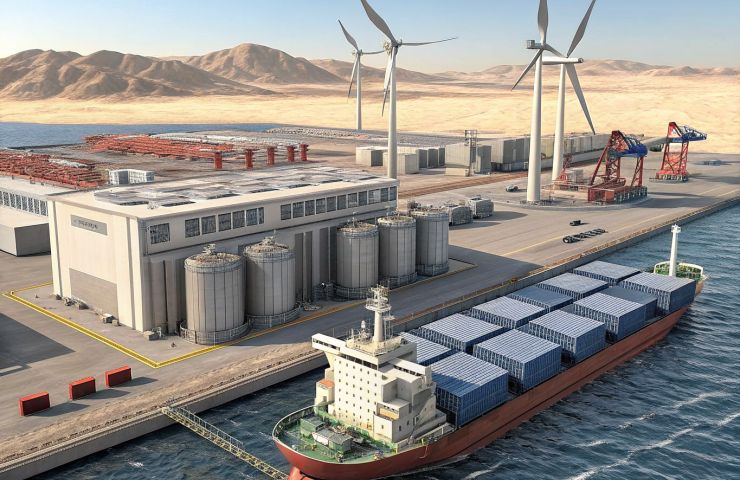
March 10, 2026At first glance, a shipment of electrolyser modules rolling into a Middle Eastern port might look like just another cargo drop-off. But when Shuangliang, one of China’s top electrolyser makers, ships 80 MW of kit to Oman’s up-and-coming green hydrogen hub, you know there’s more to the story. This month, hefty crates stamped with Shuangliang’s logo rolled into the port of Duqm, headed straight for the sprawling sustainable energy and ammonia production complex that India’s ACME Group is racing to finish. More than just equipment, this delivery signals Oman’s pivot away from oil toward a zero-carbon future. With first-phase offtake deals in place and government support firmly behind it, the Sultanate is staking its claim as a major exporter of clean ammonia to Europe.
Core News: Shuangliang has just dispatched 80 MW of electrolysers as part of what’s billed as a 300 MW green hydrogen project in the Duqm Special Economic Zone (SEZAD). Led by ACME Group, phase one is designed to crank out 100,000 tonnes per year of green ammonia, backed by a 15-year offtake deal with Norway’s fertilizer giant Yara. Already, more than half the plant’s under construction and they’re aiming to switch it on late next year. Sources say the setup will tap Duqm’s abundant solar and wind power, push that juice through electrolysis stacks, and then funnel the green hydrogen into an ammonia synthesis loop that meets RFNBO standards for export.
How Electrolysis Powers Green Hydrogen
The heart of any green hydrogen scheme is the electrolyser, the gadget that uses electricity to split water (H2O) into hydrogen (H2) and oxygen (O2). You can imagine it like a reverse electric car battery: when power from solar panels and wind turbines hits the unit, it kicks off a reaction. Water trickles through cell stacks—either proton exchange membrane (PEM) or alkaline types—and an electric current sends hydrogen ions scurrying to the cathode, where they pair up and form H2. Oxygen gets released at the anode. That H2 then gets squeezed and sent downstream to a Haber-Bosch reactor, mixing with nitrogen to churn out ammonia. By packaging the fuel this way, hydrogen infrastructure gets simpler: ammonia’s way easier to store and ship, and since the electrolyser is fed entirely by sustainable energy, you end up with truly zero-emission ammonia for Europe.
Financing and Offtake: ACME’s Strategic Play
Locking in a long-term offtake agreement is the secret sauce for financing big green hydrogen projects. Here, ACME Group nailed a 15-year contract with Yara for the full 100,000 tonnes of phase one ammonia production. That binding deal de-risks the whole gig in lenders’ eyes, clearing the way for a mix of debt and equity financing. Developers say this blueprint can be copied elsewhere—think India or Europe—where ammonia terminals double as hydrogen infrastructure hubs. For ACME Group, Oman offers policy sweeteners and an industrial backbone at Duqm SEZAD, making it a no-brainer launchpad for scaling green hydrogen and ammonia ventures worldwide.
Oman’s Renewables-Led Diversification
The government in Oman has quietly been piecing together its energy transition since the early 2010s, earmarking Duqm SEZAD as a high-stakes industrial corridor. With sky-high direct normal irradiation and decent onshore wind speeds, this spot fits large-scale solar and wind projects like a glove. To reel in developers, they’ve rolled out feed-in tariffs, zero customs duties, and a fast-lane permitting system. By zeroing in on sustainable energy and green molecules, Oman aims to wean itself off hydrocarbons, spark local job growth, and grab a slice of booming global markets. If phase one nails its targets, expansions could stretch the complex well beyond 300 MW of electrolyser capacity, cementing Oman’s spot among top green hydrogen exporters.
China’s Electrolyser Ambitions
This Shuangliang delivery is more than a one-off—it’s part of China’s sprint to lead electrolyser manufacturing. Over the last year, Chinese outfits have scooped up overseas contracts, undercutting rivals with sharp pricing and nimble supply chains. Shuangliang in particular is known for equipping large-scale ventures like Duqm alongside domestic projects. Although Western and Japanese players still hold the efficiency crown, Chinese firms are closing the gap by offering modular designs, faster delivery, and keen after-sales support. The Duqm shipment spotlights China’s growing muscle to feed global green hydrogen demand—a trend that’s only picking up steam as nations chase net-zero targets.
A Middle Eastern Green Hydrogen Race
Duqm isn’t the only game in town. In Oman, TotalEnergies and OQAE are cooking up a 300 MW solar-and-wind combo feeding clean energy schemes, while Saudi Arabia and the UAE are eyeing multi-gigawatt projects in Neom and Abu Dhabi’s Al Taweelah. Across the Gulf, these initiatives bump shoulders, with each claiming bragging rights based on scale, offtake deals, and port access. Oman’s ace is Duqm’s deepwater port—it shaves days off shipping to Europe. Plus, a smaller local market means more output can head straight to export hubs hungry for low-carbon fuel.
Risks and Roadblocks
Of course, it’s not all smooth sailing. Big green hydrogen projects come with hefty price tags, and while electrolyser costs are sliding, they still account for a chunky share of the budget. There are technical hurdles too: stack durability, sourcing enough fresh water, and integrating variable renewables into the grid without tripping breakers. On the market side, demand for green ammonia might grow slower than hoped, and cheaper low-carbon alternatives like blue hydrogen could siphon off buyers. Yet with locked-in offtake deals and government hand-holding, ACME Group and its partners are betting they can navigate these pitfalls.
The Road Ahead
With phase one set to fire up by late next year, everyone’s watching Duqm’s ramp-up. Will the electrolysers hit their design targets? Can the ammonia synthesis loop nail European purity standards? If all goes well, ACME Group and Yara will kick off exports of RFNBO-compliant ammonia in early 2027—a major win for the region. Looking past that, further phases could push capacity well beyond 300 MW, and we might even see green hydrogen corridors linking Duqm with India, Europe, and beyond. If this shipment from Shuangliang marks green hydrogen’s desert breakthrough, the next few years will show just how big this boom can get.
About the Author: The Catalyst
I’m The Catalyst, and I cover everything from hydrogen infrastructure and ammonia markets to the tech and policy twists shaping our sustainable energy future.

 With over 15 years of reporting hydrogen news, we are your premier source for the latest updates and insights in hydrogen and renewable energy.