
Snam Advances 1,900 km Hydrogen Infrastructure
March 19, 2026Don’t let the name fool you: Snam’s latest play is all about green hydrogen. In a move that looks modest—just €200 million sliced out of a €14 billion war chest—it’s really a make-or-break test to see if Europe’s aging gas veins can transform into the backbone of tomorrow’s hydrogen infrastructure.
Core Summary
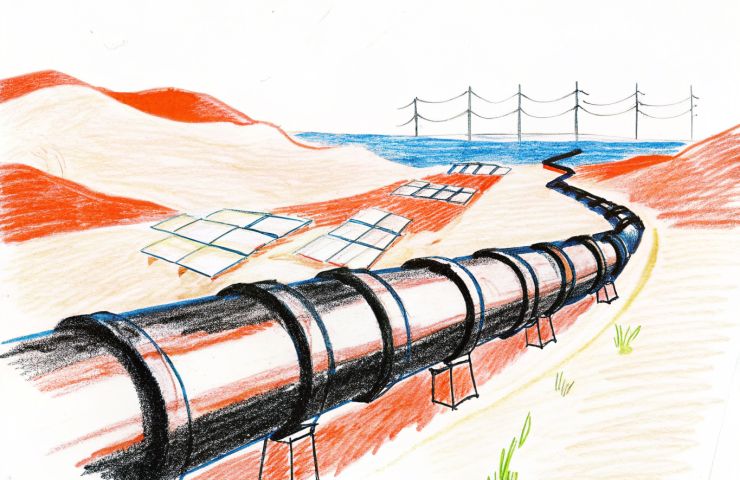
Snam Rete Gas, the pipeline arm fully owned by Snam, is earmarking €200 million through 2030 to roll out a 1,900 km Italian Hydrogen Backbone. Picture a line stretching from sun-drenched Sicily to export hubs in the north, tapping southern solar power to produce renewable hydrogen. Instead of digging fresh trenches every kilometer, around 60 % of the existing network will be re-engineered into a hydrogen pipeline, keeping costs and environmental disruption in check. This initiative is just one slice of Snam’s wider €14 billion plan for 2026–2030, which bundles transport, storage and hydrogen projects into a unified energy transition strategy.
Why It Matters
You might blink at €200 million—after all, Snam hauled in €3.88 billion of revenue in 2025 and posted a €2.97 billion adjusted EBITDA—but this is about rewriting the rulebook on hydrogen infrastructure. By converting old steel arteries instead of building greenfield pipelines, Snam sidesteps a mountain of permits and hefty upfront capex. The European Commission has slapped a Project of Common Interest label on the plan and chipped in a €24 million grant, dovetailing with REPowerEU and the European Green Deal’s net-zero by 2050 ambitions under the umbrella of European decarbonization. After the 2022 energy shock, Brussels is desperate to cut ties with volatile fossil imports. With connections to the SoutH2 Corridor, this backbone could carry up to 4 million tonnes of green hydrogen annually from North Africa, slashing CO₂ in steel mills and refineries across Italy, Austria and Germany, while bolstering EU energy security.
Under the Hood
Retro-fitting a network built for methane is no walk in the park. Hydrogen molecules are tiny troublemakers, prone to embrittle steel, so Snam’s engineers will be out in force running integrity checks, pressure-cycling tests and pipe upgrades to handle high-purity H₂ or blends. Compressor stations get revamped seals, monitoring systems get beefed up, and roughly 1,140 km of lines will need a full retrofit, with fresh pipeline sections filling in the gaps where safety standards can’t be met. Layer in biomethane hookups and the Ravenna carbon capture plug-in, and you’ve got a recipe for technical synergy—if you can pull it off.
Strategic Edge
Europe’s manufacturers won’t hit net-zero by 2050 without a steady stream of clean hydrogen. Italy’s sunny south and industrial north practically beg for an H₂ corridor: solar panels juice electrolyzers down south, and the resulting renewable hydrogen powers blast furnaces and refineries up north. Snam’s backbone will serve as the continent’s main artery, tying into offshore wind farms, salt cavern storage and biomethane networks under its €14 billion 2026–30 blueprint. Plugging into the SoutH2 Corridor also positions Snam as Europe’s southern hub for North African hydrogen flows, aligning neatly with Italy’s national strategy and Green Deal funding.
Historical Context
Snam’s story goes back to 1941, when it was born as a state-run gas manager during Italy’s post-war reconstruction. Over eight decades, it built the backbone of Europe’s gas grid, watching natural gas evolve into a transitional fuel. Now, under CEO Agostino Scornajenchi, Snam is betting on hydrogen as the next bridge in the energy transition, fueled by EU pushes for hydrogen and carbon capture.
Collateral Impacts
Get this right, and Italy’s hydrogen capacity could top 4 million tonnes a year, potentially shaving off 10 million tonnes of CO₂ if paired with low-carbon power. From Taranto to Turin, engineering and construction jobs will pop up, giving local economies a lift. Europe’s energy security scores a win too, cutting dependence on pipeline gas—especially from Russia. Layer on some 20+ green hydrogen plants across Italy in various stages, plus the Ravenna CCS link and biomethane interconnects, and you’ve got a burgeoning ecosystem for clean fuels.
Challenges Ahead
Of course, no plan is bulletproof. Scaling electrolyzers under a desert sun brings water and grid headaches, while Italy’s patchwork of regional regulations could stall permits. Pure hydrogen in vintage pipes raises safety and maintenance bills beyond the retrofit budget. And without rock-solid offtake contracts, banks and investors might hesitate to back the full rollout. It’s a delicate dance between tech, policy and market appetite.
Maverick Take
Here’s my gripe: €200 million is pocket change on Snam’s balance sheet and EU ambitions. If they’re serious, they’ll need clear demand contracts and deeper pockets from private investors or recovery funds. Until I see half a million tonnes of H₂ flowing through those old steel veins, it feels more like a flashy demo than a finished hydrogen pipeline.
Next Steps
Keep an eye out for a flurry of MOUs with North African producers and Italian industry clusters—classic hydrogen theater to build momentum. Snam will push forward with front-end engineering, lock in land rights and aim for a final investment decision by early 2030. Brussels could tweak blending caps and tariffs to sweeten the deal. Suppliers of steel, compressors and sensors should be polishing their pitches right now—this project could define who wins Europe’s clean hydrogen race.
Looking Ahead
Don’t underestimate those legacy pipelines; they could be the fastest lane to decarbonizing heavy industry. But bulking them up for H₂ needs more than engineering chops—it calls for strong market signals, political will and plenty of green electrons fueling those electrolyzers. Snam is betting Europe’s thirst for clean hydrogen stays strong. If it does, these steel veins might just fuel the continent’s zero-emission drive for decades to come.

 With over 15 years of reporting hydrogen news, we are your premier source for the latest updates and insights in hydrogen and renewable energy.
