Telmes to Equip Southern Italy Depot with Hydrogen Refueling Infrastructure
Telmes won a €1.4M contract to install electrical systems for a hydrogen refueling station at Ferrovie della Calabria’s Cosenza depot, supporting hydrogen trains and buses.
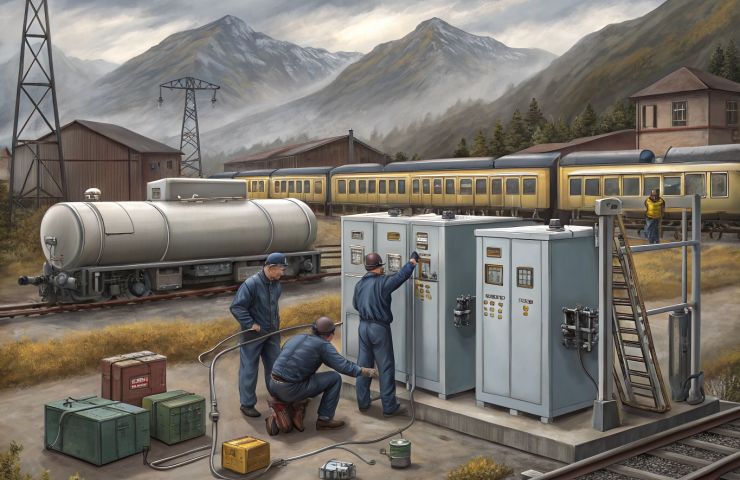
If you’re looking for a real game-changer in southern Italy’s push for sustainable transport, Telmes S.p.A. just made headlines by landing a €1.4 million contract to overhaul the Ferrovie della Calabria maintenance depot at Vaglio Lise in Cosenza. They’re tackling everything from medium- and low-voltage switchboards to new lighting, grounding and cutting-edge control systems—essentially building out a full-fledged hydrogen infrastructure hub. And yes, that includes two train fuel dispensers plus a dedicated bus fueling station to keep the operator’s fuel cell fleet rolling smoothly.
For a depot that’s been chugging along since the late 1980s on diesel, this is a paradigm shift. Ferrovie della Calabria’s narrow-gauge regional network is about to embrace Stadler’s hydrogen-powered trains (ordered in 2023), and the refreshed setup will let those trains—and a future hydrogen bus service—refuel on-site with green hydrogen. It’s one more giant leap toward zero-emission regional travel.
- Hydrogen production onsite via modular electrolysis powered by solar and wind.
- High-pressure hydrogen storage tanks, chilled to –40 °C and compressed to 700 bar.
- Two train dispensers plus a bus line for complete refueling redundancy.
- Custom electrical panels with PLC controls, SCADA integration and real-time safety monitoring.
- Seamless integration with the existing diesel workshop for dual-fuel maintenance.
- Installation wraps up by year-end, with commissioning kicking off early next year.
- Fully aligned with Italy’s National Recovery and Resilience Plan and the EU Green Deal.
Technical overview
It all starts with purified water on-site: that feeds into an electrolyzer stack, which splits H₂ from O₂. The hydrogen then gets compressed, chilled and stashed in IP67-rated, high-pressure vessels—think 700 bar at a frosty –40 °C. Telmes will install medium- and low-voltage switchboards in IP54 enclosures, complete with PLCs, digital I/O modules and a PROFIBUS network. A sleek SCADA interface lets operators dive into real-time data, run predictive maintenance checks and keep the system humming. Safety isn’t an afterthought either: there are grounding systems to dissipate static, gas detectors around the clock and emergency shutdown valves ready to act.
On the dispensing side, units plug straight into train and bus fueling ports, all managed via a central control panel. With backup power supplies and duplicate dispensers, there’s always at least one line live—even when one’s offline for maintenance. That reliability is a must for keeping services on schedule across Calabria’s mountainous terrain.
Strategic context
Italy’s hydrogen ambition really kicked into gear when prototype trains hit Lombardy in 2023. Regional “hydrogen valleys” in Puglia, Abruzzo and Valle Peligna are gearing up with 30 MW electrolyzers to churn out thousands of tonnes of green hydrogen annually. Projects like the Snam-Hera hub and Hera-Eni electrolysis trials show how cross-sector collaboration can power this transformation. Backed by the EU Green Deal and PNRR funds, Italy aims to cut millions of tonnes of CO₂ by 2030 and hit net-zero by 2050. The Cosenza depot upgrade slots perfectly into that strategy, offering a blueprint for non-electrified lines where overhead wires simply aren’t practical.
Business and economic impact
Telmes—listed on Euronext Growth Milan since late 2025—returned to profitability last year after pivoting from water-treatment controls and industrial automation into the hydrogen infrastructure market. They’ve already delivered electrical systems for renewable water and wastewater projects, building a solid reputation for custom panels and SCADA solutions. With around 72 employees, analysts have slapped a ‘buy’ rating on the company, highlighting its hydrogen exposure. Italy’s hydrogen sector could add up to €27 billion to GDP by 2030, create 200,000 construction jobs and 10,000 permanent roles—exactly the kind of boost Calabria has been craving.
Company perspectives
For Telmes, this contract is more than a one-off—it’s a springboard into large-scale clean-energy projects. They’re confident that a successful delivery here will unlock similar opportunities at other transport hubs across Italy and Europe, plus lucrative service and maintenance deals down the road.
Ferrovie della Calabria stresses that a reliable on-site hydrogen supply is non-negotiable if they want to keep trains running on time and break free from diesel. They’re also eyeing track expansions and signaling upgrades, leaning on PNRR co-financing to spread out capital costs and grow their green fleet.
Regional development and policy alignment
Calabria’s GDP per capita trails the national average, and the region has long struggled with infrastructure gaps. Cosenza, home to about 63,000 people, grew up as a 19th-century rail hub but today relies on tourism, agriculture and small-scale manufacturing. That’s why PNRR funds are pouring into green-energy projects—to level the playing field and squeeze every euro from public investment. And let’s not forget Calabria’s terrain is ideal for small-scale hydropower, which could feed renewable electricity into the hydrogen production process.
Operational challenges
Rolling out hydrogen infrastructure isn’t exactly plug-and-play. Electrolyzer components, membranes and high-pressure compressors remain pricey and sometimes hard to source. Balancing intermittent renewables with the grid to power electrolysis adds another layer of complexity. On top of that, southern Italy’s tight labor market means specialized training’s a must for technicians handling high-pressure gas and fuel cell technology. The upfront capex might scare off smaller operators, although the lower opex and stable fuel costs tend to win them over in the long run.
And of course, safety protocols have to be bulletproof: hydrogen’s low ignition energy and broad flammability range demand comprehensive gas detection, grounding and emergency shutdown systems—all certified under national regs at commissioning time.
Environmental impact
Producing green hydrogen on-site wipes out diesel combustion emissions and could save thousands of tonnes of CO₂ based on regional train-km each year. Italy’s targeting up to 8 million tonnes of carbon abatement by 2030 through its network of hydrogen valleys and clean-transport projects. By swapping out fossil fuels on branch lines, the Cosenza upgrade also helps protect Calabria’s stunning landscapes and keeps the region on track for its 2050 net-zero goals. Using local renewables for electrolysis further cuts curtailment and boosts energy independence in the south.
Looking ahead
The Vaglio Lise depot transformation could become the go-to model for non-electrified corridors across Europe. If it clicks, other operators—especially those battling tricky terrain—might follow the same playbook, much like Alstom’s Coradia iLint trains in Germany and Austria, which have chalked up over 1,000 km on a single tank. Add in hydrogen buses and industrial applications, and you get a truly integrated refueling network. With the EU’s REPowerEU strategy and Italy’s net-zero roadmap in view, future funding rounds will almost certainly favor projects that mesh neatly with these big-picture plans.
At the end of the day, for both Telmes and Ferrovie della Calabria, delivering this project on time and on budget isn’t just a nice-to-have—it’s the proof point that smart investment in hydrogen infrastructure can generate real economic and environmental wins for regions that have been waiting in the wings far too long.