Ultra-Long Duration Energy Storage with Solid Oxide Fuel Cell Technology
Noon Energy’s modular reversible solid oxide fuel cell system promises 100+ hour energy storage at under $20/kWh, offering a compact, carbon-based solution for data centers and microgrids, and a potential up to 1 GW deployment with Meta.
Noon Energy is in talks with Meta to bring up to 1 gigawatt of next-level, 100+ hour energy storage to life, thanks to their clever modular reversible solid oxide fuel cell systems. Rumor has it — unconfirmed by either party — that this could be a game-changer for ultra-long duration energy storage, giving data centers and microgrids a steady, clean power lifeline when they need it most.
The gist is pretty straightforward: when the sun’s shining or the wind is blowing, any extra juice gets turned into chemical energy and tucked away in carbon-based storage media. Later, when demand spikes or renewables dip, you just reverse the process to crank out electricity. By leaning on widely available carbon sources and skipping scarce minerals like cobalt or nickel, they’re aiming for a storage price below $20 per kilowatt-hour — now that’s the kind of number that’ll make investors sit up and listen.
What Makes the Technology Tick
At the heart of it all is a modular reversible solid oxide fuel cell power block that can switch hats between an electrolyzer and a fuel cell. In charge mode, it’s like a sponge, soaking up electricity to pull oxygen out of the carbon media and store energy. Flip it to discharge mode, and it breathes in air to push that energy back into the grid. You can stack these power blocks for more oomph or hook up extra storage tanks for even longer runtimes, so it’s super flexible for anything from a small commercial setup to massive grid-scale energy storage projects.
Another neat trick: because power rating and storage capacity live in separate buckets, you’re not stuck paying for extra capacity you don’t need — or vice versa. Want more juice in a pinch? Throw on a couple more power blocks. Need that multi-day buffer? Beef up the storage tanks. That kind of on-demand sizing could radically simplify planning for everything from off-grid sensors to big urban microgrids.
From Mars to Microgrids
You might be surprised to learn that Noon Energy’s roots stretch all the way to NASA’s MOXIE gear on Mars, where solid oxide electrolysis turned Martian CO₂ into life-sustaining O₂. The same trusty ceramics and system tricks made the leap back to Earth, where they’re now tackling our renewable energy storage headaches instead of alien atmospheres. It’s a cool twist — space-age R&D helping keep our lights on down here.
Right in Step with Renewable Demand
Think about data centers, island communities, or off-grid sites that need unflappable power for days when solar panels and wind turbines take a break. Traditional lithium-ion arrays only cover a handful of hours, but this setup — a true ultra-long duration energy storage solution — delivers more than 100 hours of steady juice. Whether it’s emergency backup, grid balancing, or keeping critical loads humming, it’s the kind of renewable energy storage that turns “What if” into “We’ve got this.”
Made in the United States, Made for America’s Future
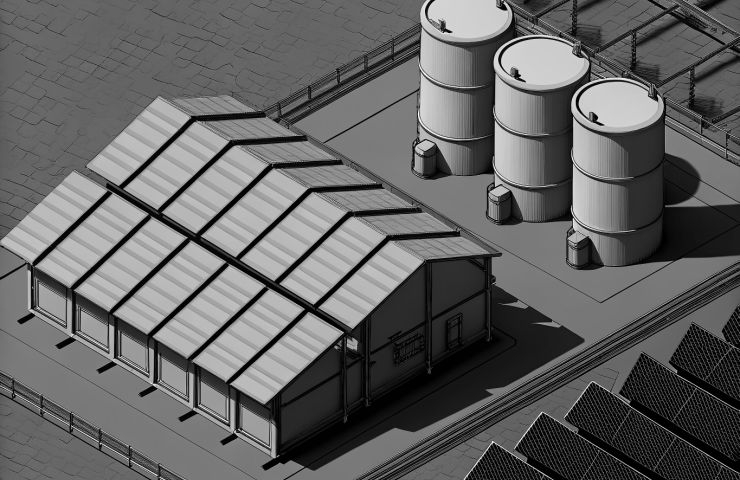
Since its launch in 2018, Noon Energy has kept everything stateside — from R&D benches to factory floors. This month they snagged a temporary use permit in California for a solid oxide storage demo at 350 Demeter Street, where their reversible SOFC system will handle both electrolysis and hydrogen storage in cylinders. By tapping West Coast engineering smarts and local supply chains, they’re doing more than testing tech — they’re kickstarting a clean-tech talent pipeline and laying groundwork for future grid-scale energy storage deployments across the country.
Environmental and Economic Upsides
When you size up the footprint, these reversible SOFC setups crush the competition. They pack about three times the energy density of a typical lithium-ion farm and can be up to two hundred times smaller than some of those sprawling flow battery installations. That means less land, fewer permits, and a smaller environmental handshake.
And since the magic happens with ceramics and carbon-based storage media instead of exotic metals, you sidestep nasty supply-chain headaches and geopolitical jitters. Lower material costs and easier sourcing could make long-duration storage commercially sweet for the first time, unlocking revenue streams from capacity payments to last-resort backup services.
Aligning with Policy and Investment Trends
Across the board, policy-makers and big investors are buzzing about long-duration solutions. Federal incentives, state clean energy mandates, and corporate net-zero pledges are all pointing capital toward projects that boost grid resilience and slash carbon footprints. A proven, scalable renewable energy storage technology that doesn’t rely on critical minerals checks all the right boxes — and it looks like the perfect candidate to tap into the next wave of clean energy funding.
A Forward-Looking Energy Future
We’re really at a tipping point right now — cost and carbon simply can’t be at odds anymore. With solar and wind on one side and heavy-duty power needs on the other, we need a bridge that’s both budget-friendly and earth-friendly. That’s where modular, carbon-based storage media backed by reversible SOFC blocks come in. Picture a future grid that never sleeps, delivering steady electricity even when the sun dips below the horizon or the breeze dies down for days. Sure, Noon Energy and Meta aren’t spilling every single detail of their playbook, but these space-tested systems already show they can handle the toughest conditions — on Mars and beyond. Before you know it, that Martian R&D might just be powering your local microgrid or keeping your data center online. It’s the kind of forward-thinking solution that feels less like science fiction and more like tomorrow’s reality.