
University of Bath and Druck Partner on Cryogenic Hydrogen Storage Sensors for Net-Zero Aviation
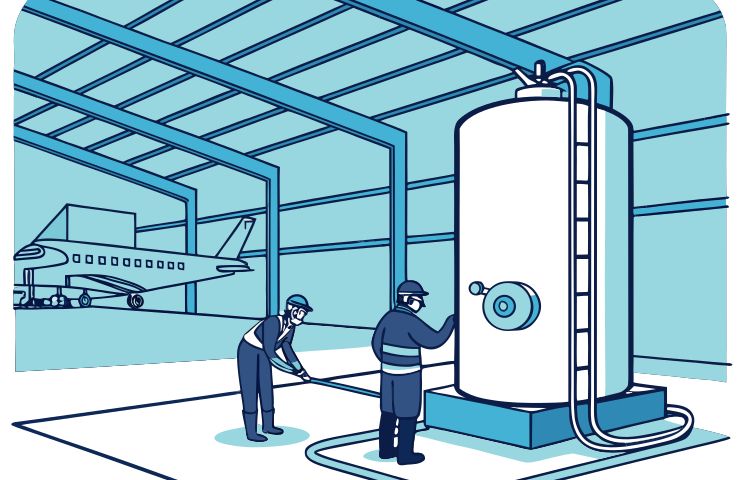
February 9, 2026Ever wondered how we’ll keep planes flying without all that carbon baggage? That’s where the University of Bath and Druck—a Baker Hughes business unit known for its top-notch pressure instrumentation—step in. They’ve teamed up in a Knowledge Transfer Partnership to develop and certify the world’s first flight-qualified cryogenic hydrogen pressure sensors for liquid hydrogen (LH2) storage and transport on aircraft. By blending Bath’s deep expertise in cryogenics with Druck’s clever MEMS sensor platform, they’re tackling a major roadblock in zero-emission technology: accurate pressure monitoring at a bone-chilling –253 °C.
Meeting a Critical Need
Aviation accounts for over 8 percent of the UK’s greenhouse gas emissions, making it one of the toughest nuts to crack in the push for industrial decarbonization. Hydrogen could be the clean jet fuel we’re looking for, but keeping LH2 stable at –253 °C is no small feat—materials contract, electronics glitch, and tiny leaks can slip by unnoticed. Today’s aerospace sensors only hold up down to around –80 °C and aren’t rated for continuous LH2 exposure. Without rock-solid sensors, operators can’t sniff out micro-leaks, verify tank integrity, or squeeze every drop of efficiency out of their fuel. Filling that instrumentation gap is key to ushering in true hydrogen storage for flight.
Technical Approach
At Bath’s Institute for Advanced Automotive Propulsion Systems (IAAPS), researchers have cryogenic test chambers, hydrogen handling rigs, and simulation tools that mimic real-world fuelling cycles. They’ll trial different diaphragm materials, seals, and electronics to fend off embrittlement and keep calibration drift under control through those brutal temperature swings.
Druck is giving its MEMS-based sensor platform a serious upgrade—think hydrogen-proof packaging, shock resistance, and built-in pressure-temperature sensing to auto-compensate for thermal effects. The endgame? Solid, trustworthy data no matter how wild the conditions get.
Calibration runs the full gamut: vacuum through overpressure during refuelling or purges. Every sensor must meet aerospace standards for vibration, electromagnetic compatibility (EMC), and safety certification. Teams are working hand in glove with the European Union Aviation Safety Agency and the UK Civil Aviation Authority to hammer out test protocols.
On top of that, they’re crafting advanced signal processing and diagnostic firmware to filter out thermal noise and vibration artifacts. That level of precision lets them detect leaks down to parts-per-million—vital for maximizing fuel efficiency, cutting hydrogen losses, and keeping flights and ground ops safe.
Strategic Significance
Backed by Innovate UK, this partnership turbocharges innovation from the lab to the hangar. A certified LH2 sensor ready for flight gives UK aerospace firms a competitive edge in the hydrogen aviation boom—trimming time to market and dialing down development risks. It’s a prime example of how a robust hydrogen infrastructure fuels sustainable energy goals.
The UK Hydrogen Strategy and the Aerospace Technology Institute have spotlighted hydrogen storage and distribution as priority areas. Having certified cryogenic sensors on board doesn’t just benefit aircraft—it boosts safety and efficiency at ground-based liquefaction plants and refuelling stations too, tightening up operations across the board.
By strengthening the supply chain in the South West and creating high-value engineering roles, this work also opens export opportunities for sensors and testing services, giving the regional hydrogen ecosystem a shot in the arm. Gordon Docherty, President and General Manager of Druck, stresses that embedding certification milestones from the get-go derisks development, smoothing the route from prototype to full deployment.
Company and Research Context
Since the 1960s, the University of Bath has been building its sustainable propulsion credentials—covering hydrogen production, storage, and utilization—through flagship initiatives like the Bath Beacon. They’re also key players in Future Flight and FETCH projects, all aimed at advancing hydrogen fuel systems for aviation.
Druck brings over 50 years of sensor mastery to the table, with more than half a million aerospace units in service worldwide. Their Leicestershire site is a hotbed for tailor-made solutions in extreme environments, laying the groundwork for cryogenic hydrogen applications.
Professor Carl Sangan leads Bath’s cryogenics efforts, while Druck’s engineers feed real-world test data into sensor firmware, guaranteeing consistent performance across every flight profile.
The Bath Beacon’s ethos—connecting academia, industry, and government—cements South West England’s reputation as a hydrogen research and innovation powerhouse.
Impact Beyond Aviation
These certified cryogenic sensors aren’t just game-changers for aircraft. They can also support space launch propellants and industrial gas networks, offering real-time pressure monitoring that optimizes hydrogen storage and pipeline operations. That cuts downtime, trims maintenance costs, and advances industrial decarbonization.
Widespread sensor rollout means more jobs in manufacturing, calibration services, and maintenance, plus tighter safety protocols across the hydrogen value chain. End users benefit from lower costs, and specialized technician training and fresh R&D in calibration technologies get a boost too.
Looking Ahead
Next on the agenda: design refinements, environmental stress testing, and live fuelling demos. The aim is to secure EASA and CAA certification within two to three years, then make the sensor platform available to aircraft manufacturers and system integrators.
Longer term, the team is eyeing sensor miniaturization, 3D-printed housings, and integration with digital twins for predictive analytics—imagine a plug-and-play module ready for any hydrogen setup.
Conclusion
This partnership is tackling one of the last big technical hurdles to net-zero aviation, setting the stage for safe, efficient hydrogen-powered flights. Flight-certified sensors for LH2 storage will not only underpin a strong, zero-emission transport ecosystem but also showcase the UK’s leadership in hydrogen innovation, offering a blueprint for global adoption of sustainable energy solutions.
source: bath.ac.uk

 With over 15 years of reporting hydrogen news, we are your premier source for the latest updates and insights in hydrogen and renewable energy.
