
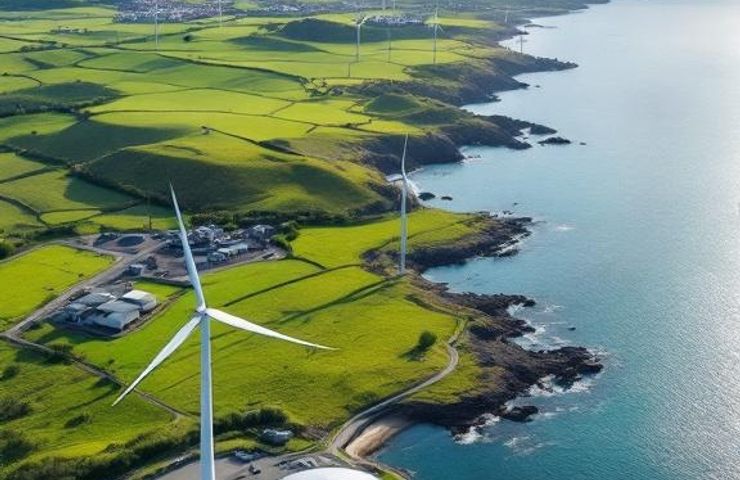
Wales Unveils Strategic Policy Position for Low-Carbon Hydrogen
January 27, 2026As the push for industrial decarbonization accelerates, Wales is betting its future on hydrogen. On January 2026, the Welsh Government rolled out its Strategic Policy Position for Hydrogen, a framework designed to funnel investment into hydrogen production and low-carbon hydrogen production, and chart a course for its use in the toughest-to-electrify sectors.
Policy Driven by Net-Zero Ambitions
Helmed by Cabinet Secretary Rebecca Evans, this plan is Wales’ blueprint for hitting net-zero emissions by 2050 under the Net Zero Wales agenda. It leans on advice from the independent Climate Change Committee and syncs up with UK Government guidance. Rather than mandating one technology, it focuses on meeting the Low Carbon Hydrogen Standard, so innovators have room to experiment.
Leveraging Wales’ Industrial Heritage
Wales’ legacy of coal mining and steelmaking runs deep, but the challenge now is slashing emissions without hollowing out the manufacturing base. This policy taps into the nation’s renewable energy strengths—wind, hydro, you name it—to position low-carbon and renewable hydrogen as the bridge from its industrial past to a greener tomorrow.
Comprehensive Framework to Support Low-Carbon Hydrogen
At its core, the framework requires that every drop of hydrogen hits the UK Government’s Low Carbon Hydrogen Standard. Eligible pathways include:
- Electrolysis powered by renewable or low-carbon electricity;
- Fossil Gas Reforming with CCS, capturing CO₂ from natural gas;
- Biogenic Gas Reforming of biogas from organic waste;
- Biomass Gasification to generate hydrogen-rich streams;
- Gas Splitting Producing Solid Carbon as a byproduct.
Beyond ticking boxes, these methods must sustain real decarbonization, avoid dirty fuels, and propel local economic growth.
Consultation and Stakeholder Input
Before publishing, the government opened a public consultation that closed in May 2025, attracting 62 responses from industry, academia, trade bodies and individuals. Most backed aligning with the UK’s Low Carbon Hydrogen Standard. A few flagged questions about hydrogen’s place in the energy hierarchy of Planning Policy Wales, prompting a promise of extra guidance on planning and land-use.
Economic and Industrial Impacts
Decarbonizing heavy industry isn’t just about cutting CO₂—it’s about jobs and keeping factories humming. Hydrogen projects should create work during construction, operation and maintenance, even if the exact numbers are still being crunched. By giving steel, chemicals and cement new low-carbon lifelines, Wales aims to prevent de-industrialization and capital flight. A core principle is the just transition, ensuring communities built on traditional industries share in the benefits.
Alignment with UK Frameworks
Wales isn’t going it alone. This policy dovetails with UK-wide hydrogen support—think Hydrogen Allocation Rounds and Westminster’s business models—so Welsh developers can tap into national funding streams. Both governments have backed the Climate Change Committee’s view that hydrogen is essential for achieving and sustaining net-zero.
Next Steps and Guidance
In the months ahead, the Welsh Government will work with UK regulators to keep its approach in step with updates to the Low Carbon Hydrogen Standard. It also plans to spell out how the energy hierarchy in Planning Policy Wales applies to hydrogen developments. Rollout will proceed through existing planning consents and environmental safeguards, balancing speed with community and ecosystem care.
Looking Ahead
By staking its claim on low-carbon hydrogen, Wales is shooting for the forefront of sustainable energy innovation in the UK. As more electrolysers come online and carbon capture matures, this framework will face its toughest test: real-world projects. If it succeeds, Wales could hand other regions a playbook for slashing industrial emissions without sacrificing economic vitality—or the jobs that depend on it.
 With over 15 years of reporting hydrogen news, we are your premier source for the latest updates and insights in hydrogen and renewable energy.