BAM Launches ModuH2Pipe to Advance Hydrogen Infrastructure Testing
Europe’s first full-scale hydrogen pipeline testbed, ModuH2Pipe, is now operational in Brandenburg, offering real-world safety validation to support rapid, de-risked hydrogen infrastructure rollouts.
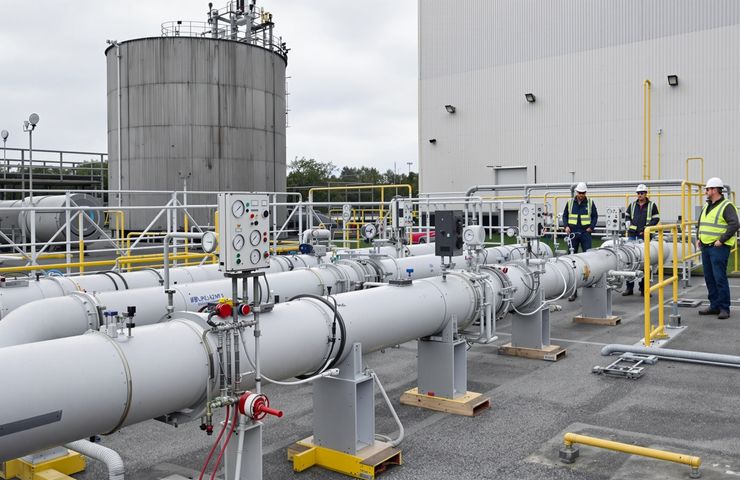
The German Federal Institute for Materials Research and Testing, known as BAM, has unveiled ModuH2Pipe, a fantastic new laboratory that's all about testing hydrogen pipelines in real-world conditions. Located at BAM’s Test Site for Technical Safety near Baruth/Mark in Brandenburg, this place puts pipe sections through the wringer, subjecting them to pressure cycles that mimic all sorts of scenarios, from start-ups to failures. They’re testing pressures that range anywhere from 10 bar to a whopping 900 bar! This is a big deal for anyone involved in hydrogen infrastructure in Germany and across Europe.
Creating Real-World Test Environments
So, what's cool about ModuH2Pipe? It features adjustable pipe sections up to five meters long and with diameters hitting up to 1,400 mm. They’ve organized these sections into three practical modules: H2Compatibility, H2Safety, and H2Quality. The operating module cycles hydrogen, or blends of hydrogen and natural gas, between low and high pressures—10 to 85 bar—to mimic a typical day in the life of a pipeline. And for the safety module? It cranks the pressure up to 900 bar to really push valves, seals, and fittings to their limits until they fail. Plus, BAM’s labs conduct thorough material and gas analysis, checking for things like embrittlement and leak propagation. It’s like a full-on health check for the hydrogen pipes!
Enhancing Monitoring with Tech
But that’s not all; ModuH2Pipe is also bringing some serious tech into the mix with advanced sensors and analytics. They’ve got fiber-optic strain sensors, ultrasonic leak detectors, and electrochemical hydrogen sensors that can give real-time performance updates along the pipeline. Researchers can even introduce controlled contamination—like adding tiny amounts of water or oxygen—to study how it affects sensor accuracy. They’re gathering heaps of data on pressure, temperature, and gas composition throughout these cycles, which feeds into machine-learning algorithms designed to forecast failures or suggest when to perform maintenance. This clever use of integrated sensing really tackles one of the biggest challenges in hydrogen networks: keeping an eye on things over long distances without getting false alarms.
Collaborative Approach to Testing
Now, here’s where it gets even better: ModuH2Pipe isn’t just a research hub; it operates as a service platform. Various players—grid operators, manufacturers, and certification bodies—can book test campaigns tailored to their needs. BAM plans to team up with industry groups, universities, and standardization bodies to co-create test protocols that line up with international certification schemes. This means partners can tap into a government-backed, neutral environment that spans the entire value chain—from material testing to sensor development. As the hydrogen market gears up, this service model could really help cut down on the costs of developing new products while speeding up how long it takes to get them to market.
Why This Matters for Hydrogen Infrastructure
The launch of ModuH2Pipe comes at a pivotal moment for Europe's energy transition. We’re transitioning from just planning to actual construction, and backers want guarantees that operations will be safe before they invest big bucks in these multi-billion-euro pipelines. The data generated here can help reduce technical risk premiums, influence insurance costs, and support project financing for this burgeoning hydrogen infrastructure. The €3.8 million investment in this lab highlights a trend of public institutions stepping up to provide the testing facilities that might be too costly for the private sector to build on its own. In the long run, adopting standardized protocols and data-driven designs could streamline approval processes, lower costs, and speed up the rollout of zero-emission hydrogen networks.
What’s Next and the Bigger Picture
BAM, with its rich experience in materials research, is in a unique position to influence regulatory processes. Its H2Safety@BAM center pools expertise in materials compatibility, safety, certification, and more—all aligned with national and EU policy goals. The approved hydrogen core network by the Federal Network Agency and the EU’s fresh market regulations call for standardized safety validation, which ModuH2Pipe is ready to provide. The data collected could help shape regulations on inspection intervals, leak rates, and how to react in case things go wrong.
In the short term, BAM is gearing up for a slew of test campaigns—everything from evaluating new high-strength steel alloys to testing polymer seals and valves under intense pressure changes. Looking further down the line, they might even host multi-operator ring tests where different sensor technologies compete side by side to see which performs better. The success stories from this could shine a light on small failures that often slip under the radar during smaller tests. However, if they uncover weaknesses, it might mean that companies need to rethink their designs or operations, pushing the envelope on how quickly they can get started safely and effectively. This "fail-safe" mindset could save future costs and funding by catching issues before they escalate.
And it’s not just Germany keeping an eye on things; regulators and industry leaders in other countries are watching closely, too. Similar test facilities have been proposed in places like France and the Netherlands, but none quite hold a candle to ModuH2Pipe in terms of scale and flexibility right now. As Europe pushes for cross-border hydrogen corridors, linking imports from the North Sea to production hubs in the East, having a shared set of data will be key to ensuring consistent safety standards and integrated network planning.
While ModuH2Pipe doesn't generate hydrogen itself, it plays a crucial role in ensuring that low-carbon or green hydrogen production can be transported safely. Reducing leaks is vital for hitting those lifecycle emissions targets set by the European Commission’s renewable gases directive and justifying investments in hydrogen production like electrolysers and storage solutions.
With ModuH2Pipe now up and running, Europe has set the stage for a robust, full-scale testing ground for hydrogen pipeline safety. By turning material science theories into practical engineering data, this lab lays the foundation for speedier approvals and standardized processes, all while paving the way for a stronger hydrogen infrastructure network throughout the continent.