EBARA Opens World’s First Liquid Hydrogen Pump Test Center in Japan
EBARA has launched the Futtsu District 2nd facility in Japan, the world's first test center for liquid hydrogen pumps, aimed at advancing hydrogen infrastructure.
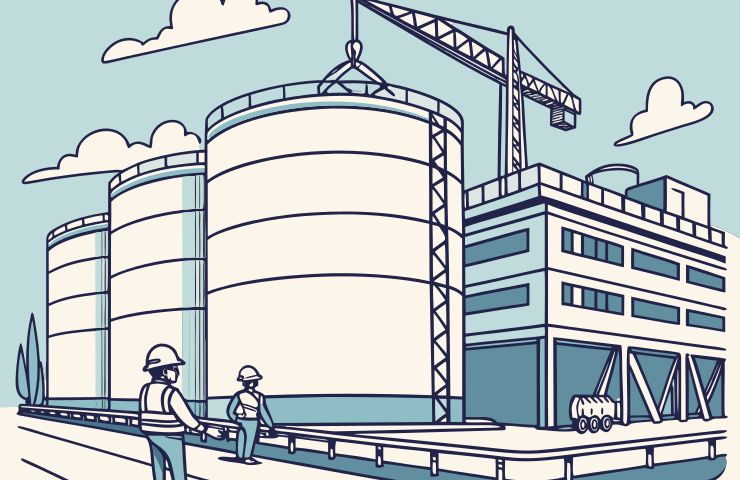
EBARA CORPORATION has officially launched the Futtsu District 2nd facility in Chiba Prefecture, a site dedicated to testing liquid hydrogen pumps at commercial scale. The opening is this month’s milestone in a move that couples testing capability with manufacturing under one roof. It is not simply a laboratory; the facility is presented as an operational platform where pieces of the hydrogen supply chain can be examined together, under realistic conditions. That combination — testing plus manufacture — is central to the message EBARA is sending about the maturation of hydrogen infrastructure in Japan and beyond.
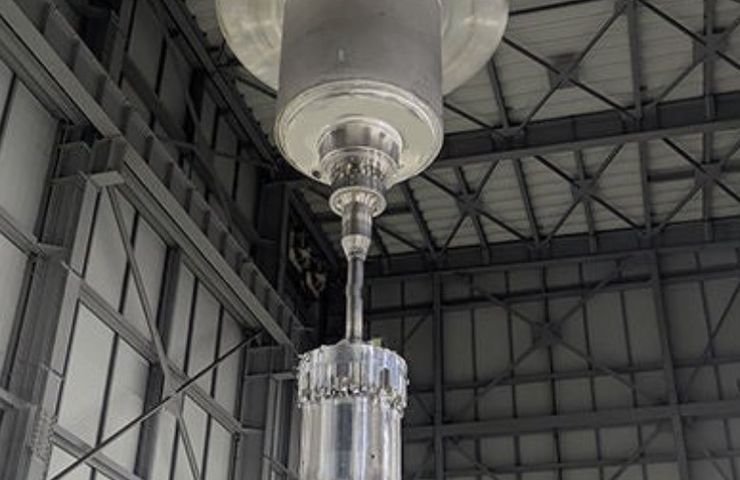
The installation incorporates two named elements: E-HYETEC, a system designed to test liquid hydrogen pumps using actual liquid hydrogen at approximately -253°C, and E-HYEFAB, its manufacturing counterpart. E-HYETEC runs pumps with real cryogenic fluid rather than simulants. E-HYEFAB sits alongside it, intended to translate development outputs into producible components. Together they form an integrated setup that EBARA says will shorten the path from product development to delivery. The stated rationale is straightforward: certain demands of liquid hydrogen applications cannot be validated through conventional trial means, and co-located testing plus fabrication is meant to close that gap.
The facility’s remit covers a range of equipment. Booster pumps, cryogenic return-gas blowers and fluid systems will be tested under full operational loads to assess their behaviour in conditions that mirror real-world service. According to EBARA, such rigorous conditions help identify performance issues before products reach critical hydrogen supply points, including terminals and refueling stations. The approach, the company frames it, reflects an industry requirement for equipment that performs reliably and safely when scaled up from prototype to commercial use. That emphasis on operational realism is a recurring theme in the design brief for the site.
In terms of scale, the Futtsu facility spans approximately 18,000 square meters and houses a complex intended not only to test but also to manufacture components judged critical for the hydrogen supply chain. The physical footprint is meant to support both experimental work and volume-driven production processes. EBARA links this ambition to Japan’s wider policy direction: the country’s hydrogen strategy was notably revised in 2023 to focus on industrial competitiveness and public-private investment, a change the company positions as part of a national push toward a sustainable hydrogen economy. The Futtsu site is described as a practical expression of those policy priorities.
Viewed strategically, the opening of Futtsu sits alongside broader shifts in hydrogen production and deployment. As the world moves toward clean hydrogen, EBARA highlights how the facility responds to evolving demands for validated cryogenic systems. The company notes Asia’s late entry into this domain and frames Futtsu as a step in the region’s effort to catch up: a place where long-standing pump expertise meets testing conditions designed to produce confidence in operational reliability. In EBARA’s account, that synergy — experience in pump technology combined with stringent test regimes — is intended to support deployments of cryogenic systems that are essential for low-carbon energy projects.
This new facility is presented as a critical enabling technology, one that could matter beyond Japan’s borders. It embodies, in EBARA’s terms, a commitment to validating the technical requirements of hydrogen infrastructure at a scale and intensity meant to simulate commercial service. At the same time the company acknowledges wider benchmarks: while development at Futtsu is promising, comprehensive market deployment and cost-effectiveness remain the true metrics for success. Closing the gap between development and deployment, the company says, will require ensuring both safety and reliability as it moves products toward supply points and broader markets. For EBARA, navigating that evolving landscape will be a test in itself — one that will demand technical rigor, manufacturing discipline and attention to the competitive pressures shaping hydrogen supply chains.