European Commission Opens Consultation to Reinforce EU Hydrogen Strategy
The European Commission has launched a consultation to reshape the EU's hydrogen policy, focusing on building a competitive hydrogen value chain and aligning policies with renewable energy. Stakeholder inputs will be identified until November 23, 2026.
The European Commission has opened a four-week consultation intended to reshape the bloc’s hydrogen policy as it moves from setting targets to putting them into practice. The call for evidence begins in late October 2026 and is open to citizens, organisations and industry experts. Contributions must be submitted by November 23, 2026.
At stake is a strategy that the Commission says should deliver a more robust and competitive European hydrogen value chain. The document under consultation aims to give investors greater stability and predictability while aligning hydrogen policy with the renewable-energy framework out to 2040. Reducing dependence on imported fossil fuels is a stated strategic rationale behind the renewed focus on hydrogen.
Key Objectives of the Consultation
The review revisits the bloc’s original Hydrogen Strategy from 2020, which set out ambitious deployment goals. Back then the EU targeted at least 40 GW of renewable-hydrogen electrolysis capacity and 10 million tonnes of renewable hydrogen production by 2030. Implementation has proved difficult. High costs, regulatory complexity and uncertain demand were cited as key obstacles.
The current consultation is intended to probe those obstacles and to test whether the existing targets remain realistic in light of stakeholder input. Responses could affect future approvals for hydrogen production projects, the planning of infrastructure and the effectiveness of instruments designed to support the market.
The Role of Technologies in Achieving Hydrogen Goals
Central to the consultation is the technology used for hydrogen production. Renewable hydrogen is produced by a process known as electrolysis, which uses renewable electricity to split water into hydrogen and oxygen. Under EU guidance, that method qualifies as a renewable fuel of non-biological origin (RFNBO).
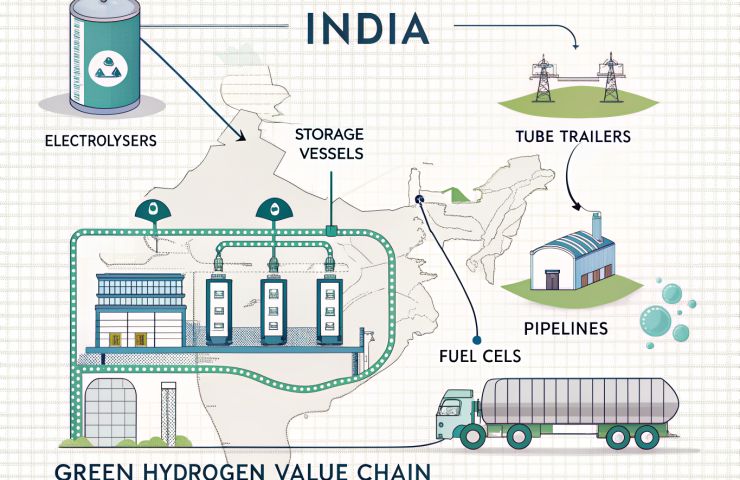
Electrolysers themselves are singled out as a critical determinant of how efficiently and at what scale hydrogen can be made. These devices convert electrical energy and water into hydrogen and oxygen and are therefore fundamental to any large-scale deployment. How fast and how cheaply electrolysers can be manufactured and scaled will help define the pace of the hydrogen roll-out.
Strategic Implications for the Industry
The consultation also frames the discussion in financial terms. The EU has already put in place instruments intended to underwrite early projects. The European Hydrogen Bank has allocated more than €1 billion to hydrogen projects aimed at boosting renewable production and reducing financial risk. In addition, the Innovation Fund hydrogen auction is set to provide another €500 million for emerging hydrogen initiatives.
Those commitments highlight how policymakers want to crowd in private investment alongside public support. A coherent policy framework could lower production and operational costs, strengthen supply chains and accelerate adoption of hydrogen technologies. Speaking to industry experts, many see this as a necessary move to mitigate risks for investors and stimulate market confidence in hydrogen-related projects.
Environmental and Regulatory Considerations
Environmental criteria are a recurring theme in the consultation. Renewable hydrogen is presented as a way to cut emissions, particularly in sectors that are difficult to electrify directly. But the draft consultation also flags the need to ensure that hydrogen production meets lifecycle emissions standards and remains genuinely renewable.
To that end, the exercise may result in revised approaches to hydrogen certification, more rigorous lifecycle emissions accounting and tougher compliance requirements under environmental rules. Regulators will be looking to balance the ambition to scale up production with the need to guard against greenwashing and to ensure that reported emissions savings are credible.
Looking Ahead: The Future of the EU Hydrogen Strategy
As the consultation proceeds, the Commission will collect stakeholder views that could lead to a comprehensive recalibration of its hydrogen strategy. The responses could shape the next phase of policy, from how projects are approved to the instruments used to support market creation. The final decisions will be pivotal for how the EU advances industrial decarbonisation and scales green hydrogen production.
For industry participants, the consultation represents a moment to influence rules that will determine investment conditions for years to come. For policymakers, it is an opportunity to reconcile past ambitions with the practical realities of deployment and to refine mechanisms intended to mobilise finance and technology. The outcome will help determine whether hydrogen can be rolled out at the scale and pace the EU envisages.
In short, the launch of this consultation marks a consequential phase for the EU’s hydrogen ambitions. Stakeholders now have until November 23, 2026 to submit evidence and arguments that could steer the bloc’s approach. The process aims to make the pathway for green hydrogen production and use clearer — and to ensure that any future strategy is technically credible, financially viable and environmentally robust.