SANY Hydrogen Wins Additional Alkaline Electrolyser for Da’an Green-Ammonia Project
Shanghai Metals Market reports SANY Hydrogen won an award for an additional 1,000 Nm³/h alkaline electrolyser at the Da’an green ammonia facility in Jilin, highlighting expansion and procurement uncertainties.
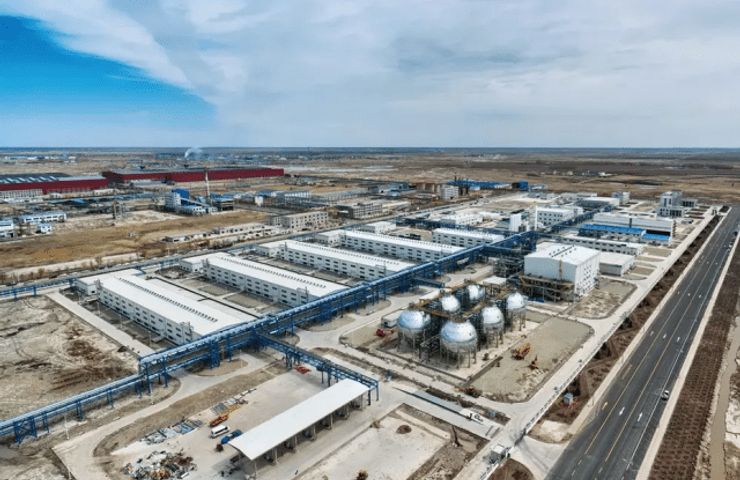
SANY Hydrogen Energy Co., Ltd. was reported to have received an award notice for one additional 1,000 Nm³/h alkaline-water-electrolysis hydrogen-production unit for the Da’an wind-and-solar green-hydrogen-to-ammonia demonstration project in Jilin Province. The reported winning price was 6.33 million yuan, though the primary procurement documentation has not been independently published.
Project Background and Original Award
SANY Hydrogen Energy Co., Ltd., a subsidiary of SANY Group specializing in alkaline and PEM hydrogen-production equipment, announced in April 2023 that it had secured a contract to supply eight 1,000 Nm³/h alkaline electrolysis units to Da’an. The development is sponsored by the State Power Investment Corporation in partnership with Jilin Electric Power Co., Ltd., forming an integrated chain of wind and solar generation, water electrolysis, hydrogen storage and ammonia synthesis.
According to SPIC materials and government-linked reporting, the Da’an site features 800 MW of dedicated renewable capacity, comprising roughly 700 MW of wind turbines and 100 MW of photovoltaic panels. Jilin Electric Power Co., Ltd. publications indicate that operations commenced in July 2025. Project sources list design outputs of 32,000 tonnes of renewable hydrogen and 180,000 tonnes of green ammonia per year, with ammonia slated for industrial feedstock and potential export markets.
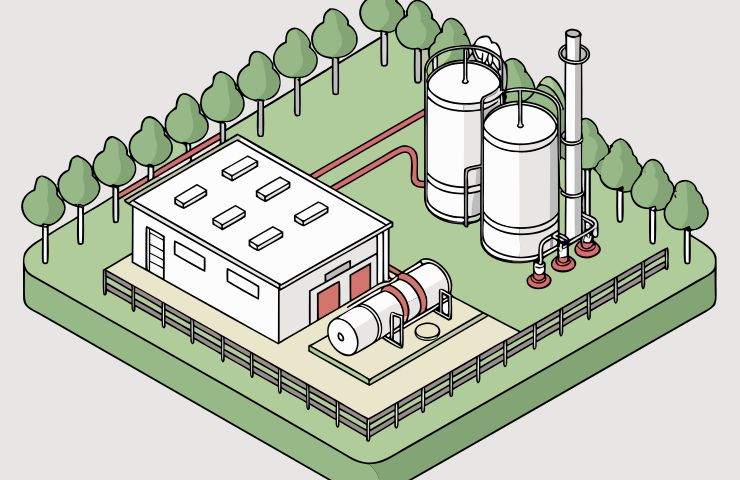
The facility sits within the western Jilin Da’an Clean Energy Chemical Industrial Park near Liangjiazi Town. It is configured to integrate on-site electrolysers with hydrogen storage tanks that buffer the system and help reconcile variable renewable input with the continuous needs of ammonia synthesis.
Recent Procurement and Uncertainties
According to the Shanghai Metals Market project tracker, the new award notice covers one further 1,000 Nm³/h alkaline electrolyser, described as a repeat purchase following SANY’s original delivery. The tracker aligns the reported price of 6.33 million yuan per unit with broader market benchmarks for large alkaline electrolysers, though precise cost breakdowns remain undisclosed.
No public record has identified the exact contracting entity within the SPIC or Jilin Electric Power structure for this additional unit. The tracker also notes that an earlier electrolyser tender section was suspended before this award, creating a procurement-history inconsistency that warrants clarification through official tender records or contract filings.
Technology Context
According to the International Energy Agency, alkaline water electrolysis uses direct current to split purified water into hydrogen and oxygen via an aqueous alkaline electrolyte such as potassium hydroxide. It is a commercially mature technology with generally lower capital cost than proton-exchange-membrane electrolysis, though it offers less flexibility under rapidly changing power inputs.
Public descriptions of Da’an indicate a hybrid electrolyser configuration. Alkaline stacks supplied by SANY are paired with PEM systems from alternate vendors to balance capital cost and operational responsiveness. Hydrogen produced by electrolysis is compressed and stored on-site, then combined with nitrogen from an air-separation unit in a catalytic ammonia-synthesis loop, as outlined by the U.S. Department of Energy. Unreacted gases are recycled, and liquid ammonia is condensed, stored and transported under stringent safety controls.
Strategic Significance
China’s medium- and long-term hydrogen-energy plan for 2021–2035, issued by the National Development and Reform Commission and the National Energy Administration, sets a target of 100,000–200,000 tonnes per year of renewable hydrogen by 2025. The Da’an demonstration project was launched under this policy framework to validate large-scale integration of variable renewable power, electrolysis, hydrogen storage and chemical synthesis in support of national carbon-peaking goals for 2030 and carbon-neutrality goals for 2060.
Stakeholders have described Da’an as one of the largest integrated green-ammonia efforts in China, reflecting Jilin Province’s ambition to become a hydrogen hub in northeast China. The reported additional electrolyser could signal confidence in the technology’s performance. It could also reflect redesign needs or capacity adjustments. Either way, the outcome will influence equipment demand forecasts for electrolyser manufacturers and inform policy decisions on scaling similar facilities.
Policy and Financing Landscape
Under China’s national hydrogen demonstration programme, projects like Da’an may qualify for policy support and subsidies, including preferential grid access, fiscal incentives and carbon-credit mechanisms, as outlined in government guidelines. The demonstration status reportedly unlocks central and provincial funding channels, potentially involving SPIC equity, state-backed loans and green-credit facilities. However, public disclosures have not detailed the financing breakdown, leaving uncertainties about capital expenditure allocation and operating subsidies.
About SANY Hydrogen Energy
SANY Hydrogen Energy Co., Ltd. markets both alkaline and PEM electrolyser systems for grid-connected and off-grid applications. The company describes its strategy as supplying large-scale hydrogen systems for renewable-power deployments and highlights R&D and manufacturing facilities in Hunan Province. SANY Hydrogen’s growing order book, including original and additional Da’an awards, reflects its push to capture demand under China’s hydrogen-energy plan. Long-term competitiveness will depend on validated project performance, evolving cost curves and expanded delivery capacity.
Operational and Market Challenges
Green ammonia production is electricity-intensive, with renewable electricity costs representing up to 80 percent of production expenses according to independent analyses. The Da’an facility must manage curtailment risks, water treatment for electrolysis feedstock and seasonal water availability. Securing reliable ammonia offtake agreements—potentially with fertiliser producers or maritime-fuel purchasers—will be critical to financial viability.
Grid integration challenges include balancing electrolyser operation with local grid stability and limiting renewable-power curtailment. Safety protocols for ammonia storage and handling involve leak-detection systems, secondary containment and emergency-response planning. Independent observers emphasize that credible low-carbon certification and transparent lifecycle-emissions accounting are essential for market acceptance and export competitiveness.
Outlook and Next Steps
The reported new electrolyser order adds complexity to the unfolding narrative at Da’an. Observers will look for official procurement notices, contract awards, delivery schedules and commissioning updates to confirm whether the additional unit proceeds as an expansion, replacement or optimisation measure. Verified data on electrolyser utilisation rates, actual hydrogen output and ammonia throughput will be critical to assessing the project’s technical and commercial success.
Beyond Da’an, outcomes will shape China’s broader hydrogen infrastructure roadmap, inform electrolyser-supply chain development and influence market confidence in green ammonia as a viable industrial-decarbonization vector. Stakeholders will also watch for progress on domestic and international certification standards for clean ammonia, which will determine export potential and pricing dynamics in global markets.