Green Hydrogen Production: Perdaman Appoints Electric Hydrogen for 750 MW PEM Electrolyser in Karratha
Perdaman has selected Electric Hydrogen to provide up to 750 MW of PEM electrolyzers for Project Helios, aiming to blend green hydrogen with natural‐gas processes at its Karratha urea plant and advance industrial decarbonization through large‐scale electrolysis and solar PV integration.
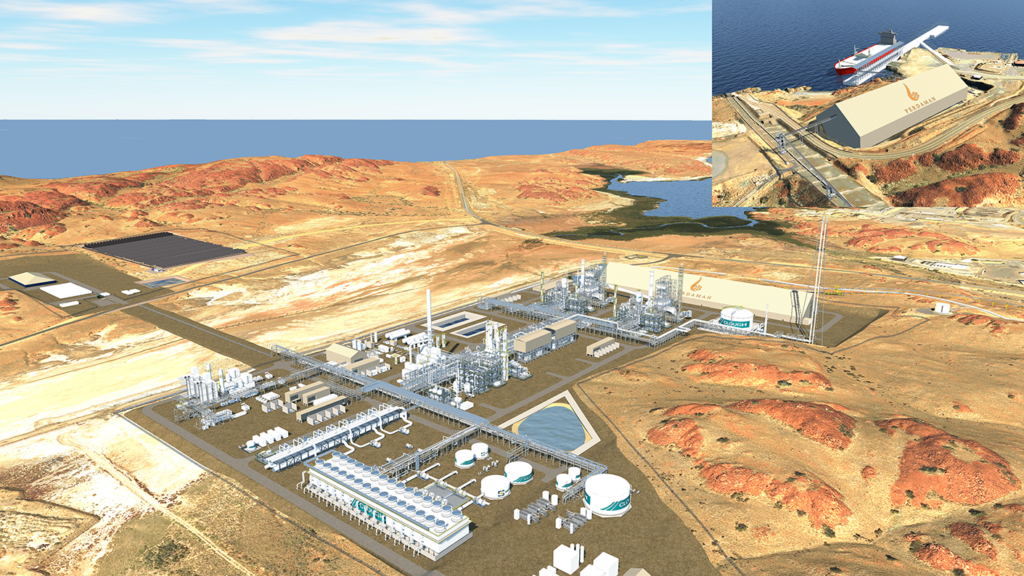
In the heart of Western Australia’s Pilbara region, where the sun blazes down on red rocks and ancient Aboriginal art coexists with bustling gas terminals and chemical plants, a game-changing green hydrogen initiative is on the horizon. The Perdaman Group has tapped Electric Hydrogen as their go-to supplier for high-power proton exchange membrane (PEM) electrolysers. This partnership is part of Project Helios, a renewable project that aims to drastically cut emissions at the Karratha urea facility, which produces a whopping 2.3 million tonnes of urea annually, also known as Project CERES.
This collaboration is all about leveraging the strengths of both companies. Perdaman Commercial Developments is in the process of constructing Australia’s largest granular urea plant on the Burrup Peninsula. They’ve got a solid 20-year gas supply deal with Woodside as well as a long-term offtake agreement with Incitec Pivot. Meanwhile, Electric Hydrogen, based in Massachusetts, has been making waves for its innovative 100 MW HYPRPlant PEM systems. These modular units combine power conversion, water treatment, gas processing, and thermal management, making them perfect for producing green hydrogen at an industrial scale. In the second stage of Helios, Perdaman plans to deploy up to 750 MW of these electrolysers with the backing of over 1 GW of solar energy, which will significantly reduce reliance on fossil gas to manufacture ammonia and urea.
Phase 1 of Helios kicked off with a 30 MW solar farm that now supplies renewable energy to the CERES plant. But Phase 2? It’s a whole new ball game. Early research suggests that by pairing over 1 GW of solar power with clusters of 100 MW HYPRPlant modules, the project could generate more than 120 tonnes of green hydrogen daily. That’s enough to cut Scope 1 emissions by hundreds of thousands of tonnes of CO₂-equivalents each year, plus it will help reduce local NOₓ and particulate pollution.
The Mechanics of PEM Electrolysis
At the core of Electric Hydrogen’s offering are their high-current-density PEM stacks. Picture a solid polymer membrane that keeps hydrogen and oxygen separate while conducting protons under DC voltage. Water gets oxidized at the anode into protons, electrons, and oxygen. Then, the protons move through the membrane and meet with the electrons at the cathode to form hydrogen gas. By stacking hundreds of these cells into compact 100 MW HYPRPlant units, Electric Hydrogen balances scalability and flexibility. The integrated systems for rectification, compression, purification, and heat management mean they can quickly adapt to changing solar input without losing efficiency.
From Gas to Green Feedstock
As it currently stands, Project CERES uses autothermal reforming (ATR) to turn Scarborough gas into hydrogen-rich syngas, which then goes through shifting and purification processes for creating ammonia via the Haber-Bosch method before being granulated into urea. Although ATR is quite efficient, it does come with a heavy carbon price, releasing an estimated 650,000 tCO₂-e each year. By blending green hydrogen from Helios into the mix, there’s a real opportunity to lower the carbon footprint, with projections suggesting that this could help dodge tens of millions of tonnes of CO₂ emissions over an 80-year period.
Policy Incentives and Hub Infrastructure
Project Helios stands to gain from Australia’s Hydrogen Production Tax Incentive, which offers a refundable $2/kg for renewable-based hydrogen starting in 2027 and running until 2040. Plus, there's the Hydrogen Headstart initiative, which underpins early large-scale projects. The Renewable Hydrogen Strategy from Western Australia and the Pilbara Hydrogen Hub—backed by a hefty AUD 140 million in joint state and federal funding—are laying the groundwork for shared pipelines, port upgrades, and training facilities. There’s even a proposed hydrogen/ammonia pipeline that aims to transport up to 492,000 tonnes a year, connecting various projects while minimizing redundancy. Studies indicate that the levelized cost of hydrogen in Pilbara could hit US$3.38/kg, making it some of the most affordable hydrogen in the country.
Strategic Stakes for Perdaman and EH2
Perdaman, led by CEO Vikas Rambal, has been granted Major Project Status federally and declared a Project of State Significance in WA. This recognition backs up a massive A$6 billion investment, which is set to create nearly 2,000 construction jobs and around 200 ongoing operational roles. Electric Hydrogen isn’t lagging either; they've secured over USD 600 million from investors like bp Ventures, Fortescue, and Breakthrough Energy Ventures. With a gigafactory in the U.S. and large-scale supply agreements with AES and New Fortress Energy, rolling out EH2’s HYPRPlant in the Pilbara’s challenging climate will really put its performance to the test, especially in areas with high temperatures and significant cultural heritage.
Balancing Heritage and Emissions
Murujuga’s rock art, an invaluable Aboriginal cultural treasure, has sparked quite the debate around industrial activities on the Burrup Peninsula. The WA Environmental Protection Authority has mandated ongoing air quality monitoring and proof that the weathering rates of these ancient artworks aren’t increasing. Many view Project Helios as a potential solution, aiming to cut down greenhouse gases and NOₓ emissions. However, detractors warn that relying on partially integrating hydrogen still leaves us dependent on fossil gas and might not fully deal with the cultural concerns surrounding the site.
Outlook
If Phase 2 of Project Helios fulfills its promises, it could pave the way for a model of industrial decarbonization worldwide. It would demonstrate that large-scale green hydrogen production and robust hydrogen infrastructure can successfully retrofit existing chemical plants. Yet, there are still hurdles to overcome: securing land and heritage approvals, constructing over 1 GW of solar PV, managing both grid and off-grid power flows, and sticking to stringent monitoring protocols. For investors, regulators, and the clean hydrogen sector as a whole, how things unfold in Karratha over the next few years will be a crucial indicator of whether green hydrogen can genuinely transform hard-to-abate industries.