NEDO & Kyoto University Fast-Track Hydrogen Fuel Cell R&D with BL34XU Beamline
NEDO and Kyoto University are building BL34XU, the world’s first hydrogen-focused beamline at SPring-8-II, to slash R&D cycles and accelerate hydrogen fuel cell and electrolysis research.
If you’ve been keeping an eye on the world of hydrogen fuel cell research, you’re in for some exciting news—Japan's stepping it up a notch! Thanks to a collaboration between NEDO and Kyoto University, we’re about to see the launch of BL34XU, a brand new synchrotron beamline at the upcoming fourth-generation SPring-8-II facility in Hyogo Prefecture. This isn’t just any old lab setup; it’s being hailed as the first resource that’s built solely for hydrogen energy materials. What’s more, it’s set to deliver an impressive thirtyfold boost in our ability to analyze fuel cells and water electrolysers in real time.
Fast Facts
Building on a Legacy
The story behind SPring-8 goes way back to the time when Japan chose Harima Science Garden City to house its premier third-generation synchrotron. Since its debut in 1997 with a mere 10 beamlines, the facility has exploded to over 60 lines, covering everything from medical imaging to industrial applications. Now, with backing of around 499 billion yen from the government, SPring-8-II is set to upgrade the storage ring, cutting down on power consumption while prepping for future challenges. BL34XU will mark the first entirely new beamline on this revamped ring, solidifying Kyoto University's role alongside NEDO in the country's research and development efforts.
Why It Matters
This isn’t just another shiny lab setup; it’s a game-changer for Japan’s hydrogen infrastructure. With ambitious goals for lowering green hydrogen production costs and ramping up demand, the research and development scene has been hitting some snags. Innovations like new catalysts, membranes, and stack designs typically need to pass through multiple facilities—a cumbersome process. BL34XU streamlines this ordeal by bringing together X-ray absorption, diffraction, tomography, and scattering on a single platform. Throw in some AI-driven analysis, and you’ve got a hub aimed at slashing development time and trimming costs.
It’s even got a funding boost, starting with 7.2 billion yen in FY 2025 under a NEDO program, and this aligns perfectly with Japan’s Green Innovation Fund. If the country wants to hit its goal of around $3/kg for hydrogen production by 2030, improving methods and durability of fuel cells is crucial. This beamline could be just the catalyst (pun intended!) the industry needs to stay competitive with European and Chinese efforts.
Under Japan’s Basic Hydrogen Strategy, they’re aiming to hit around 20 million tonnes per year by 2050. However, critics are cautioning against becoming overly reliant on fossil-derived hydrogen. The detailed data from BL34XU could help pivot towards genuine low-carbon methods by optimizing the catalysts and membranes used in water electrolysis with renewable energy inputs—essentially closing the gap between laboratory breakthroughs and large-scale implementation.
Pressure-Cooker Technical Dive
Sitting atop SPring-8-II’s multi-bend achromat lattice, BL34XU directs ultra-bright X-rays into two main experimental hutches. The first one houses operando cells that test membrane electrode assemblies or electrolysis units under realistic loads. Multiple detectors work in concert, capturing X-ray absorption fine structure (XAFS), X-ray diffraction (XRD), and even nanoscale porosity and particle aggregation data. And at 100 keV, the beam can penetrate full stacks to uncover hidden defects.
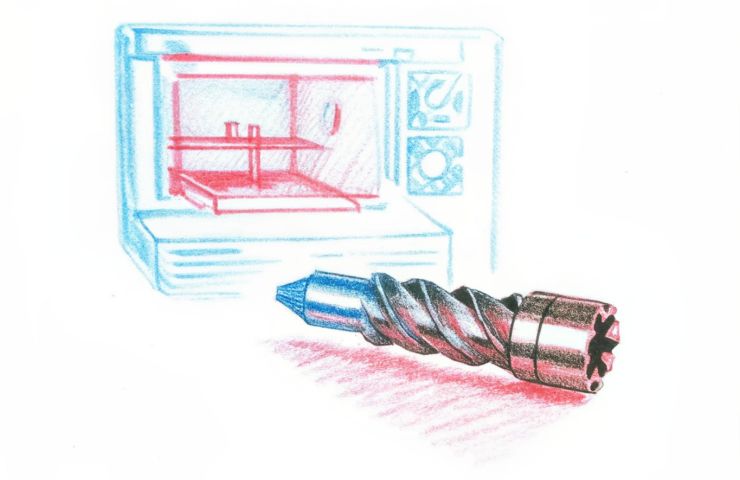
The neighboring manufacturing hutch is basically a mini production facility. It features catalyst ink mixers, coaters, and ovens operating under laminar flow, while computed tomography (CT) and laminography keep an eye on how the microstructure develops as the films dry and cure. All this data feeds back into machine learning models to spot degradation or deviations before they throw a wrench in a prototype run. It blends synchrotron analysis with pilot-scale process engineering, all tailored for hydrogen fuel cells and electrolyser modules.
Strategic Angle
NEDO is touting BL34XU as a national common platform, co-funded with Kyoto University and run through JASRI’s user program. RIKEN’s involvement in the SPring-8-II upgrade guarantees that this beamline will enjoy a significant increase in brightness while reducing power consumption. This partnership boosts Japan’s R&D strength without dramatically changing the global synchrotron landscape. Industry players—from automakers to utilities—are queuing up for advisory slots, keen on research related to hydrogen storage and fuel cell stack optimization.
Since 1997, JASRI has been at the helm of SPring-8's user programs, and they plan to integrate BL34XU into their public-access framework. This means both academic and industry folks can request beamtime along with national projects. With 57 beamlines currently operational, adding BL34XU diversifies the offerings and showcases confidence in the importance of hydrogen to Japan's energy future. RIKEN’s year-long shutdown starting in late FY 2027 sets the stage for installation, with collaborative operations expected to kick off in FY 2029.
Competition Check
Europe's ESRF-EBS and the US’s forthcoming fourth-generation upgrades promise similar brightness, but few have integrated operando multimodal analysis with inline manufacturing. Meanwhile, China’s high-energy synchrotron projects are still in the works without a clear agenda for hydrogen research. If NEDO’s “world's first” claim holds true, BL34XU could become the poster child for integrated hydrogen research infrastructure. In this race, the real challenge isn’t just photon flux but how quickly developers can go from ink formulation to performance mapping and back.
Maverick Analyst Take
Let’s keep it real. A fancy beamline speeds up data collection, but it’s not a magic bullet for issues like supply chain hiccups or high-scale costs. Japan excels at building research platforms, but turning insights into competitive products remains a challenge. The value of BL34XU hinges on companies being bold enough to redesign stacks based on real-time feedback—and actually reducing the cost of ownership for hydrogen infrastructure and fuel cell systems. Without that, it risks becoming just a costly microscope with limited market payoff.
Don’t forget about the bureaucratic hurdles. Even with JASRI’s user program, beamtime can be competitive. You’ll need solid collaboration proposals and clear industry backing to secure your spot. And then there’s the data load—expect hundreds of gigabytes per run across various modalities, which could strain workflows if labs don’t update their data handling systems. Once the high-tech microscopy is wrapped up, it’s important to remember that the real world is about costs per kilowatt-hour, not just cool diffraction patterns.
What’s Next?
Researchers should get their proposals ready now if they want to lock in their beamtime before FY 2029 rolls around. Policymakers and investors will be closely watching to see if the outputs from this beamline actually lead to lower costs for electrolyser projects and greater reliability in fuel cell fleets. The real test of BL34XU’s potential isn’t just how bright its X-rays are, but how effectively it can help drive down hydrogen costs and ramp up the rollout of zero-emission technologies.