Hydrogen Fuel Cell News: Hong Kong Approves Two New Cross-Boundary Trials
Hong Kong’s government approves two new hydrogen fuel cell vehicle trials for cross-boundary freight, raising total projects to 40 under its hydrogen development strategy.
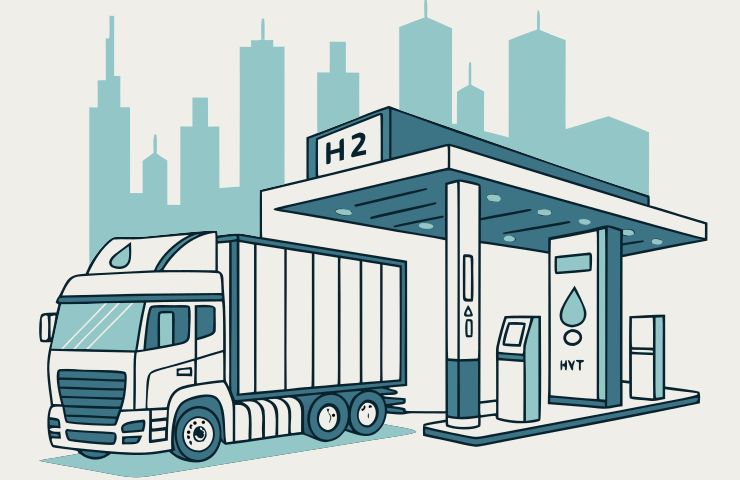
In a sign of mounting momentum across hydrogen news and green hydrogen news, Hong Kong’s Environment and Ecology Bureau has announced that the Inter-departmental Working Group on Using Hydrogen as Fuel has granted agreement-in-principle to two fresh trial projects. Led by Global Money Limited and Guofu Hydrogen Energy (Hong Kong) Development Co., Limited, these trials will test the performance of two hydrogen fuel cell articulated vehicles and one cold chain truck in cross-boundary freight services. With this latest approval, the total count of endorsed hydrogen energy trials in the city has reached 40, marking a significant step forward in local hydrogen fuel cell news and the broader transition toward a low-emission transport network.
These cross-boundary initiatives align with Hong Kong’s commitment to exploring hydrogen production methods and scaling up hydrogen storage methods to resolve logistics challenges where battery-electric solutions face limitations. By injecting practical experience into policy and infrastructure planning, authorities aim to evaluate key factors like refuelling efficiency, vehicle durability and safety compliance at border checkpoints, all within the dense urban fabric and tight land constraints characteristic of the Hong Kong Special Administrative Region.
Strategic Framework and Historical Context
Hong Kong’s coordinated push into hydrogen transport began in 2022 when the SAR Government established the Inter-departmental Working Group on Using Hydrogen as Fuel to oversee trial approvals, regulatory development and technical guidance. In mid-2024, the city unveiled its Strategy of Hydrogen Development, which sets out clear objectives to promote hydrogen use in sea, land and air transport and prepares for legislative amendments covering hydrogen production, storage, transport and application.
Since then, the Working Group has progressively greenlit trial projects across a range of modes. By 2023, it had signed off on hydrogen fuel cell double-deck buses and light rail trains, demonstrating the technology’s adaptability to mass transit routes. Additional initiatives have included tube trailers for mobile refuelling and stationary fuel cell systems for construction sites, indicating a multi-modal strategy that feeds real-world data back into policy design. The Working Group brings together over a dozen bureaus and departments—including the Transport and Logistics Bureau, Planning Department, Lands Department and Marine Department—to ensure every angle of hydrogen application is covered.
Technical Standards and Safety Guidelines
A critical pillar of Hong Kong’s trial programme is the suite of technical guidelines developed by the Electrical and Mechanical Services Department. These include the Code of Practice for Hydrogen Fuelled Vehicles and Maintenance Workshops, the Code of Practice for Hydrogen Filling Stations, and guidance for quantitative risk assessments of hydrogen installations. Each code lays out rigorous requirements for high-pressure hydrogen storage vessels, leak detection systems, ventilation controls and emergency shutdown procedures to mitigate the risks posed by hydrogen’s flammability and pressure levels.
In practical terms, vehicle operators must ensure onboard tanks meet strict integrity standards, that dispensing nozzles lock and seal correctly during refuelling, and that monitoring equipment triggers automatic isolation at preset thresholds. The Buildings Department reviews station designs for compliance with construction safety codes, while the Security Bureau vets emergency response plans. The Electrical and Mechanical Services Department, with input from the Fire Services Department, also conducts training workshops and emergency drills to validate response plans and ensure first responders are prepared for hydrogen-related incidents. Through trial feedback, these standards will be refined continuously, embedding lessons learned and global best practices into Hong Kong’s regulatory framework.
Project Details: Articulated and Cold Chain Vehicles
The newly approved trials cover two distinct heavy-duty applications. Global Money Limited will introduce two hydrogen fuel cell articulated vehicles, designed to handle high payloads across long hauls. These tractors and trailers store compressed hydrogen at pressures of 350 or 700 bar and convert it via fuel cell stacks into electricity that powers the vehicle’s electric motors. A small battery buffer manages regenerative braking and transient loads, ensuring smooth operation and rapid refuelling at dedicated hydrogen refueling stations or via tube trailers.
Meanwhile, Guofu Hydrogen Energy (Hong Kong) Development Co., Limited will field one hydrogen fuel cell cold chain vehicle, equipped with a refrigerated body for temperature-sensitive cargo. In this case, the fuel cell system can supply power both to the traction motors and the refrigeration unit, eliminating reliance on auxiliary diesel generators. Such integration is critical for perishable goods transport, where precise temperature control and low noise are essential.
Supporting Infrastructure and Logistics
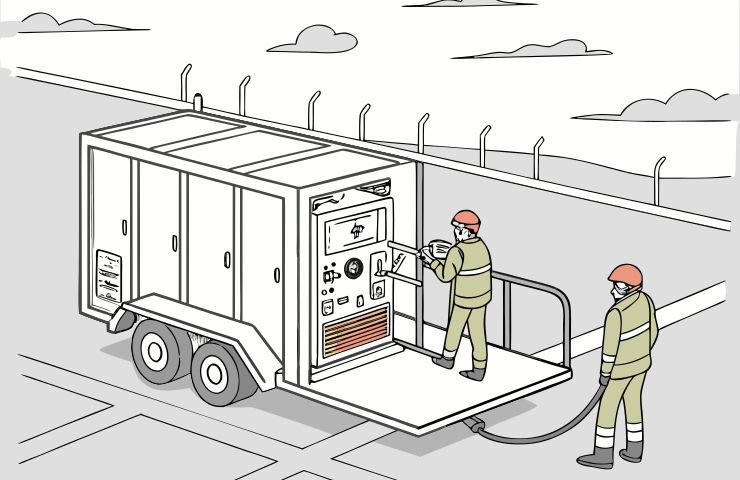
To enable these tests, the city is building or designating hydrogen storage and dispensing facilities that meet EMSD’s separation distances and hazard control criteria. Hydrogen arrives by tube trailers or pipelines to local storage hubs before being compressed into high-pressure vessels. Dispensing units then transfer the gas to vehicle tanks, with system controls ensuring precise pressure ramping and temperature management. In land-constrained urban areas, the government is exploring compact station layouts and partnership models to embed hydrogen infrastructure within existing transport depots.
Cross-boundary runs add another layer of complexity. Vehicles must navigate border checkpoints under the Cross Boundary Transport (Third Country Cargo) Ordinance, requiring coordination between the Transport Department, Customs and security agencies. These trials will reveal how well hydrogen operations integrate with established cross-border logistics flows and where procedural adjustments might be needed.
Funding and Regulatory Pathways
Hong Kong has set aside resources to encourage early adoption through funding vehicles like the New Energy Transport Fund, which subsidises hydrogen buses and heavy vehicles, and the Construction Innovation and Technology Fund, which has earmarked over HK$2.2 billion for pilot projects including hydrogen power systems on building sites. Public support helps offset the higher capital expenditure for fuel cell systems and refuelling infrastructure until production scales up and cost curves improve.
On the legislative front, the government is preparing amendments to the Gas Safety Ordinance and related regulations, targeting a bill submission to the Legislative Council by 2025. Insights from the 40 trial applications will inform these changes, ensuring the legal framework evolves in step with technology developments and operational realities on the ground.
Anticipated Outcomes and Challenges
Operational data from the trials will shape decisions on scaling up hydrogen adoption in Hong Kong and within the wider Greater Bay Area. Successful runs could bolster confidence among fleet operators and investors, laying the groundwork for broader hydrogen project financing and the import of low-carbon hydrogen from mainland China and overseas. A mature refuelling network may create new clusters of technicians and engineers specialising in high-pressure gas systems, generating skilled jobs in hydrogen storage, transport and maintenance.
Environmental gains hinge on the supply chain. While fuel cells emit only water vapour at the tailpipe, the full climate impact depends on how the hydrogen is produced. Transitioning to green hydrogen production will be critical for delivering genuine life cycle emission reductions, while local air quality improvements along busy corridors could reduce health risks linked to diesel particulates and nitrogen oxides. Regulatory or technical hurdles identified through the trials will highlight areas for improvement, whether in station siting, safety management or cross-border procedures.
As Hong Kong charts this course, it remains to be seen how hydrogen will fit alongside other low-emission alternatives like battery-electric trucks. Yet by systematically testing real-world use cases and refining its regulatory approach, the city is positioning itself at the forefront of clean energy transport in a region defined by intensive logistics and dense urban spaces. This iterative, data-driven strategy reflects Hong Kong’s commitment to aligning with global best practices and to unlocking the potential of hydrogen as a resilient, low-carbon fuel. These efforts dovetail with Hong Kong’s broader ambition for carbon neutrality by 2050 and complement initiatives like green data centers and electric mass transit under the territory’s decarbonisation roadmap.