Hydrogen Infrastructure Bottleneck Threatens Europe’s Zero-Emission Truck Rollout
VDA warns that Europe’s zero-emission truck rollout risks stalling due to insufficient high-power charging and hydrogen refueling infrastructure, calling for urgent funding, regulatory reforms, and public-private collaboration.
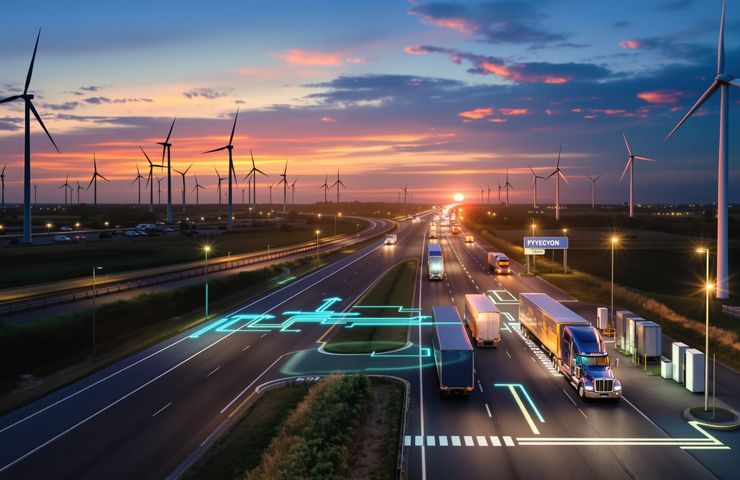
The German Association of the Automotive Industry (VDA) has sent out a serious wake-up call: Europe’s shift towards zero-emission heavy-duty vehicles could derail thanks to a lack of robust charging and hydrogen refueling infrastructure. In a press release dated August 31st, VDA pointed out that Germany currently has just 88 public truck charging sites, featuring a mere 355 fast-charging points. When you look at Europe as a whole, there are only around 730 heavy-duty chargers operating above 350 kW, which is just a drop in the bucket compared to the tens of thousands that experts say we’ll need by 2030. The situation for hydrogen refueling is equally concerning, with only a few hundred stations built for long-haul hydrogen vehicles. VDA argues that without a quick and coordinated expansion of both public networks and depot connections, meeting EU CO₂ standards and decarbonizing the industry will likely be impossible.
Infrastructure Gap by the Numbers
The National Centre for Charging Infrastructure (NLL) is gearing up to deploy fast-charging points at 351 motorway locations by 2030, planning to roll out around 1,800 Megawatt Charging System (MCS) connectors along with 2,400 Combined Charging System (CCS) plugs. However, industry experts warn that this effort falls way short of what’s actually needed. According to VDA, just Germany will require approximately 4,000 public MCS chargers and close to 14 GW of aggregated capacity to support a ramping fleet of battery-electric trucks—currently, public expansion plans cover merely 2.6 GW, which is less than 20% of what’s projected.
Looking at the EU level, the European Alternative Fuels Observatory (EAFO) has documented around 730 fast-charging points for heavy-duty vehicles, yet ACEA argues we need at least 35,000 MCS plugs and 50,000 fast chargers suitable for trucks by 2030. This glaring mismatch between installed infrastructure, official plans, and actual industry requirements paints a worrying picture that could put the brakes on large-scale fleet electrification.
Policy Framework and AFIR Targets
The Alternative Fuels Infrastructure Regulation (AFIR) has set some pretty ambitious binding targets for alternative fuels infrastructure along the Trans-European Transport (TEN-T) network. Under AFIR, member states are required to establish dedicated heavy-duty vehicle charging pools that have a minimum combined power of 3.6 MW every 60 km on the main corridors and to set up hydrogen refueling stations with a capacity of at least 1 tonne per day and 700 bar dispensers at least every 200 km. This regulation, which kicks in from April 2024, is the first serious attempt to ensure that infrastructure development keeps pace with demanding vehicle CO₂ targets.
But here’s the catch: AFIR has already seen slow progress. Getting permits for grid connections can take over a year, and national funding for heavy-duty chargers often comes too little too late. In Germany, the existing budget for corridor networks and tender cycles isn’t aligning with the high capital required for megawatt-level facilities, which has VDA sounding the alarm about the need for regulatory updates and faster public funding processes.
Germany's 2026 hydrogen station funding scheme has set aside about €220 million, which, while a good start, pales in comparison to station construction costs estimated between €3 and €6 million for each site. VDA suggests that we need to quadruple national budgets and work in tandem with EU recovery funds to meet the scale of what's required.
Hydrogen Refueling Bottleneck
For hydrogen fuel cell trucks to thrive, they need an extensive network of high-capacity refueling stations capable of handling heavy volumes every day. According to the Clean Hydrogen Observatory, Europe currently has only a few hundred hydrogen stations, and even fewer are suited for heavy-duty trucks. VDA predicts we’ll need around 2,000 hydrogen stations for trucks by 2030, including about 300 in Germany, each able to dispense 2 tonnes or more daily.
However, there are significant hurdles to overcome, like the hefty upfront costs—often between €3 million and €6 million per station—complicated logistics for delivering compressed or liquid hydrogen, and uncertain utilization rates. Without commitments from fleet operators to use these stations, investors are left holding weak business cases, making it tough to ramp up green hydrogen production, proper storage, and the entire hydrogen supply chain that’s crucial for low-carbon heavy-duty transport.
Business Risks and Market Implications
These uncertainties intensify the ongoing debate about hydrogen fuel cell vs battery electric powertrains, where the availability of infrastructure is pivotal for total cost of ownership and planning for operations. On the flip side, early adopters who invest in fully integrated charging and hydrogen refueling setups could snag significant advantages, like lower energy costs and valuable partnerships with OEMs and fleet operators.
Parallel Trends: EU vs. Member State Plans
ACEA is pushing for a pan-European network that includes at least 700 hydrogen stations each with a capacity of 6 tonnes per day, alongside 35,000 MCS plugs by 2030. Some member states have rolled out corridor maps, but there’s a wide disparity in coverage and funding levels. France eyeballs 70 hydrogen hubs by 2029, while the Netherlands aims for 15 MCS sites by 2027. Germany's NLL plan is one of the most developed but still needs to scale up significantly to meet industry stress tests and actual duty-cycle data.
This hodgepodge approach highlights the urgent need for better coordination at the EU level, with standardized tender models and cross-border interoperability to keep freight moving smoothly across Europe, without infrastructure gaps slowing things down.
Next Steps: Funding, Regulation and Collaboration
VDA is urging lawmakers and industry players to:
As the IAA Transportation 2026 fair approaches, all eyes will be on whether policymakers and grid operators can match VDA’s sense of urgency with actual commitments. Those in the know anticipate that conversations at the event could yield actionable roadmaps and new funding promises, paving the way for the heavy-duty sector to finally hit its zero-emission stride.
Without urgent, coordinated efforts to boost hydrogen refueling stations and megawatt charging infrastructure, Europe may find itself missing its climate goals—and the heavy-duty transport revolution could stall once it’s barely off the ground.