Hyundai Motor Group Showcases Hydrogen Ecosystem at World Hydrogen Expo 2026
Hyundai Motor Group's recent showcase at the World Hydrogen Expo 2026 highlighted its commitment to hydrogen technologies, featuring the 2027 Hyundai NEXO and advancements in infrastructure that support the hydrogen economy.
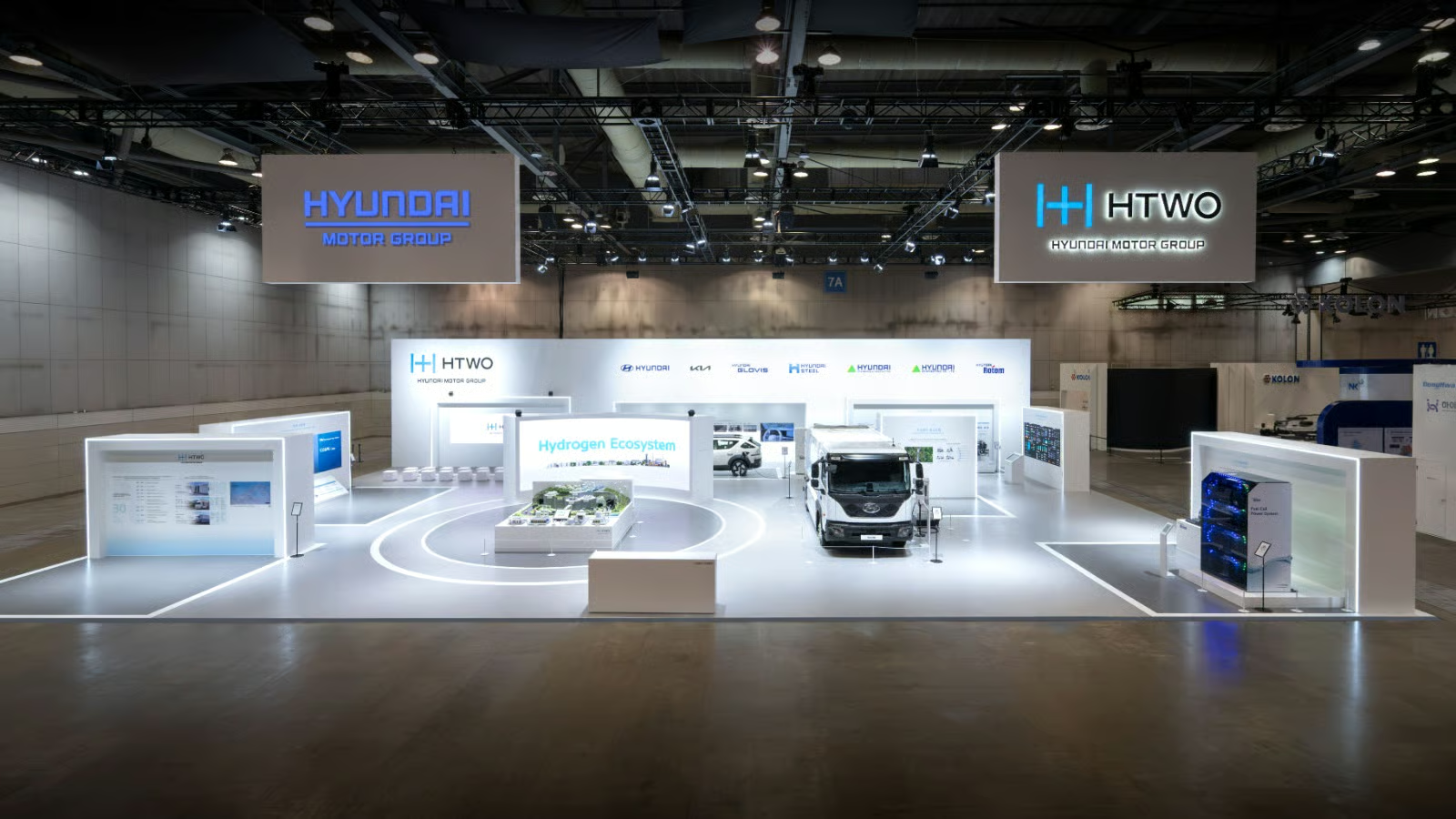
Hyundai Motor Group recently showcased its advances in hydrogen technology at the World Hydrogen Expo 2026 in Goyang, South Korea. The event offered a public display of the company’s evolving hydrogen portfolio. Hyundai presented an integrated set of technologies and proposals designed to promote hydrogen not only as a fuel for vehicles but as a central component in a wider industrial and mobility ecosystem.
Among the highlights were the next-generation 2027 Hyundai NEXO, a commercial fuel-cell system, and a model of a hydrogen-powered locomotive. Each exhibit underlined Hyundai’s commitment to applying hydrogen across different platforms. Attendees also saw demonstrations of PEM water electrolysis, waste-to-hydrogen production, and novel refueling ideas, including an automatic hydrogen-charging robot, signaling a push toward practical, end-to-end solutions.
Bridging Technologies and Infrastructure
The technologies on display framed Hyundai’s strategy around connecting vehicles with the systems that produce, distribute and consume hydrogen. Rather than treating cars, trucks or trains in isolation, the company presented hydrogen as part of an interconnected chain. Hyundai hints at the necessity of that integrated approach for hydrogen to be viable at scale.
That holistic viewpoint matters because the shift to hydrogen vehicles will depend on more than sales figures. It will require supply chains, refueling networks and production capacity to move in step. Today, high costs, a limited number of refueling stations and the carbon intensity of some hydrogen production methods remain real barriers to broader adoption.
Hyundai’s showcase also included a focused demonstration of its hydrogen fuel-cell electric vehicle technologies. The NEXO, positioned for consumer customers, is reported to have a driving range of up to 826 kilometers on a single charge, a figure Hyundai uses to illustrate the convenience hydrogen can offer. Still, wider market uptake will be closely tied to the local availability and affordability of hydrogen as a transport fuel.
Commercial Applications on the Horizon
The commercial pitch at the expo emphasized fuel-cell systems engineered for trucks and buses, designed to handle longer operating hours and faster refueling cycles. Those design priorities — durability and quick turnaround — speak directly to fleet operators who measure value in uptime and operating costs. If fuel cells can deliver on longevity and refueling speed, they could change operational calculations in logistics and public transit.
At the same time, the model of a hydrogen locomotive pointed to another potential application beyond road transport. Hyundai’s rail concept aligns with trends already visible elsewhere, including the deployment of hydrogen trains in Europe such as the Alstom Coradia iLint in Germany. While Hyundai’s rail applications remain in development, the displays made clear the company sees rail as one of several sectors where hydrogen technology could have meaningful impact.
A Policy Framework Supporting Growth
Hyundai’s advancements come against a backdrop of public policy support. The Ministry of Climate, Energy and Environment of the Republic of Korea has allocated substantial funding for the deployment of hydrogen vehicles and refueling stations, a signal of government intent to nurture a hydrogen economy. Such funding is aimed at helping close infrastructure gaps and at encouraging consumers and businesses to consider hydrogen-powered options.
That public backing complements Hyundai’s stated objective of building a self-sustaining hydrogen market. The company envisions an ecosystem in which vehicles, fueling stations and producer infrastructure are interdependent, each element reinforcing the others to create reliability and to stimulate growth. Even so, the interplay among technology development, policymaking and consumer acceptance will be decisive in overcoming current market-entry hurdles.
Looking Ahead
The World Hydrogen Expo showcase captured a broader vision of hydrogen as more than a fuel for cars. Hyundai positioned hydrogen as an integral part of future transportation and industrial frameworks, highlighting research, production techniques and practical refueling concepts together. With continued investment and development in hydrogen production and infrastructure, companies like Hyundai are not just adapting to change but are actively shaping it.
The path to a hydrogen economy will be neither quick nor straightforward. It will demand coordinated effort from manufacturers, policymakers, energy producers and end users, and it will require patience from stakeholders across sectors. The challenges are substantial, yet the potential rewards in sustainability and technological innovation make the endeavor one that Hyundai and its partners appear intent on pursuing.