Innovative Hydrogen Storage Solutions from Uruguay: Pioneering a Greener Future
Mirian Elizabeth Casco, a researcher from Universidad Católica del Uruguay, was awarded the L'Oréal-UNESCO For Women in Science award for her innovative hydrogen storage project, which utilizes local biomass for sustainable energy solutions.
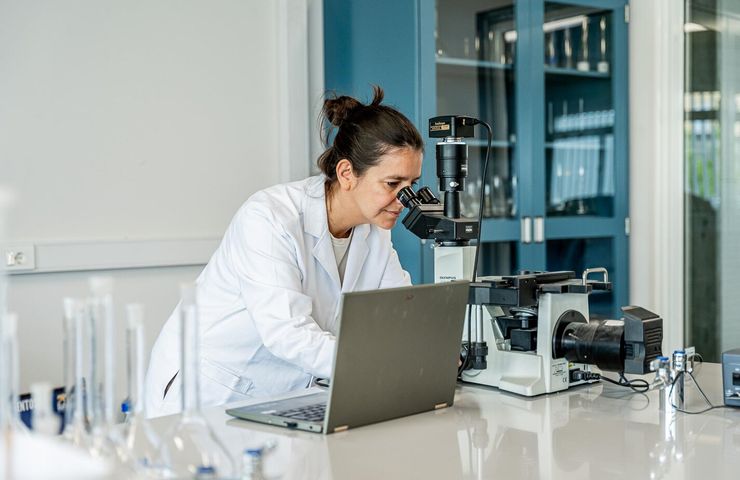
Mirian Elizabeth Casco, a dedicated researcher at Universidad Católica del Uruguay, recently gained recognition for her innovative project aimed at revolutionizing the way hydrogen is stored. Winning the 19th national L'Oréal-UNESCO For Women in Science award this month, her work is a promising step towards solving one of the main challenges in the hydrogen storage sector.
A Groundbreaking Approach to Hydrogen Storage
Casco’s project, titled "Solid hydrogen storage through gas hydrates confined in carbonaceous materials derived from national biomass", sets out a clear technical route: use activated carbon produced from local biomass residues as the host for solid hydrogen. The idea is to encourage the formation of hydrogen gas hydrates—ice-like crystalline structures that can trap hydrogen molecules—inside the porous matrix created from agricultural byproducts. It is a materials-focused approach. By concentrating on carbonaceous substrates derived from national biomass, the work ties material design directly to local supply chains and waste streams.
Addressing Hydrogen’s Storage Challenges
Hydrogen poses a well-known problem for storage because of its low volumetric density, which makes compression and liquefaction energy-intensive and costly. Casco's method aims to offer a different path: a solid-state option that could be safer and less energy-demanding than conventional techniques. The proposal does not claim to eliminate all existing problems, but it seeks to reduce one of the core barriers to wider hydrogen use by changing how the molecule is contained. If the hydrate-in-carbon approach performs as intended, it could alter perceptions about hydrogen's practicality as a clean energy carrier within Uruguay’s broader green hydrogen agenda.
Funding and Support: A Collaborative Effort
The award includes a grant of US$22,000 to be used over the next two years for project execution. That financial backing reflects a partnership model between academia and corporate sponsors—specifically L'Oréal Groupe, which partners with UNESCO to promote and support women in science across various scientific fields. The modest but targeted funding is designed to advance laboratory work, pilot trials and the initial stages of scale-up, rather than to underwrite a full commercial rollout.
Strategic Importance for Uruguay
The project also resonates with national policy. It aligns with the hydrogen strategy outlined by the Ministry of Industry, Energy and Mining and with the goals of the H2U program, which emphasizes the necessity for adequate infrastructure to support hydrogen production, storage, and distribution. As hydrogen demand grows, storage solutions that can be integrated with domestic production and logistics will be central to ensuring a reliable supply for industry and transport. In that context, work that links storage technology to locally available biomass could help reduce dependency on imported materials and support national objectives for sustainability and waste valorization.
Future Prospects: Pioneering the Green Hydrogen Landscape
The successful realization of Casco’s research could encourage additional hydrogen storage efforts and attract collaborators and investors focused on the hydrogen sector. It may help validate hydrogen as a feasible clean energy carrier in Uruguay by demonstrating a storage route that uses local feedstocks and existing research capacity. Practical success would not be instantaneous; it would require continued testing, demonstration and alignment with infrastructure planning outlined by national programs. Still, the project’s local emphasis and its funding horizon of two years provide a structured path for early validation and potential follow-on activities.
As more countries and governments recognize the role hydrogen plays in meeting green energy goals, innovations like Casco's could spark an energy revolution not just in Uruguay but globally. This research stands as a testament to the potential of marrying technology and sustainability—a true glimpse into the future of energy storage and production.