Koelnmesse’s Hydrogen Forklifts Leading the Charge in Low-Emission Trade Fair Logistics
Koelnmesse and DSV have deployed ten hydrogen fuel-cell forklifts and an on-site refuelling station at Cologne’s trade fair grounds, showcasing rapid refuelling and locally emission-free material handling powered by green hydrogen.
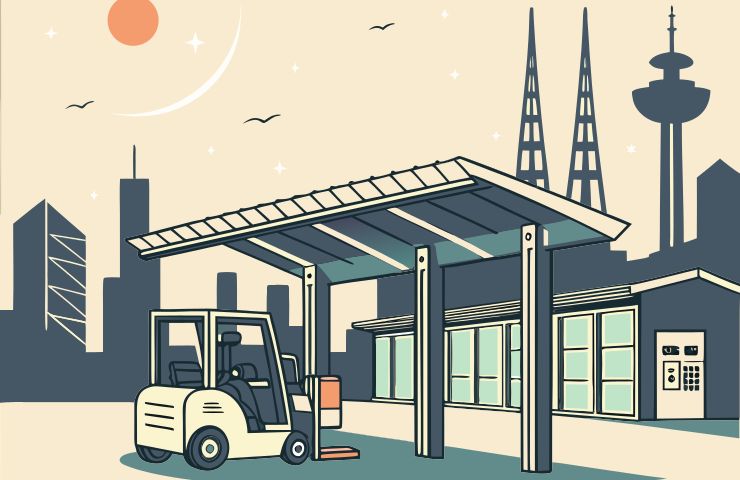
Picture yourself right in the bustling heart of Cologne, where the stunning historic skyline meets a vibrant trade fair campus bustling with activity. This spring, Koelnmesse GmbH, in collaboration with their logistics partner DSV, rolled out an exciting pilot project featuring a fleet of ten sleek hydrogen fuel-cell forklifts, complete with a dedicated refueling station. It's a significant moment that shakes up the hydrogen news and green hydrogen news landscape. Set against the dynamic backdrop of North Rhine-Westphalia, Europe’s economic engine, this initiative shows just how clean hydrogen production and hydrogen infrastructure can revolutionize logistics at trade exhibitions. By running on green hydrogen, these forklifts ensure operations are not only emission-free but remarkably quiet—a win-win!
Rapid Refueling Changes the Logistics Game
At a venue where every second counts and space is precious, waiting around for long battery charging times could really throw a wrench in the works. But these new hydrogen fuel-cell forklifts? They refuel in under five minutes. That’s a huge difference compared to the hours it can take for battery-electric models. Each of the ten forklifts can run two shifts of eight hours a day, with the filling station providing freshly delivered hydrogen in high-pressure batches. This means operators don’t have to swap out entire vehicles; they can simply switch cylinders. During a recent event, this fleet managed to pull off over 2,000 loading operations in just three days without any delays due to charging. And the cherry on top? Their only emissions are a bit of water vapor, making them a true game changer for low-emission material handling.
Collaboration Sparks Innovation
This project highlights the magic that happens when industry leaders come together with a shared goal. Koelnmesse GmbH has boldly set its sights on achieving climate-neutral operations by 2030, while DSV brings years of logistics know-how into the mix. Together, they’re managing the largest hydrogen forklift fleet ever seen at a trade fair in Germany. While it’s clear both companies are key players, rumblings in secondary media suggest there might be tech partners involved in developing the refueling stations and supplying the hydrogen—details still needing confirmation. Beyond just logistics, they’ve even developed a digital dashboard to monitor hydrogen usage, forklift uptime, and maintenance on the fly, fine-tuning their operations. If this first phase goes as planned, there’s talk of expanding beyond ten forklifts, which could lead to even deeper cuts in onsite emissions and encourage other venues across Europe to take a similar leap.
A Glimpse into the Future of Green Hydrogen Production
Looking down the road, this initiative is more than just a proof of concept—it’s paving the way for on-site renewable hydrogen producing capabilities. Koelnmesse is exploring the idea of a rooftop solar panel setup combined with electrolyzers to generate green hydrogen right at the exhibition grounds. By connecting hydrogen production methods directly to their daily operations, they aim to create a closed-loop system between energy generation and logistics, which could tremendously reduce upstream emissions and help operate almost independently from the grid. This ambition aligns beautifully with broader European efforts to establish resilient, locally-sustained energy networks and reinforces hydrogen’s position as a fundamental part of tomorrow's clean energy infrastructure. By mid-decade, the goal is to harmonize hydrogen-powered material handling with smart grid technologies to balance renewable energy production with real-time demand.
Ensuring Safety and Reliability
Handling hydrogen requires sticking to stringent safety protocols, and this setup doesn’t take shortcuts. The on-site refueling station meets all strict pressure-vessel regulations, boasting real-time leak detection sensors and emergency shutoff systems. Forklift operators have undergone specialized training in safe refueling practices and puncture-resistant techniques. To keep everyone on their toes, regular emergency drills and quarterly audits are part of the plan, ensuring that staff are fully prepared for any situation that might arise. Independent assessments indicate that with the right design and maintenance, hydrogen fuel-cell vehicles can be just as safe—if not safer—than traditional industrial trucks. By integrating solid operational checks and monitoring into daily routines, Koelnmesse and DSV show that achieving high performance doesn’t have to come at the cost of safety.
Policy Momentum and Market Signals
Across the EU, the Hydrogen Strategy for a Climate-Neutral Europe sets ambitious targets, aiming to connect at least six gigawatts of renewable hydrogen electrolyzers by mid-decade—and even more afterward—backing initiatives like this one. Germany’s national hydrogen strategy is channelling considerable funding into research grants and infrastructure investment to speed up market adoption. For players like Koelnmesse and DSV, tapping into these programs can help shoulder some of the costs for the stations and forklifts, making it easier to expand. This project also aids in developing supply chains for electrolyzers and fuel cell components. As more venues hop on the green hydrogen bandwagon, the resulting supply chains for electrolyzers, fuel cells, and safety systems will ramp up, bringing down costs along the way. These market signals are crucial in moving hydrogen fuel cell technologies from niche trials to mainstream logistics solutions.
Broader Impact on Hydrogen Infrastructure
This initiative sits at the forefront of an expanding network of hydrogen refueling stations and hydrogen vehicles throughout Germany and beyond. With governments and investors pouring big bucks into clean hydrogen efforts, pilot sites like Cologne’s exhibition grounds are becoming pivotal proving grounds. The success of these ten forklifts powered entirely by green hydrogen could trigger new financing for hydrogen projects, foster off-take agreements, and promote the development of storage and distribution infrastructures. For nearby ports, distribution centers, and large event venues, observing a real-world example of low-emission logistics in action can unlock exciting prospects for shifting their heavy-use fleets toward cleaner alternatives, pushing the momentum for a hydrogen-fueled industrial ecosystem. Beyond just environmental benefits, this project is creating specialized jobs in fuel cell maintenance, safety monitoring, and station management, opening new career paths in the area. It’s positioning Cologne as a key player in the hydrogen scene and solidifying North Rhine-Westphalia's reputation for innovative sustainable technologies.
Lessons Learned and Next Steps
As data rolls in from sensors and operator logs, Koelnmesse and DSV are honing in on areas that could use some fine-tuning: boosting the station's throughput, streamlining the supply chain logistics for green hydrogen deliveries, and integrating predictive maintenance into their operations. Early findings indicate that each forklift avoids the equivalent of two to three battery change cycles each day, leading to noteworthy time savings and lowered energy costs if expanded. The partners are currently eyeing a second phase that could add more vehicles and a new refueling point, bolstering hydrogen's case as an essential element of sustainable logistics. They’re also planning community workshops to share insights with other venues and stakeholders, encouraging knowledge exchange and speeding up the adoption of sustainable logistics practices.
Steering Toward a Sustainable Tomorrow
Strolling through a lively fair, you might overlook the innovative technology powering those displays and tables. Yet behind the scenes, each hydrogen fuel-cell forklift is playing a crucial role in transforming clean energy logistics. This pilot signifies a perfect blend of innovation, collaboration, and aspiration, offering a tangible sneak peek into the future of sustainable operations. As Koelnmesse GmbH and DSV sift through the performance metrics from this spring’s launch, they’re mapping out a roadmap for wider adoption—setting the bar high for efficiency, emissions reduction, and resilience. In an ever-evolving landscape of hydrogen production, storage, and refueling, this initiative stands out as a shining example of what can happen when clear vision meets decisive action.