Natural Hydrogen Exploration Gains Momentum as Mantle8 Secures €31 Million Series A
French startup Mantle8 raised €31 million to scale its natural hydrogen exploration platform, marking a significant investor bet on subsurface hydrogen production potential.
In some exciting clean hydrogen news, French startup Mantle8 just secured a hefty €31 million in a Series A funding round to ramp up its efforts in exploring natural hydrogen. Nestled in Sassenage, near Grenoble, this innovative company is diving into an ecosystem that's rich in microelectronics and energy research. Their goal? To harness geological sources of dihydrogen buried beneath the surface and establish natural hydrogen as a go-to low-carbon resource. Investors are buzzing about this milestone as it marks a fascinating shift in hydrogen production, moving away from traditional electrolysis methods towards geological exploration techniques.
Capital Injection to Scale Exploration
This funding round was led by Sandwater, with contributions from heavyweights like Breakthrough Energy Ventures, the French public investor Bpifrance’s Ecotechnologies 2 fund, IP Group, Wind Capital, and the Calderion platform backed by Audacia. For Sandwater, a climate fund based in Norway, this investment is a strategic leap toward tapping into subsurface hydrogen. Having the backing of Breakthrough Energy Ventures, which is linked to Bill Gates, adds global credibility and a focus on funding technologies that cut emissions. With Bpifrance on board, it highlights France's commitment to bolstering its domestic hydrogen resources. After last year’s €3.4 million seed round, which included funding from the EU’s Just Transition Fund, Mantle8’s total funding now sits around €37 million. The management team is eyeing 2026 as a critical year to transition from proving scientific theories to scaling up technology, with exploration campaigns kicking off shortly.
Mapping the Invisible
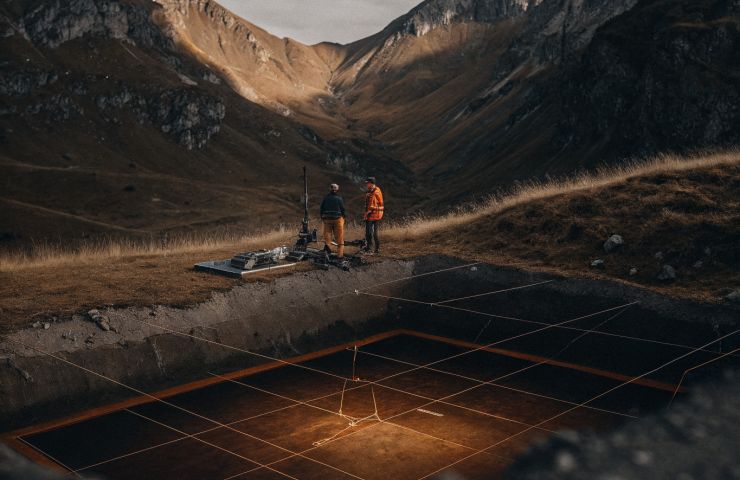
At the core of what Mantle8 is doing is a clever proprietary platform that blends seismic imaging, surface gas analysis, geochemistry, and AI-driven predictive modeling. Their geophysical teams use controlled sources and sensors to send waves underground, capturing reflections that help build high-resolution 3D models of rock layers, faults, and fluid traps. By repeating these surveys over time, they can track small changes in wave speeds, offering a dynamic 4D view of fluid movement. On top of that, geochemical analysis of gases from seeps and shallow wells provides valuable info on gas composition. Their machine learning algorithms then tie all this data together to create probability maps indicating where hydrogen might be found, prioritizing targets and cutting down the number of wells needing to be drilled. This blend of digital techniques and fieldwork aims to minimize the risks involved in drilling campaigns and speed up the path to demonstration wells.
From Lab to Drill Site
So what exactly is natural or “white” hydrogen? It’s created by geological processes—think oxidation of iron-rich minerals in ultrabasic rocks or interactions between water and rock deep underground. While there have been notable seeps and borehole hits over the decades, systematic exploration has been pretty limited until now. Mantle8 is determined to change that by turning scientific observations into something that can be industrialized, focusing on locating traps where hydrogen gathers in high purity. Back in 2025, they announced what they described as the first-ever 4D imaging of an active natural hydrogen system, visualizing how gas migration patterns shift over time. Thanks to this new funding, the team plans to drill a series of pilot wells in France’s Auvergne-Rhône-Alpes region, a place rich in various tectonic and mineral settings. The outcomes of these trials will be crucial in conducting feasibility studies for commercial-scale hydrogen production, tackling unknowns like reservoir pressure, flow rates, and system longevity.
Strategic Implications for the Energy Transition
This funding milestone is part of a larger evolution happening in the hydrogen landscape. Although Europe has primarily concentrated on green hydrogen production through renewable-powered electrolysis, there’s a growing interest in geological hydrogen as a potentially more cost-effective alternative. If particular subsurface systems can consistently produce dihydrogen with minimal processing, we might see production costs that could beat those of electrolytic green hydrogen, especially in areas where renewable electricity prices are high. The involvement of Breakthrough Energy Ventures indicates that major investors are recognizing subsurface exploration as a risky but ambitious frontier. For France and the EU as a whole, tapping into local hydrogen reservoirs could lessen dependency on imports, boost regional growth, and strengthen energy security. But achieving this depends on proving that natural hydrogen fields can provide stable output without creating significant regulatory or environmental issues.
Regulatory and Environmental Considerations
Even though the promise of natural hydrogen is captivating, it doesn't come without its share of regulatory and environmental challenges. Current regulations designed for hydrocarbons or mining might not fit neatly into the framework for hydrogen, which has led the French Ministry for Ecological Transition to put out reports discussing various scientific, legal, and social acceptability aspects. Some key concerns include protecting groundwater, potential risks of induced seismic activity from drilling, and the long-term impacts on reservoirs. As pilot wells get underway, navigating licensing procedures, conducting environmental impact assessments, and engaging with the community will be vital. Strong monitoring systems—using 4D imaging and real-time sensors—will be essential in reassuring both regulators and stakeholders as this unconventional resource heads toward commercial evaluation.
Roots in the Grenoble Innovation Hub
Grenoble’s Auvergne-Rhône-Alpes region has built quite a reputation for scientific excellence and energy innovation. The area is home to top-notch research institutions, universities, and dynamic public-private partnerships focusing on microelectronics, renewable energy, and subsurface sciences. This fertile ground has given rise to a cluster of startups like Mantle8, which leverage advanced geoscience and digital tools for resource exploration. Being close to academic hubs and testing facilities provides Mantle8 with excellent advantages, not to mention access to funding sources like the EU’s Just Transition Fund. Collaborating with local labs has propelled the development of cutting-edge seismic sensors and data analytics, further cementing Grenoble’s role as a forefront player in the future of hydrogen production and digital exploration innovations.
Looking Ahead
Mantle8 is setting its sights on commencing initial production trials by 2028 and aims to hit commercial viability by around 2030, though those dates are certainly ambitious. They’re eyeing a target price of about €0.80 per kilogram of hydrogen, which—if all goes according to plan—would be cheaper than many current electrolytic methods. However, these goals aren't guaranteed and hinge on a range of factors like reservoir features, drilling success, and how well production performs. If they pull it off, this venture could significantly alter the landscape of hydrogen infrastructure and logistics, potentially creating new supply routes independent of renewable energy setups. Over the next few years, the industry will be keeping a close eye on drilling outcomes and cost trends to see if subsurface hydrogen can ultimately unlock a genuinely natural energy source. Regardless, this funding round highlights how geological exploration and digital innovation are paving exciting new pathways in the clean energy transition.