Nordic-Baltic Hydrogen Corridor Charts Path for Cross-Border Green Hydrogen Infrastructure
Early industry backing for the Nordic-Baltic Hydrogen Corridor has reached 87% of planned capacity, underlining the project’s potential as Europe’s first large-scale cross-border green hydrogen pipeline.
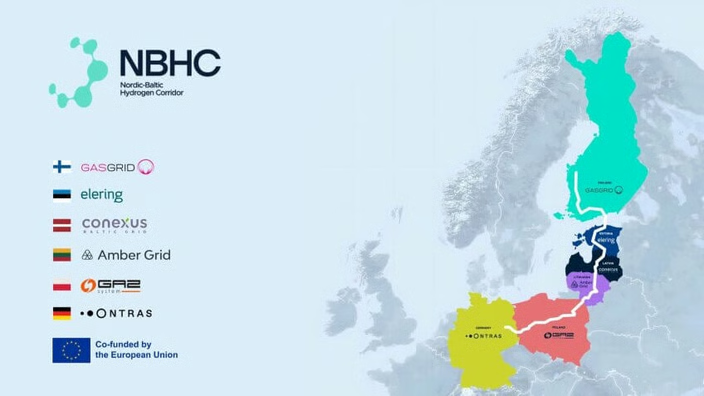
The Nordic-Baltic Hydrogen Corridor it’s a green hydrogen network that's gaining traction, now backed by six gas transmission system operators who see real potential in the market. By uniting forces with Gasgrid Finland, Elering, Conexus Baltic Grid, Amber Grid, GAZ-SYSTEM, and ONTRAS, Europe is well on its way to creating a hydrogen highway that spans from the Arctic Circle all the way down to the industrial heart of Central Europe.
This summer, a call for interest showed just how much buzz this initiative has stirred up. Industry players have already expressed a demand for about 79.2 TWh of hydrogen annually by 2040, which is around 87 percent of the corridor's predicted capacity! That kind of commitment this early in the planning process builds a lot of confidence among investors, policymakers, and potential customers looking to tap into this hydrogen infrastructure.
From Pre-feasibility to Feasibility
The idea behind the corridor has moved beyond just talking—it’s completed pre-feasibility studies with big names like ENTSOG and the European Hydrogen Backbone initiative, focusing on routing, capacity needs, and how to reuse old infrastructure. Thanks to its designation as an EU Project of Common Interest, the corridor has secured funding and a simplified permitting process under TEN-E regulations. Now it’s transitioning to the feasibility phase, where technical, commercial, and regulatory analyses will take place in the next couple of years. This essential groundwork is laying the foundation for critical investment decisions. The six operators are also working on tariff structures and cross-border agreements to ensure smooth hydrogen transport from Nordic and Baltic producers to customers in Poland and Germany.
Stitching Regions and Markets
Each of the partners brings a unique perspective to the corridor. In Finland, Gasgrid Finland is keen to harness offshore wind and hydropower to feed electrolysers that create green hydrogen. Over in Estonia, Elering is figuring out how to integrate hydrogen flows into its power system and existing interconnections. In Latvia, Conexus Baltic Grid is checking out storage solutions in its Inčukalns caverns, while Amber Grid in Lithuania is eyeing agriculture, refining, and industry to find potential customers. Meanwhile, GAZ-SYSTEM aims to cater to Poland's heavy industries, and ONTRAS is lining up partnerships with German steel and chemical makers. Together, they’re weaving separate markets into a cohesive regional hydrogen ecosystem—the first of its kind for Northern and Central Europe!
Technical Backbone
At the heart of this corridor is a robust network of high-pressure steel pipelines operating at about 80 bar, with strategically located compressor stations to keep the hydrogen flowing. Engineers are looking to combine repurposed gas pipes with new segments, ensuring everything works seamlessly and can handle the unique properties of hydrogen. It’s not just about the pipelines, though—underground storage facilities will be crucial for balancing supply, especially during seasonal fluctuations. Participants in the market will book capacity, adhere to regulated tariffs, and withdraw hydrogen at specific points along the pipeline, creating a flexible trading environment governed by a standard set of rules. Safety is paramount, so they’ll build on decades of experience in gas pipeline management, adding extra measures for leak detection and material resilience.
Why It Matters
Europe’s energy transition depends on moving large quantities of renewable energy carriers. While electricity grids have their limits, hydrogen can travel across borders using existing pathways, reaching industrial locations far from where wind farms are situated. The Nordic-Baltic corridor tackles critical issues like connecting abundant green hydrogen production areas, decarbonizing heavy industries, and enhancing energy security by reducing dependence on imported fossil fuels. If fully utilized, it’s estimated that this corridor could help slash up to 37 million tonnes of CO₂ emissions per year by mid-century, given a consistent low-carbon supply.
Balancing Risks and Rewards
Despite all this optimism, there are still challenges ahead. Final investments will hinge on turning those early expressions of interest into binding commitments. Environmental impact assessments and route maps are still under scrutiny, and while the region shows great renewable potential, we need offshore wind and electrolyser projects to keep pace. Plus, there’s the looming question of how other technologies—like direct electrification or alternative energy imports—could shift future demand. But the fact that the corridor has early backing from the market speaks volumes. It shows that producers, traders, and consumers are all tuned in and interested.
Market Signals and Investment
When the six operators called for interest, the response was lightning quick—93 responses from 81 companies covering 108 unique hydrogen projects came flooding in! These span everything from electrolyser developers to industrial users and distribution operators, indicating a significant growth in demand from about 25.4 TWh in the mid-2030s to around 38.2 TWh by 2050. This early enthusiasm doesn't just validate the corridor's ambitious 91 TWh design capacity; it also strengthens financing discussions.
On the financial side, EU preparatory grants—totaling nearly €7 million—are helping align regulations and lay down technical foundations. Industry estimates point to the need for about €8.4 billion for initial construction, with another €3.4 billion expected for expansions by 2040. These numbers may still change, but they highlight the substantial investment potential that large-scale hydrogen infrastructure brings to engineering, manufacturing, and construction sectors.
Repurposing and Storage: Beyond the Pipeline
But it’s not just about laying new pipelines; operators are also looking into converting existing gas pipes where possible. Data from the European Hydrogen Backbone indicates that repurposing could significantly contribute to the build. To ensure hydrogen compatibility, they’ll be assessing materials and upgrading compressors and valves. But pipelines need to be complemented by storage solutions, which are vital for smoothing supply and navigating through seasonal ups and downs. Latvia's Inčukalns facility, already the largest gas cavern in Europe, is being considered for potential hydrogen use, reflecting how today’s infrastructure can evolve to support a zero-emission future.
Tuning In to the Timeline
The road ahead follows a familiar playbook for infrastructure: moving from concept and pre-feasibility to feasibility, then leading to final investments in the next couple of years. Construction could kick off in the late 2020s, with hopes for the first commercial flows around 2030 to 2033. By that time, markets might have matured, electrolyser capacity may have expanded, and regulations could be clearer—creating a robust ecosystem ready to deploy hydrogen at scale. Along the way, the corridor will likely intersect with other European routes, creating hubs of liquidity and reinforcing the idea that hydrogen isn’t just a niche clean fuel; it’s becoming a vital utility.
Looking beyond just the pipelines, the Nordic-Baltic Hydrogen Corridor could become a blueprint for establishing transnational connections in other regions—from Iberia to Italy or along the North Sea coast. If the collaboration among transmission system operators, governments, and industry players holds strong, Europe’s hydrogen network might grow organically, similar to how early gas grids developed—only this time, with a green twist. And honestly, that’s the most exciting prospect of all!