Pajarito Powder Scales Fuel-Cell Catalyst Production Fourfold in Albuquerque
Pajarito Powder says it has quadrupled its fuel-cell catalyst capacity at its Albuquerque plant and installed 20-kilogram batch equipment to support a new hydrogen fuel-cell vehicle, while reportedly negotiating with a major automaker on a supply deal.
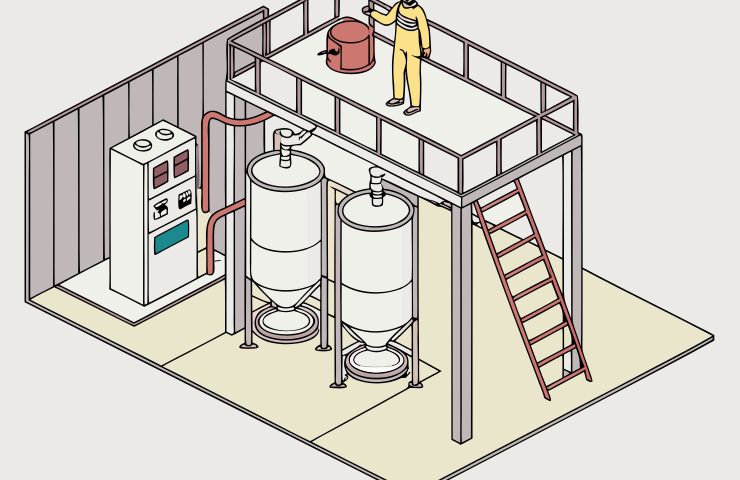
Pajarito Powder says it is increasing fuel-cell catalyst production capacity fourfold at its Albuquerque facility and has installed manufacturing equipment capable of producing 20-kilogram batches of a proprietary catalyst material. The company indicates the expansion is intended to support a new hydrogen fuel-cell vehicle expected to launch soon. Albuquerque Business First reports that Pajarito Powder is in talks with a major automotive customer on a long-term supply contract, though neither the customer nor the vehicle model have been publicly identified.
Scaling Catalyst Manufacturing
The reported fourfold increase in production capacity represents a significant step for Pajarito Powder, which recently completed a 28,000-square-foot chemical production complex and headquarters in Albuquerque, according to company materials. New equipment now handles larger controlled batches. Precision mixing, thermal treatment, impregnation, cleaning and drying are all scaled to 20-kilogram lots. Those process stages must maintain uniformity in heat and mass transfer, prevent contamination and ensure batch-to-batch consistency to meet stringent automotive qualification requirements.
Technical Deep Dive: PEM Fuel-Cell Catalysts
Proton-exchange-membrane (PEM) fuel cells convert hydrogen and oxygen into electricity through electrochemical reactions at catalyst layers. At the anode, hydrogen molecules are split into protons and electrons; the membrane conducts protons while forcing electrons through an external circuit to generate power. At the cathode, oxygen combines with protons and electrons to form water. This process produces zero tailpipe emissions during vehicle operation, according to U.S. Department of Energy guidance. Practical automotive power levels, however, rely on platinum-group-metal catalysts dispersed on high-surface-area supports that resist corrosion and degradation over millions of operating cycles.
Engineered Catalyst Supports
Pajarito Powder develops tunable mesoporous carbon supports, branded as VariPore and other Engineered Catalyst Supports, that aim to optimize nanoparticle dispersion, reactant transport and durability, based on peer-reviewed research and company technical documentation. These supports offer interconnected porosity to provide high surface area and pathways for gas, electron and proton movement while anchoring platinum or platinum-alloy nanoparticles in stable configurations. By improving metal utilization and slowing agglomeration, the design may allow automakers to achieve required performance with lower precious-metal loadings, which is critical given U.S. dependence on imported platinum, DOE analysis indicates.
Batch Scaling and Quality Control
Moving from laboratory-scale grams to industrial-scale 20-kilogram batches involves challenges in mixing uniformity, thermal ramp rates, solvent removal and contamination control. Automotive manufacturers typically require rigorous process qualification, statistical quality control and traceability before accepting a new catalyst material, industry sources say. Pajarito Powder has yet to disclose annual output or yield rates for the expanded lines, and no signed customer contract has been confirmed. The company describes the capacity increase as intended to support a forthcoming fuel-cell vehicle program.
Strategic Implications
Domestic scale-up of fuel-cell catalyst production aligns with federal objectives to strengthen U.S. hydrogen infrastructure and reduce reliance on imports for critical minerals such as platinum and iridium. The U.S. Department of Energy awarded approximately $18.45 million to projects for both fuel-cell and electrolyzer catalyst scale-up, DOE documents show, supporting work on engineered carbon supports, platinum and platinum-alloy catalysts for fuel cells, and iridium-oxide catalysts for PEM electrolysis. Expanding domestic manufacturing capacity addresses one link in the supply chain, but automakers and hydrogen producers must also tackle vehicle qualification, refueling infrastructure deployment and hydrogen production economics to achieve commercial viability.
Company and Project Background
Pajarito Powder emerged more than a decade ago from technologies licensed from the University of New Mexico and Los Alamos National Laboratory, according to New Mexico economic-development documentation. Founders Thomas J. Stephenson, Paul Short and Barr Zulevi built a materials business focused on electrocatalyst systems for PEM fuel cells and electrolyzers. The company recently completed its current 28,000-square-foot chemical production complex in Albuquerque, then attracted strategic investment from Hyundai Motor Company and Kia Corporation through recent funding rounds, sources indicate. Leadership shifted earlier this year when hydrogen-industry executive Christian Mohrdieck took on the role of CEO to guide automotive supply engagement.
Beyond fuel-cell catalysts, Pajarito Powder produces iridium-based oxygen-evolution catalysts for PEM water electrolysis and non-platinum materials for emerging alkaline exchange membrane (AEM) electrolysis. DOE technical assessments highlight iridium-oxide loading reduction, improved utilization and durability as key hurdles for electrolyzer scale-up. By scaling both fuel-cell and electrolyzer catalyst lines, the company positions itself within the broader hydrogen production and consumption ecosystem.
Comparative Trends in Catalyst Manufacture
The push to scale catalyst production mirrors trends in battery manufacturing, where companies have invested in gigafactories to achieve economies of scale. In the hydrogen sector, few suppliers currently can handle automotive-grade batch sizes beyond a few kilograms. Industry analysts note that by advancing 20-kilogram lot production, Pajarito Powder seeks to fill a gap identified by automakers exploring fuel-cell vehicle programs. Other global catalyst producers have outlined separate plans for larger scale lines, but U.S.-based capacity remains limited, underscoring the strategic value of a domestic node in Albuquerque.
Outlook
The recent expansion brings a domestic supplier closer to meeting potential automotive demand for hydrogen fuel-cell catalysts, but its long-term impact depends on several factors. A formal supply agreement with an automaker and successful catalyst qualification would validate the scale-up effort, while sustained hydrogen-station deployment and cost-competitive renewable hydrogen production would be needed to support vehicle uptake. The company’s engineered supports could help reduce catalyst loading and improve durability, but whether these technical advances translate into lower total cost of ownership for hydrogen vehicles remains to be seen.
As governments and industry pursue zero-emission technology goals, strengthening the U.S. hydrogen supply chain for both production and utilization remains critical. The fourfold scaling of catalyst manufacturing in Albuquerque represents one practical step designed to support the next generation of hydrogen fuel-cell vehicles, according to the company’s announcement. Yet, the commercial success of hydrogen-powered transport will hinge on collaboration across material suppliers, automakers, infrastructure developers and policy makers to overcome economic, technical and logistical challenges.