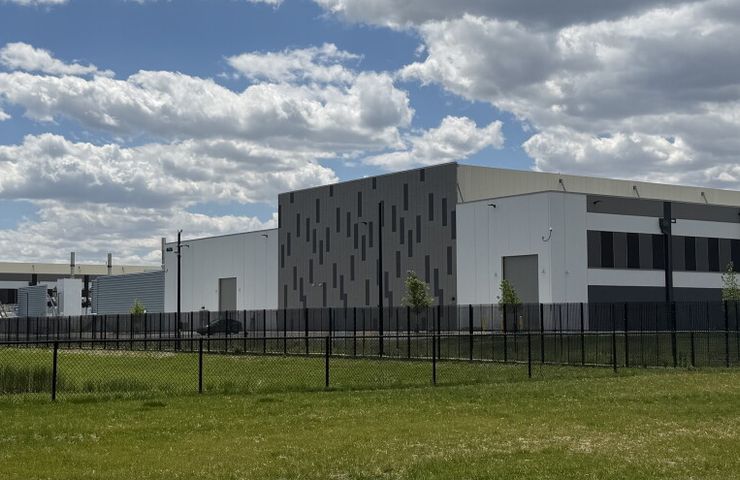
AEP to Invest $4B in 702 MW Bloom Energy Fuel Cell Plant for Google in Wyoming
AEP plans to invest $4 billion in a 702 MW Bloom Energy fuel cell plant near Cheyenne to power Google under a 20-year PPA, with carbon capture targets.
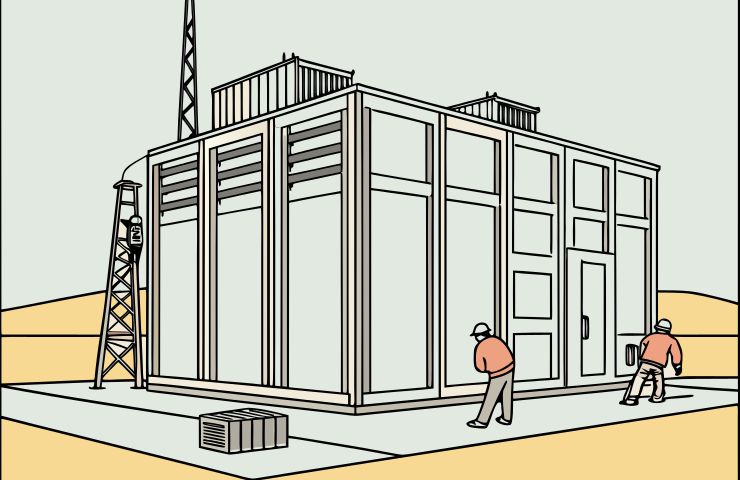
Recently, American Electric Power says it plans to invest approximately $4 billion in a planned 702 megawatt fuel cell generation facility near Cheyenne, Wyoming. The company announced it will develop the plant through Cheyenne Fuel Cell, LLC, a project vehicle in which AEP holds 92 percent equity and funds advised by Basalt Infrastructure Partners hold 8 percent. AEP says the facility is intended to supply electricity to Google under a 20-year power purchase agreement.
AEP indicates construction is set to begin in 2026, with commercial operation targeted by late 2028, although the company did not confirm whether ground has broken. The technology developer, Bloom Energy, will provide its solid-oxide fuel cell platform capable of converting natural gas into electricity electrochemically rather than through combustion. Bloom Energy states its systems can run continuously on natural gas, biogas or hydrogen blends, though the final fuel mix for the Wyoming project has not been disclosed.
Fuel Cell Technology and Carbon Capture Plans
Bloom Energy explains that its solid-oxide fuel cells electrolytically reform fuel into ions that generate electricity before emitting water, heat and carbon dioxide in a concentrated exhaust stream. AEP says the plant will incorporate carbon capture to reduce stack emissions, aiming for near-zero lifecycle carbon output. However, AEP has not released specifications on the capture technology, capture rate, or storage and transport arrangements, and the overall climate benefit remains theoretical until these details are documented.
Related Google Data Center Supply
This project is one component of a broader power strategy for Google's planned Cheyenne data center. In a separate deal, Black Hills Corporation said it will provide up to 590 megawatts of grid service, manage about 2.1 gigawatts of contracted resources through a private microgrid and invest $1.8 billion in new natural gas generation. Black Hills emphasizes that its arrangement and AEP's fuel cell plant operate under distinct contracts and ownership structures.
Large-Load Procurement and Project Significance
Securing reliable power for massive data-processing facilities often involves transmission expansion, multiyear interconnection work and complex resource planning. AEP positions its modular fuel cell approach as a way to deliver firm capacity closer to the load and accelerate service compared with traditional bulk generation. The 20-year power purchase agreement provides revenue certainty for the project developer and aligns with Google's strategy to lock in long-term supply as its local demand scales toward gigawatt levels.
Google has committed to running on carbon-free energy every hour by 2030, yet its current procurement relies on annual renewable matching and variable local hourly carbon-free supply, not guaranteed zero-carbon dispatch. The Wyoming fuel cell plan could bolster reliability, but without transparent accounting on upstream methane emissions and carbon capture performance, it cannot be deemed carbon-free. AEP itself describes the emissions outcome as a planned objective rather than a proven operational result.
Regulatory and Environmental Uncertainties
The facility will need approvals on siting, air-quality, carbon capture, pipeline connections and utility tariffs under Wyoming jurisdiction. Large-load projects in the state already trigger industrial siting reviews and air permits, as seen in Black Hills' agreements. Regulators may scrutinize how costs are allocated between new corporate load contracts and legacy ratepayers, especially if backup or stranded-asset risks emerge.
Market and Investment Implications
A successful 702 MW fuel cell installation for a hyperscale data center would signal growing utility interest in distributed electrochemical generation and hydrogen-ready infrastructure. It could prompt further demand for Bloom Energy's technology, gas supply logistics and carbon management services. The system’s ability to run on natural gas today but transition to hydrogen or biogas in the future aligns with long-term decarbonization plans. Conversely, failure to deliver promised emissions reductions or cost targets may dampen investor appetite and raise questions about natural gas dependence in the data center sector, potentially slowing the uptake of hydrogen-enabled solutions.
Outlook and Next Steps
AEP says it will finalize engineering, secure financing and begin construction in 2026, targeting operation by the end of 2028. Monitoring permit filings, offtake terms, equipment procurement and carbon capture details will be key to assessing whether the project can meet its firm power and near-zero-emission goals. The outcome will also inform how utilities and tech firms design bespoke power solutions when hyperscale computing collides with decarbonization ambitions.
Historical Context of Fuel Cells in Data Centers
Solid-oxide fuel cells have evolved from demonstration projects into commercial distributed-generation platforms over the past two decades. Developers like Bloom Energy have deployed Energy Server systems at telecom sites, manufacturing plants and pilot data center installations, demonstrating continuous operation and modular scalability. The Cheyenne initiative represents one of the first large-scale plans to integrate fuel cells with carbon capture for hyperscale computing customers. If realized, it would mark a milestone in deploying non-combustion power solutions where uninterrupted supply and low local emissions are critical.
Economic and Local Community Impacts
An estimated $4 billion investment in generation equipment, engineering, construction and infrastructure could drive significant economic activity in Laramie County, Wyoming, according to AEP. While the company has not released job figures or tax projections, similar utility-led projects have supported hundreds of construction jobs and boosted local tax revenues in comparable regions. Long-term operations will likely involve a smaller workforce, focused on system maintenance, fuel supply management and carbon capture monitoring.
Comparison with Conventional Gas Turbine Plants
Unlike combined-cycle gas turbines that burn fuel to generate high-pressure steam or gas to spin turbines, fuel cells convert fuel into electricity through an electrochemical process, potentially offering higher electrical efficiency and lower NOx and particulate emissions. However, the fuel cell stacks and balance-of-plant complexity can entail higher capital costs and unproven reliability at this scale. Carbon capture integration may further complicate operations, especially given the energy penalty associated with scrubbing CO2 from high-purity exhaust streams.
Data Center Power Strategies Converge
Google's pursuit of 24/7 carbon-free energy has spurred diverse approaches: bilateral PPAs with wind and solar farms, grid-interactive data centers and now on-site or near-site firm capacity from fuel cells and natural gas plants. The Cheyenne region will thus host a patchwork of supply arrangements, from renewables to carbon-captured fuel cells, all tied together through microgrids, transmission upgrades and long-term contracts. This complexity mirrors a broader industry shift as hyperscale operators wrestle with cost, reliability and decarbonization in tandem.
Conclusion: A Test for Hydrogen-Ready Power
The Cheyenne fuel cell project will test whether large-scale, firm power can be provided via electrochemical generation coupled with carbon capture under a long-term commercial contract. Its success or failure could influence future utility strategies on hydrogen infrastructure and the pace of data center decarbonization. As engineering details and regulatory approvals unfold, observers will watch how effectively the facility navigates cost, reliability and environmental performance in a region shaped by both energy supply and hyperscale computing demand.