Bosch’s Multi-Fuel Injector Accelerates Shipping’s Hydrogen Infrastructure
Bosch has unveiled a multi-fuel injector platform in Hamburg that supports hydrogen, methanol, ethanol and ammonia, accelerating marine decarbonization and hydrogen infrastructure growth.
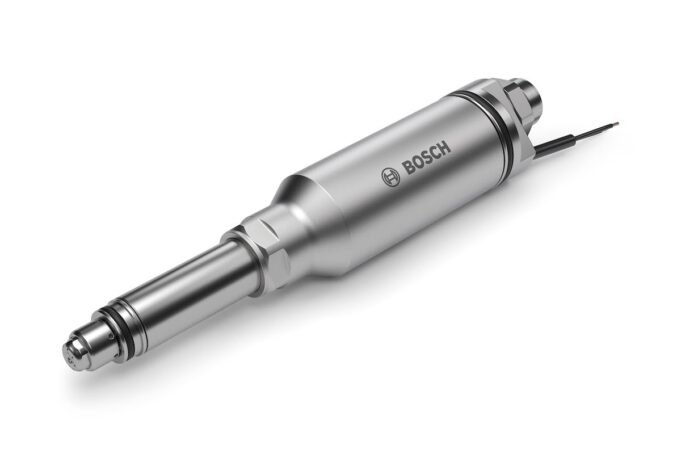
On the SMM trade fair this month, Bosch has unveiled a real game-changer in the quest for greener shipping: a multi-fuel injector platform that can handle both liquid and gaseous alternative fuels. This innovation couldn’t come at a better time, as the shipping industry—which accounts for about 80% of global trade and emits roughly 2–3% of total CO₂ emissions—is racing to align with the International Maritime Organization’s (IMO) ambitious net-zero goals. This tech offers a sneak peek into the future of eco-friendly vessels, making life a little easier for shipowners, engine manufacturers, and policymakers alike.
Industry experts point out that breakthroughs in hardware can really speed up how quickly alternative fuels transition from the lab to real-world use. With Bosch anchoring its research and development efforts in actual marine environments and embracing a modular design, it’s clear that smart investments in infrastructure and cutting-edge engineering are paving the way for a multi-fuel future.
Hamburg: A Launchpad for Green Shipping
Hamburg’s port is no small player; it boasts over 9,000 ships passing through each year, securing its status as one of Europe’s busiest maritime gateways. As regional leaders push for greener logistics and stricter emissions standards loom ahead due to the IMO’s 2050 targets, events like SMM are more than just trade shows. They serve as launchpads for innovative solutions that can help cut greenhouse gases and revolutionize global supply chains. In this context, Bosch, with its storied history dating back to 1927 when it started mass-producing diesel injection pumps, introduced its most versatile injector tech yet.
Introducing the Game-Changer Injector Platform
The star of Bosch’s unveiling is its multi-fuel injector platform designed for large engines used in ships, trains, and onshore generators. This single piece of tech is a powerhouse capable of running on hydrogen, methanol, ethanol, and ammonia, utilizing both port-fuel injection and low-pressure direct injection modes. It operates at pressures from 10 to 60 bar and sports an innovative spray-shaping cap that adjusts fuel jets to fit each engine’s combustion profile. This means it can tackle issues like low lubricity and varying ignition characteristics—all without needing external lubrication systems.
Thanks to its modular design, shipyards and engine makers can easily customize their configurations to align with their specific dual-fuel or pure alternative-fuel strategies. Gone are the days when they needed different injectors for each type of fuel, simplifying engineering and cutting retrofit expenses. In trials with clients in Asia, Bosch has seen the injector perform well, hitting the mark on reliability and precision, paving the way for larger scale trials on ocean-going vessels.
Powering the Future of Hydrogen Infrastructure
But there’s a lot more than just a flashy reveal behind this breakthrough. Bosch has been hard at work for months at its Hallein plant in Austria, which is a hub for large-engine injection systems. The team there has built a whole infrastructure dedicated to handling methanol—think storage tanks, conditioning systems, and test benches—that allow for continuous and realistic testing of the injectors under marine conditions. Bosch has invested a pretty penny into this setup to turbocharge prototype development and validate designs before they hit the market.
By integrating lessons learned from methanol injection trials with specialized gas admission valves, Bosch is tackling both liquid and gaseous fuel pathways. These valves precisely meter hydrogen, e-methane, or ammonia into the intake port, contributing to premixed combustion concepts that can significantly cut down on particulate emissions and promote cleaner burn profiles. Together, these components create a comprehensive portfolio for alternative fuels, bolstering the region’s hydrogen infrastructure and instilling confidence in shipowners ready to adopt zero-carbon strategies.
Collaborative Efforts in Marine Decarbonization
Bosch isn’t going down this road alone. The company is part of the Getting to Zero Coalition, aligning its plans with other industry leaders, ports, and fuel producers. This coalition brings everyone together—shipowners, ports, engine manufacturers, and fuel suppliers—working toward scaling up zero-carbon fuels and creating efficient shore-to-ship supply chains. By keeping everyone on the same page regarding standards and safety measures—especially for potentially hazardous fuels like ammonia—the coalition helps minimize risks and speed up the establishment of bunkering networks. Plus, the IMO’s updated GHG strategy is calling for zero- or near-zero fuels to comprise at least 5% to 10% of the energy used in shipping by 2030, adding a time-sensitive element for technology suppliers to come up with practical solutions.
There’s tangible momentum already building with early adopters. Asian shipyards and engine manufacturers are testing Bosch’s injector on long-haul engines, while European ports are gearing up to pilot bunkering terminals that accommodate methanol and ammonia. This kind of momentum shows how a single hardware innovation can kickstart a larger ecosystem, connecting fuel producers, classification societies, and shipping lines in a shared mission to decarbonize.
Why This Matters for the Environment and Society
Shipping is responsible for about 80% of the world’s trade by volume, so cutting emissions in this sector has a ripple effect across global supply chains. Bosch’s multi-fuel injector platform is a flexible tool that enables quick experimentation with different fuels without needing a complete redesign of existing engines. Shipowners can start with renewable diesel blends or methanol right away, easing into green hydrogen or ammonia as infrastructure and renewable production grow.
From a climate change perspective, transitioning deep-sea vessels from heavy fuel oil to green methanol or ammonia can slash CO₂ emissions by up to 95%, provided the fuel is sourced from renewable energy. What’s more, ammonia’s carbon-free structure ensures there’s no direct CO₂ released during combustion—though some careful after-treatment is still required to manage NOₓ and N₂O emissions. By paving the way for these sustainable paths, Bosch is at the forefront of leading sustainable shipping into a cleaner and more resilient future.
With the introduction of its multi-fuel injector platform at SMM, Bosch has rolled out a practical and scalable solution that ties together engine innovation, hydrogen infrastructure, and regulatory momentum. As trials move from the lab to real-world applications and bunkering networks expand, this groundbreaking injector could well become the go-to technology that zero-emission shipping relies on globally.