Hydrogen Fuel Cell News: SEOJIN SYSTEM Secures Major SOFC Module Supply Deal with Bloom Energy
SEOJIN SYSTEM has secured multi-billion-KRW contracts to supply solid oxide fuel cell modules to Bloom Energy, supporting the scaling of distributed on-site power generation.
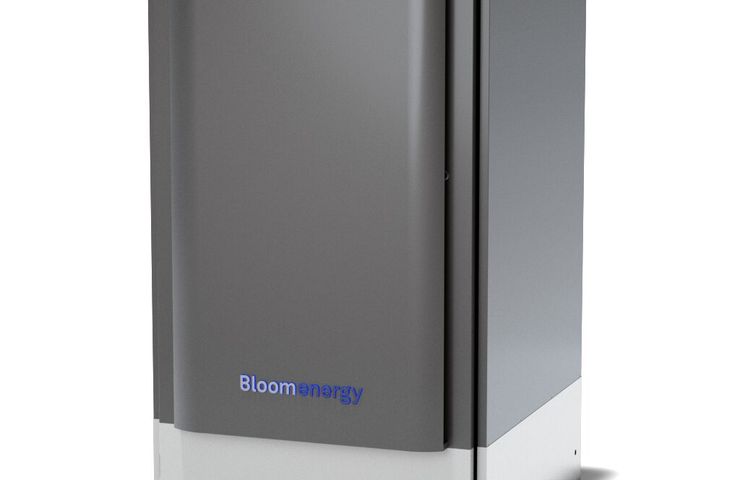
SEOJIN SYSTEM Co., Ltd. this month finalized a KRW 106.44 billion supply contract to manufacture solid oxide fuel cell modules and related parts for Bloom Energy Corporation in the United States market, according to Korean regulatory filings. The award follows an earlier agreement worth about KRW 78.5 billion signed earlier this year. Both arrangements place SEOJIN SYSTEM in charge of engineered module assemblies—structural housings, manifolds, interconnects and seals—while Bloom Energy retains the core electrochemical cell stacks and system integration duties.
What does the agreement cover?
The most recent contract runs through late next year, specifically into December, and covers the production, assembly and delivery of complete solid oxide fuel cell (SOFC) modules plus balance-of-plant components, according to Korean filings. Under its terms, SEOJIN SYSTEM will supply structural frames, thermal insulation, sealing systems and manifolds engineered to route air and fuel through multiple-cell stacks. A mid-year contract of roughly KRW 78.5 billion, also disclosed in Korean filings, extended from mid-July through late March. Secondary analyses mention module shipments originating from South Korean and Vietnamese facilities, but plant locations were not verified in primary disclosures. Neither filing identifies specific customer sites or installation locations, and shipment milestones and warranty terms were not detailed.
How do SOFC modules work?
Solid oxide fuel cells generate electricity by converting chemical energy to electrical energy at high temperature, rather than using combustion. At operating temperatures typically above 600°C, oxygen molecules entering at the cathode split into ions that travel through a ceramic electrolyte to the anode, according to industry descriptions. There they react with a fuel—natural gas, biogas or hydrogen—and release electrons that flow through an external circuit. The released heat can then be recovered for heating or additional power, boosting system efficiency.
An SOFC module integrates numerous individual cells into a stack, held within a durable housing that controls temperature and manages flows. Key subcomponents include interconnect plates, seals to prevent gas mixing, thermal insulation, wiring harnesses, control electronics and monitoring sensors to enable remote performance diagnostics. Effective sealing and insulating is crucial to minimize degradation over thousands of hours, while precise assembly tolerances limit gas cross-leakage and cell failure, according to technical briefs.
These modules offer fuel flexibility: operators can switch between natural gas, biogas and hydrogen feeds without major hardware modifications, supporting gradual decarbonization as cleaner fuels become available, according to technical literature. The contracts with Bloom Energy designate SEOJIN SYSTEM as the supplier of these complete module assemblies, excluding the core electrochemical cells, which remain under Bloom’s scope.
Who are the key players?
SEOJIN SYSTEM Co., Ltd. is a South Korea–based, publicly listed manufacturer specializing in metal-based components and modules for telecommunications and energy applications, according to its website. The company spent approximately four years in joint development and qualification of SOFC modules alongside Bloom Energy, according to secondary reporting. Its precise corporate structure and full list of manufacturing subsidiaries were not independently verified.
Bloom Energy Corporation is a U.S. developer and seller of distributed fuel cell power systems that generate electricity on-site. According to information on its website, its SOFC platforms can operate on natural gas, biogas or hydrogen. Bloom Energy lists customers such as Oracle and Intel among its users, underscoring its focus on commercial, industrial and data-center applications where reliability and emission control are critical.
Why does this partnership matter?
For Bloom Energy, outsourcing module assembly to a second qualified supplier is intended to support production scale-up and enhance supply-chain resilience, according to the company’s disclosures. Relying on multiple manufacturing sources can help mitigate risks associated with single-site production and address growing demand in markets where grid interconnection delays and transmission constraints have become common obstacles.
SEOJIN SYSTEM gains a significant new revenue stream and diversification beyond its core metal-parts business. Secondary analysis of Korean filings suggests that the October agreement accounts for nearly 10 percent of the company’s prior-year consolidated revenue, while the mid-year deal represented roughly 7 percent, according to the disclosures. This material revenue can justify further investment in advanced ceramics, precision welding and high-temperature module assembly capabilities.
Distributed SOFC systems also offer environmental benefits. Compared with small combustion turbines, SOFC modules typically emit lower levels of nitrogen oxides and particulates, experts say. When fueled with biogas or hydrogen, they can further reduce lifecycle greenhouse-gas emissions, although carbon dioxide output remains linked to feedstock choice. Industry white papers note that on-site fuel cell generation can also help alleviate pressure on aging transmission networks and improve resilience for critical facilities like data centers.
What’s next for the partnership?
The two companies may use their multi-phase contracts to progressively ramp up module production and refine manufacturing processes in sync with demand. Expanded module supply could support planned deployments at commercial and industrial sites requiring multiple megawatts of on-site power, although specific projects have not been disclosed.
SEOJIN SYSTEM is expected to leverage its new fuel cell module expertise to pursue further opportunities in energy-technology markets. The technical know-how developed in thermal management, ceramics processing and system assembly could position the company for collaboration on other fuel cell types or advanced power conversion projects. Future filings may reveal details on delivery schedules, acceptance testing and long-term purchase commitments.
On Bloom’s side, adding a qualified second supplier may help meet near-term delivery targets and support planned data-center and industrial deployments, according to the company’s investor communications. Neither party has publicly disclosed installation locations, module counts or power capacities associated with these agreements. Observers say the next milestones will involve performance qualification and commissioning at customer sites.
By establishing a two-stage supply chain for SOFC modules, SEOJIN SYSTEM and Bloom Energy are taking measured steps toward scaling distributed fuel cell deployment. With rising demand for reliable, low-emission on-site power solutions in grids under strain, these contracts mark an important move in the evolving hydrogen fuel cell landscape, according to company filings and industry analysis. While ultimate impacts on cost reduction, deployment scale and system lifetime remain to be seen, the agreements lay the groundwork for broader SOFC adoption.