Bumhan Fuel Cell Unveils Korea’s First 10 kW‐Class Cascade SOFC with 60.8% Efficiency
Bumhan Fuel Cell Co., Ltd. reports a 10 kW-class cascade SOFC system with 60.8% efficiency under KETEP-supported R&D, marking a national fuel-cell milestone.
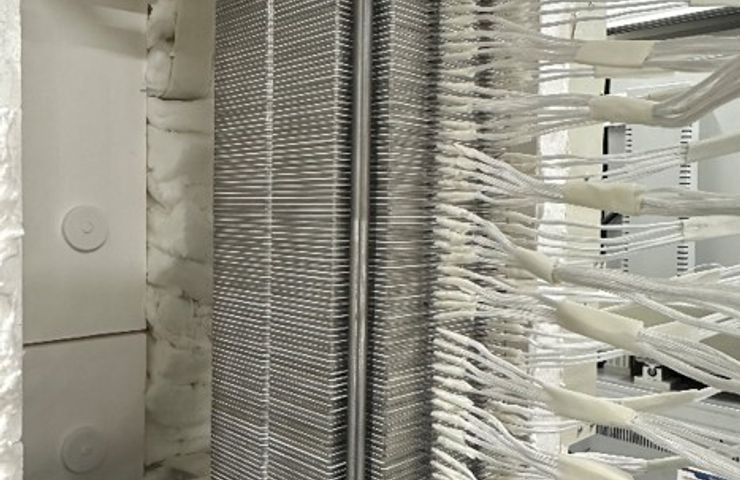
Bumhan Fuel Cell Co., Ltd. says it has developed what it describes as South Korea’s first 10 kW‐class cascade solid oxide fuel cell system, reporting 60.8% electrical‐generation efficiency through a national energy R&D programme. The company says this milestone was achieved under support from the Korea Institute of Energy Technology Evaluation and Planning, using key domestic components for stacks, reformer, separators, heat exchanger and inverter. The demonstration unit, the firm adds, uses a cascade hot‐box integration to manage gas flows and temperature across two sequential stacks.
Why It Matters
South Korea is pushing hydrogen infrastructure under its Hydrogen Economy Promotion and Hydrogen Safety Management Act and clean‐hydrogen auction schemes. According to project documentation, the R&D effort began in May 2021 with targets of at least 60% electrical efficiency and 3,000-hour durability. By scaling cascade stacks from an earlier 3 kW hot‐box demonstration, the 10 kW system represents the next step toward modules suitable for stationary generators, fuel‐cell power plants and AI data centers, where continuous, reliable power can relieve grid bottlenecks. Efficiency gains at this scale are critical for narrowing the cost gap with conventional generation.
Cascade Architecture Boosts Fuel Utilization
In cascade SOFC systems, unconverted fuel from a primary stack—typically a mix of hydrogen and carbon monoxide—exits at around 800–1,000 °C and enters a secondary stack for a second electrochemical reaction. Bumhan Fuel Cell reports this sequential arrangement lifted overall fuel utilization and contributed to the reported 60.8% efficiency. The company indicates that its cascade hot‐box manages insulation, thermal balance and gas distribution between stacks, reducing heat losses and improving reforming performance. However, detailed temperature gradients, flow rates and heat recovery metrics have not been disclosed, leaving open questions on how the design copes with thermal stress, seal integrity and interconnect oxidation under rapid load changes.
Efficiency Claim and Test Conditions
The company states the system delivered 10 kW‐class electrical output at 60.8% net efficiency, slightly above the original 60% target cited in earlier materials. This performance figure is reported at the electrical interface, though it is not clear if it refers to DC output at the inverter or AC export after parasitic loads. Measurements were conducted under unspecified test conditions, according to the announcement. Independent verification by a third party or regulator is pending, and there is no publicly available data on parasitic loads from blowers, reformer heaters or control electronics. Without standardized metrics, external analysts caution that reported efficiency may differ when balance‐of‐plant losses are fully accounted for and under variable operating cycles.
Multi-Partner R&D Framework
The project was coordinated by Bumhan Fuel Cell with backing from the Korea Institute of Energy Technology Evaluation and Planning. Collaborators included the Korea Institute of Energy Research, the Korea Institute of Ceramic Engineering and Technology, Seoul National University, Dongil Brazing and Hannam University. Each partner contributed expertise in high‐temperature electrochemistry, ceramic components, brazing techniques and academic validation. While the company highlights domestic sourcing of core parts—stacks, fuel reformer, metal separators, heat exchanger and inverter—it has not disclosed the extent of each collaborator’s deliverables or whether specific components were certified for the final system. As a result, the R&D complex remains tightly linked to company‐driven integration rather than independent qualification of each module.
Commercial and Technical Hurdles
Transitioning from a development prototype to a commercial product demands proof of long‐duration operation, rapid start-up, load-following and low degradation rates. The announcement omits data on operating hours, electrode degradation, seal performance and sulfur or carbon deposition in reformers. High-temperature systems require robust materials to manage thermal cycling and mitigate chromium contamination, yet the disclosure does not cover maintenance intervals or component lifetimes. Moreover, capital costs for ceramic cells and balance-of-plant equipment remain undefined, raising questions on return on investment. Until prospective buyers see certification, warranty terms and lifecycle cost analyses, market uptake is likely to remain cautious.
Strategic Positioning in Stationary Power
With South Korea’s grid facing capacity constraints and industrial power demand rising—particularly for AI data centers—localized generation is gaining policy support. The company suggests cascade SOFC modules could form the building blocks for distributed fuel‐cell power plants, benefiting from grid connection rules and clean‐hydrogen auction schemes. A 10 kW module, however, is small compared to megawatt-scale needs and would require dozens or hundreds of units in parallel to meet larger loads. Integrating multiple units adds complexity in control, thermal management and space requirements, potentially offsetting efficiency gains. Nonetheless, domestic development of cascade technology may reduce reliance on imported systems and bolster the local supply chain.
The Maverick Take
Bumhan’s announcement reads like a lab triumph dressed up for press—60.8% efficiency is appealing, but without independent test data, it’s a paper victory. High-temperature cascade SOFCs have promise, yet they walk a tightrope between fuel utilization gains and the burdens of thermal control, seal integrity and material degradation. Until the company publishes third-party validation or fields pilot installations, skepticism is warranted. Investors and data-center operators will need clarity on module pricing, expected lifespans and maintenance overhead before writing purchase orders. The real litmus test for this design will be cost-per-kilowatt-hour under real-world duty cycles, not a brief efficiency highlight reel.
Looking Ahead: Bumhan Fuel Cell indicates it will refine hot-box integration and pursue multi-module assembly for field trials. Observers should look for independent reports on performance over thousands of hours, detailed cost breakdowns and early adopter case studies. Until then, the technology remains an intriguing research cue rather than a turnkey solution for stationary hydrogen‐powered generation.