China's Green Fuels Initiative: Insights from Suqian's Hydrogen Production Development
China's Green Fuels Committee visited Suqian, Jiangsu, to explore hydrogen production technologies, focusing on AEM electrolysis and renewable energy integration, aiming to enhance the country's hydrogen agenda.
On a recent visit to Suqian, Jiangsu Province, the Green Fuels Committee of the China Energy Research Society engaged with local companies to explore advancements in hydrogen production and energy storage technologies. The trip was presented as the first stop in an 'Entering Enterprises' series, an initiative intended to investigate how renewable energy can be integrated with hydrogen systems at the company level. Over several hours the delegation inspected facilities, spoke with engineers and managers, and collected on-site observations to inform the committee's technical review.
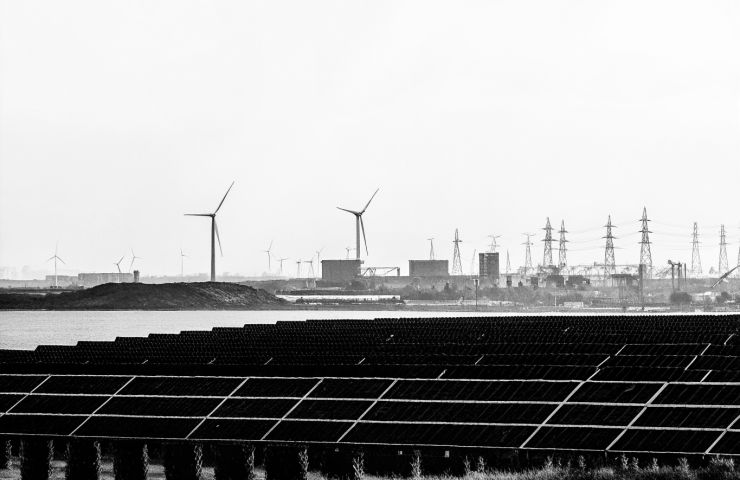
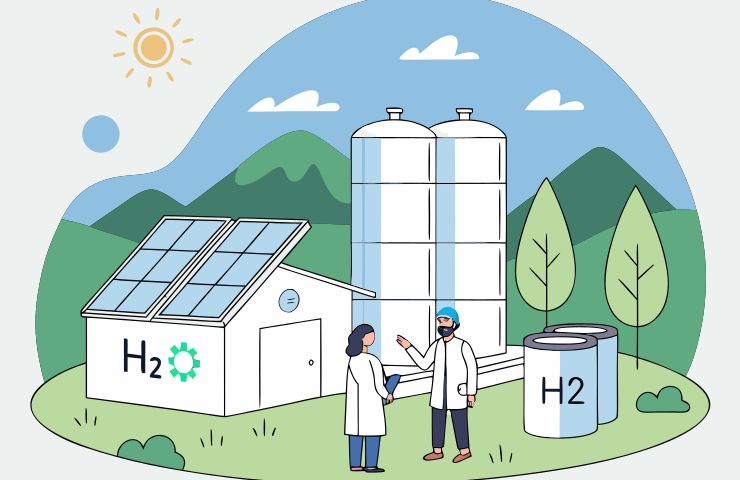
The committee was led by Dai Yande, executive director of the society, alongside Xu Li, executive deputy director of the Green Fuels Committee. Together they visited operations of the Lyando Group, including two subsidiaries: Suqian Green Energy Hydrogen Creation Technology Co., Ltd. and Suqian Time Energy Storage Technology Co., Ltd.. At the Lyando campus the delegation toured an AEM electrolyzer research and development center and examined a photovoltaic-powered off-grid hydrogen production platform that the company has been operating for trials and demonstration.
Exploring AEM Electrolysis and Off-Grid Solutions
AEM electrolysis represents an innovative approach designed to produce hydrogen using lower-cost catalysts and materials, addressing a significant challenge in the energy transition. The system relies on a solid anion-exchange membrane to conduct ions, and in design terms it seeks to combine the advantages of both alkaline and PEM systems. Delegates noted that this hybrid character is what makes AEM promising for renewable-coupled hydrogen production, particularly where lowering material costs is a principal objective.
During their visit, discussions centered on the operational challenges that remain and on practical applications for produced hydrogen. Industry conversations pointed to potential uses in sectors such as ammonia, methanol, and metallurgy, where hydrogen can serve as a feedstock or reducing agent. The photovoltaic-powered off-grid platform was framed not simply as a demonstration site but as an experimental setup for testing the viability of producing hydrogen independent of the traditional electricity grid. That independence matters because renewable generation is variable; the platform is being used to identify how electrolyzers, storage and control systems must be configured to cope with intermittent solar input.
Engineers on site described the platform as a means to validate control strategies and to collect empirical data on hydrogen yield, electrolyzer ramping behavior and energy flows under real-world solar profiles. The committee’s review included assessment of balance-of-plant issues, such as how inverters, power electronics and storage interact with the electrolyzer, and how those interactions affect overall system performance. The Lyando demonstration therefore served a dual purpose: to show a working model and to surface technical questions that would require longer-term testing.
Strategic Importance for China’s Hydrogen Agenda
This initiative aligns with China's broader energy strategy of enhancing industrial hydrogen production while transitioning to greener alternatives. Committee members emphasized that although the technical approaches on display are promising, significant barriers remain — notably the costs associated with AEM technology and the broader expense of deploying hydrogen at industrial scale. In short, AEM electrolysis could reduce reliance on fossil fuels, but it has yet to be proven commercially viable at scale.
Another topic the delegation examined was energy storage. The integration of aqueous organic flow batteries was raised as a complementary technology that could facilitate longer-duration energy storage, allowing excess solar energy to power the electrolyzer when required. In theory, that synergy can smooth mismatches between generation and demand, improve utilization of renewable assets and reduce the need for curtailment. Committee observers stressed that pairing storage with electrolyzers is a systems-level decision: it affects capital allocation, operation and the economics of hydrogen production.
Cost, the committee noted, is a multi-faceted challenge. It encompasses not only the electrolyzer stack and its catalysts but also the costs of power conversion, storage, site integration and ongoing operations. Members highlighted that lowering the levelized cost of hydrogen in this type of configuration will require improvements across those areas, which in turn depends on continued research, pilot deployments and supply-chain development. The Suqian visit was therefore intended to shed light on where those improvements may be most effectively pursued.
The importance of the Suqian visit is underscored by the committee's intention to compile technical and policy findings derived from their observations, paving the way for future recommendations aimed at influencing national hydrogen policy and standards. Delegates said they would document the operational data they observed, summarize technical gaps identified during discussions with company engineers, and prepare policy-oriented notes that address standards, safety protocols and potential incentives. The goal is to produce informed recommendations that can be considered by stakeholders shaping China's hydrogen roadmap.
Conclusion: A Step Toward Practical Hydrogen Solutions
While the technologies showcased during the Suqian visit have not yet reached a point of commercial maturity, the endeavor reflects a vital effort in China's commitment to advancing green hydrogen technologies. Participants described the visit as an early but necessary step: a way to move from laboratory results and component-level advances toward integrated systems that can be tested under real operating conditions. As research continues and industry collaboration intensifies, the future of hydrogen production in China may become increasingly viable, aiding not only local industries but also contributing to global decarbonization efforts.
For now, the Suqian demonstrations remain prototypes and field experiments. They are intended to generate data, sharpen technical priorities and build the case for larger pilots should the economics improve. The committee’s follow-up work — compiling findings and translating them into recommendations — will determine how lessons from Suqian feed into broader policy and standard-setting discussions at the national level.