Clean Hydrogen News: AI and Hyperscalers Drive $110 Billion Market Surge
BCC Research finds AI optimization and hyperscale data center demand are driving a $110 billion surge in clean hydrogen investments.
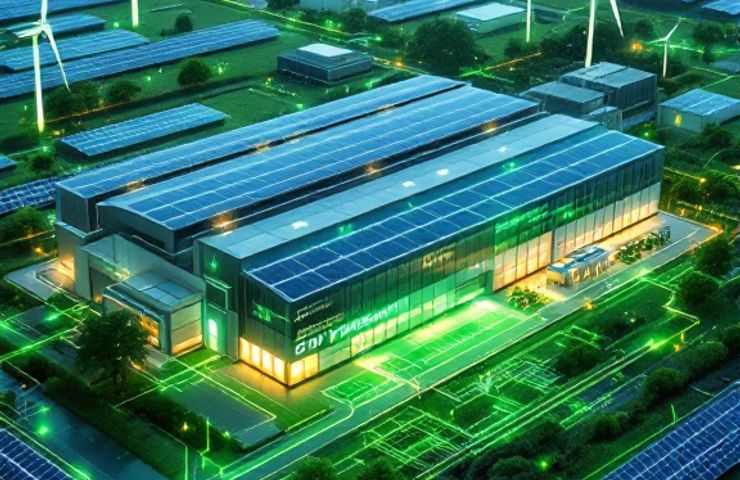
You know, it’s pretty exciting to think about how the next wave of hydrogen growth might not just rely on cranking up electrolysis or building more turbines. Instead, it could be all about using smart algorithms to perfect every single step of the process. A fresh report from BCC Research points exactly to that idea, showing how artificial intelligence is quickly becoming the backbone of green hydrogen production. Plus, with hyperscale data centers stepping in as major players, we could see a hefty $110 billion investment across around 510 clean hydrogen projects worldwide.
Getting Smarter with AI
Historically, electrolyzers have had their hands full dealing with fluctuating renewable inputs, material wear and tear, and complicated control systems. But now, we’ve got solutions like Honeywell Protonium, which optimizes design and brings down the projected levelized cost of hydrogen. These innovations not only extend the life of components but also unify operations to streamline everything from power management to production. Over in Europe, Siemens is rolling out generative AI tools like Comos AI and its Hydrogen Plant Configurator that can automate engineering tasks, generate control sequences, and even model entire plant layouts.
So here’s the cool part: plant operators can input data from sensors—like current density, temperature, pressure, and water purity—into machine learning models that can predict efficiency hotspots or potential failures. These AI-driven controllers have already shown they can boost stack availability and extend component lifetimes, which means real savings on operational costs.
Digital Twins and Material Breakthroughs
Digital twins are really taking things up a notch. Think of them as high-fidelity virtual replicas that continuously update with real-world info to forecast maintenance needs and tweak designs before any machinery moves. On the research front, AI is speeding up discoveries in catalysts and storage. Using graph neural networks, we can now screen thousands of compound structures for things like oxygen evolution or hydrogen uptake in a matter of days instead of years. Some pretty impressive projects at top research institutes are highlighting AI’s potential to cut down R&D timelines and pave the way for next-gen, cost-effective catalysts and new storage techniques.
Bridging Demand and Supply
As for hyperscale data centers, they're on the lookout for reliable, zero-emission energy sources. Given that the electricity demand for data centers is projected to double by 2030, companies like Microsoft are already testing hydrogen fuel cell backup systems and teaming up with ESB in Ireland to power their Dublin data center with green hydrogen. Other tech giants are making renewable power offtake agreements in the gigawatt range, setting the stage for a future where hydrogen fuel cell technology can provide significant power resiliency and help with decarbonization goals.
Expanding Beyond Data Centers
While data centers are making headlines, the real game-changer for green hydrogen could be in those tough-to-decarbonize industries. Steelmakers are experimenting with it for direct reduction, chemical producers are eyeing it as a low-carbon feedstock, and shipping companies are looking at ammonia as a potential carrier. All those AI tools that help optimize electrolyzer performance and predict catalyst degradation can translate into lower production costs, whether we’re talking about good old servers or industrial applications like furnaces and fuel-cell vessels. By uniting offtake agreements across tech and heavy industry, project developers can set up a more resilient hydrogen infrastructure.
Investment Trends and Future Pathways
The $110 billion investment figure isn't just a random number; it aligns nicely with the Hydrogen Council’s Global Hydrogen Compass, which tracks about $35 billion year-on-year across more than 500 projects at various stages of development. Just look at the boom: project announcements have skyrocketed from a few hundred to over 1,700 globally in just five years. That’s some serious growth, with committed investment climbing around 50% annually since 2020. The current pipeline could top 6 million tonnes per annum, with potential to hit 9–14 million if the demand keeps up. For investors and planners, these numbers represent a shift: clean hydrogen is moving from pilot projects to full-scale, multi-billion-dollar infrastructure.
Financing, Partnerships, and New Hubs
On the funding front, we’re seeing venture capital and project financing jump on board. Startups focused on AI-driven hydrogen solutions are pulling in significant cash, while larger financiers are backing green hydrogen hubs in areas with solid policy support. Europe’s cohesive approach to AI and hydrogen regulations—thanks to initiatives like REPowerEU—offers a contrast to the more fragmented landscape in the U.S., though state incentives and DOE guidelines are starting to take shape. In the Asia-Pacific region, companies are ramping up corporate AI investments, positioning themselves nicely for a fast-paced integration of hydrogen and AI.
Challenges, Progress, and Why It Matters
That said, it’s not all smooth sailing. There are data quality issues, challenges with system integration, and cybersecurity risks that need smart management. The regulatory landscape, from Europe’s unified hydrogen certification to evolving U.S. grid connection rules, can add complex layers for developers. Emerging technologies like anion exchange membrane electrolyzers show promise for cutting costs but still need some real-world validation. But every hurdle presents an opportunity for AI: predictive maintenance can signal grid bottlenecks; digital twins can simulate the impacts of policies; and machine learning can refine manufacturing processes.
Bottom line, we’re at a crossroads. Green hydrogen and AI are not just separate trends—they’re really two forces that could redefine how we tackle industrial decarbonization. The efficiencies brought by AI can make hydrogen plants cheaper and more reliable. Hyperscalers in need of dependable, low-carbon power create significant demand. Investors are keeping a close eye on a sector ready to scale up. Governments are aligning their strategies around both hydrogen deployment and AI development. The real proof will come when we see massive electrolyzer gigafactories running under AI oversight, cranking out hydrogen at competitive prices compared to fossil fuels while powering our digital and industrial ecosystems hand in hand. This vision isn’t decades down the line; the tools are already in pilot programs, investments are flooding in, and there’s a clear alignment between tech giants, industry leaders, and policymakers. For anyone watching the sustainable energy landscape, hydrogen isn’t just a niche; it’s front and center in achieving our zero-emission goals, with AI guiding the way.