Crystalline polymer catalysts edge closer to efficient green hydrogen production
Engineering the crystallinity of polymer photocatalysts boosts their sunlight-driven hydrogen production activity, potentially making organic catalysts competitive in green hydrogen production.
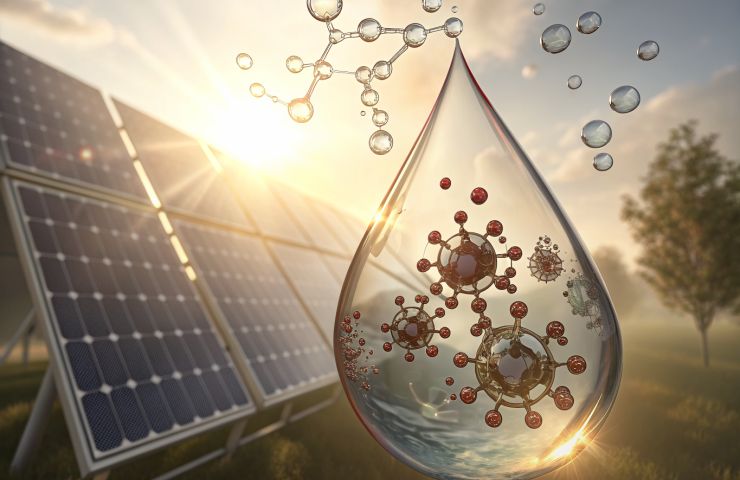
Have you ever thought that the plastic sitting next to you could actually be the key to powering cars and factories with green hydrogen? It might sound like something out of a sci-fi movie, but a fresh report in Nature hints that we're getting closer to making this a reality. Picture this: instead of relying on fossil fuels or complex high-pressure electrolysers, we could have a sunny tank of water and these cool polymer crystals doing the heavy lifting to produce hydrogen. According to a team led by Zhuzhang et al., tweaking the molecular structure of polymer catalysts can ramp up their performance, making organic materials a closer rival to the standard inorganic ones used in solar-driven hydrogen production.
Polymers have long promised a cheaper and customizable way to make catalysts that can harness sunlight. Think of it like playing with LEGO—just swap out the pieces (or monomers, in this case) to adjust the design. Historically, though, these plastics had a tough time catching up to the durability and efficiency of metal oxides. Now, researchers are twisting polymer chains into organized crystalline structures, turning a flimsy mesh into a well-oiled machine for transporting charges.
The interest in using polymers for splitting water goes way back to the late '90s. Some early tests with materials like polyaniline and polythiophene showed that they could work under UV light, but they quickly fell short in real-life settings. Those setbacks caused a temporary halt in polymer research, but things started to heat up again around 2020. Thanks to better molecular design tools and computational techniques, excitement has rekindled. Today's researchers are focusing on creating these polymer crystals by selecting the right monomers and conditions to build robust, light-absorbing materials.
Polymers Meet Sunlight
When it comes to polymer photocatalysts, the conjugated backbones act like tiny antennas. When sunlight hits them, it energizes electrons, pushing them to the conduction band and leaving holes behind. To generate hydrogen, these electrons and holes have to separate before they come together again: electrons convert protons to hydrogen, while holes oxidize water or other donors. Traditional strategies have fiddled with donor-acceptor setups, added π-bridges, and even brought in metal cocatalysts, but sometimes they lost sight of the bigger picture of how these chains are arranged.
Imagine a polymer crystal as a perfectly organized bookshelf. Each book (or chain) sits close to the other, allowing information (charges) to zip along quickly. In messier arrangements, the pathways get blocked, and the charges slow down or even disappear. Zhuzhang’s team created polymer crystals that keep their order even after being exposed to light for a long time, leading to impressive and consistent hydrogen production rates under simulated sunlight. While the summary in Nature doesn’t give us exact numbers, this qualitative leap suggests that organic powders could stand shoulder to shoulder with traditional photocatalysts like titanium dioxide.
Material Morphology and Heterostructures
But it's not just about having a structured crystal; the shape of the material can also impact how well it performs. Polymer dots that are precisely sized can cut down on the chances of recombination by making charge transport more efficient. There are also all-polymer heterojunction nanoparticles that combine different polymers, creating built-in electric fields to keep charges apart. And structures like S-scheme architectures cleverly stack oxidation and reduction catalysts together, mimicking the natural processes of photosynthesis. Plus, various anchored film designs—ranging from porous frameworks to stacked panels—offer easier recovery and better land use.
Researchers are now exploring the idea of embedding these polymer crystals in mesoporous materials or making thin films on conductive supports. These designs can enhance the surface area and help with gas release, making them easier to integrate into modular reactors. As the shapes of reactors change, so does the dream: imagine fields of panel reactors quietly producing hydrogen with very few moving parts, quite a departure from the noisy spinning electrolyser turbines we know.
Economic and Environmental Considerations
You might be scratching your head, wondering: why bother with polymer catalysts when we already have electrolysis up and running? Well, cost models offer a persuasive reason. If photocatalysts can achieve a solar-to-hydrogen efficiency of around 5–10% and have a long lifespan, the price of hydrogen production could dip to anywhere between $1.6 and $3.5 per kilogram in sunny regions. That kind of price tag starts to challenge the costs associated with green electrolysis, especially when you consider that these powder-based systems often require less complex infrastructure and lower initial investments.
Land usage is another thing to think about. Photocatalytic arrays could have a smaller footprint compared to big PV-electrolyser farms since they can simultaneously harvest light and catalyze hydrogen production. This could allow us to avoid pricey grid updates, using existing solar setups instead. Of course, it's essential to keep an eye on the environmental impact of producing these polymers—like the solvents used, the metals in catalysts, and any microplastic infiltration. Thankfully, ongoing research on solvent-free methods and metal-free cocatalysts aims to keep emissions in check.
Challenges and Scaling Up
That said, there are still some bumps in the road. Most high-performing polymer systems are dependent on sacrificial electron donors or tiny amounts of platinum. Testing often lasts just a few days, and we don't have any data showing continuous operation on a larger scale yet. Plus, there's no standardized way to measure performance: different labs report varying rates under different conditions, which can make comparisons pretty tricky.
Suspension reactors have their quirks too—they can struggle with settling, getting light into the system, and recovering catalysts. Solutions like anchored film reactors and stacked modules show promise but can complicate things and bump up costs. Engineers are in a constant tug-of-war between simplicity and performance, exploring ideas ranging from rotating drum reactors to membranes that hold the photocatalyst.
Policy and Market Pathways
For investors and policymakers, it’s crucial to explore various hydrogen production methods for long-term stability. Photocatalytic systems could be a lifeline for off-grid mining camps, remote islands, or farms, generating hydrogen on-site for refueling or ammonia production. Emerging venture funds are starting to look at modular photocatalysis platforms, banking on lower upfront costs and easier maintenance.
As these technologies advance, regulatory frameworks need to catch up too. We’ll need standards for long-term stability, safety, and particle containment. Performance standards could mirror those of solar panel warranties, helping steer procurement decisions and sales agreements. As our global goals for reducing carbon emissions become stricter, any method that lowers the cost and complexity of hydrogen production is bound to attract some serious interest.
We’re not saying commercialization is just around the corner, but this certainly brings polymer photocatalysts into the spotlight as a viable piece of the clean hydrogen news puzzle. The upcoming publication from Zhuzhang et al. promises to share concrete numbers—quantum efficiencies, stability data, and projections for pilot-scale applications. If those figures hold up in real-world scenarios, we could see polymer crystals standing alongside silicon and metal oxide frontrunners in revolutionizing how we produce green hydrogen from sunlight and water.