RWE and Kawasaki Commence Field Trial of 34-MW Hydrogen-Compatible Gas Turbine in Germany
RWE and Kawasaki have launched a field trial of a 34-MW hydrogen-compatible gas turbine in Lingen, Germany, aiming to test its capabilities using hydrogen and assess its role in future energy systems reliant on renewables.
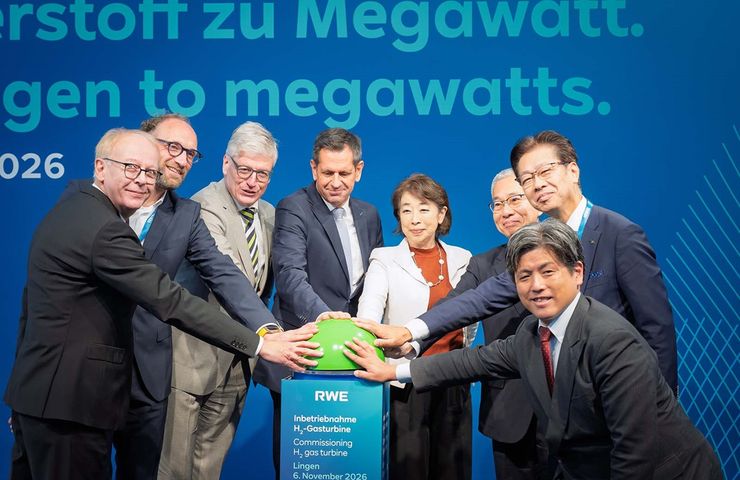
RWE Generation SE and Kawasaki Heavy Industries have launched a significant hydrogen power initiative at the Emsland gas-fired power station in Lingen, Germany, beginning trial operations of a first-of-its-kind 34-MW hydrogen-compatible gas turbine. This turbine can operate on natural gas, hydrogen, or any blend of the two, serving as a crucial step in transitioning to cleaner energy sources.
Operation of the turbine commenced this month. The immediate objective is straightforward: evaluate performance across a range of operating conditions that matter to an electricity system increasingly dependent on variable renewable energy, particularly wind and solar. In short, the trial is about testing how a thermal generator behaves when the fuel mix shifts and renewables fluctuate.
Hydrogen for the trial comes from electrolysers at the nearby GET H2 Nukleus project. RWE plans to expand that project significantly, aiming for a total electrolysis capacity of 300 MW by 2027. Connecting electrolytic hydrogen production directly to a gas turbine is central to the trial’s design and to the questions RWE and Kawasaki have put at its core.
Testing will include examining mixtures with varying hydrogen shares. The partners plan to push the turbine to run on higher hydrogen proportions and ultimately to test electricity generation scenarios up to 100 percent hydrogen. That sequence — from blended fuels toward pure hydrogen — is intended to reveal the operational limits and practical trade-offs of hydrogen firing in a conventional thermal machine.
How it works: the turbine incorporates advanced combustion technology designed to accept a range of fuels while maintaining operational efficiency and addressing emissions concerns. Its flexibility is meant to permit energy dispatchability when renewable generation is insufficient. In other words, the machine is positioned to help balance the grid and stabilize supply at times when wind and solar cannot meet demand.
Because the turbine can burn natural gas, hydrogen or blends, it sits at an intersection of existing infrastructure and future fuel systems. That positioning allows operators to move along a decarbonization pathway without immediately abandoning conventional fuel sources. It also creates a testbed for questions that go beyond combustion — questions about fuel handling, fuel blending strategies, and integration with nearby hydrogen production facilities.
The trial’s implications extend beyond turbine metrics and into systems planning. By connecting electrolysis-based hydrogen production directly to power generation, RWE aims to demonstrate a continuous energy flow from renewable electricity through electrolysis and into thermal generation. Observations from the field trial are expected to inform how such linkages could support a more flexible, low-carbon power system.
Data gathered during this campaign will be sought for several purposes. Engineers will look at combustion stability, emissions performance, and operational constraints as hydrogen shares change. Planners and regulators will be able to examine output and operational patterns. Investors and developers will be able to see how a hydrogen-capable turbine might fit into broader project economics and system designs. The trial therefore aims to generate evidence for plant design, regulatory frameworks, and investment choices across the emerging hydrogen economy.
Policy context underpins much of the motivation. Germany’s rules require that new gas plants meet hydrogen-readiness requirements, a regulatory direction that aligns with a national strategy targeting complete decarbonization of the power sector by 2045. The Emsland trial sits squarely within that policy environment; it is both a technical test and a response to evolving regulatory expectations.
Still, the trial does not answer every question. Intensive testing is necessary to map performance, but wider issues remain. Economic viability of hydrogen as a fuel is an open question. So too are the scale and configuration of the infrastructure needed for broad uptake — from production through storage and transportation to end-use. The partners acknowledge these are significant considerations when assessing hydrogen’s role at scale.
Those unresolved items are exactly why the trial matters. Field data will begin to clarify costs, operational trade-offs and infrastructure needs without turning assumptions into facts. Over time, the evidence produced may help policymakers, utilities and developers decide how aggressively to pursue hydrogen pathways and where to prioritise investment.
Operational learning from the Emsland site could influence future plant designs. It could also shape conversations about how thermal plants and renewables coexist on systems that must deliver reliable power while reducing emissions. The trial’s outcomes may therefore have practical implications for short-term grid management and for longer-term planning tied to decarbonization targets.
For RWE and Kawasaki, the exercise blends engineering validation with systems-level demonstration. It tests a piece of hardware — a 34-MW turbine — while simultaneously testing business and policy assumptions about the role of hydrogen in the power mix. The turbine’s fuel flexibility allows a phased approach: keep dispatchable capacity available today, increase hydrogen shares as supply scales up, and explore the technical limits of hydrogen firing.
In summary, RWE and Kawasaki’s field trial at Emsland represents a measured step toward integrating hydrogen into power generation. It places hydrogen technology at the center of discussions on energy transition and grid reliability, while producing operational data intended to inform future decisions on plant design, regulation and investment strategy.