European Commission Launches T-MED Investment Platform to Boost Mediterranean Clean Energy Investments
The European Commission has launched the T-MED Investment Platform to streamline renewable energy investments in the Mediterranean, aiming to provide up to €4.5 billion in guarantees and strengthen collaborations across stakeholders.
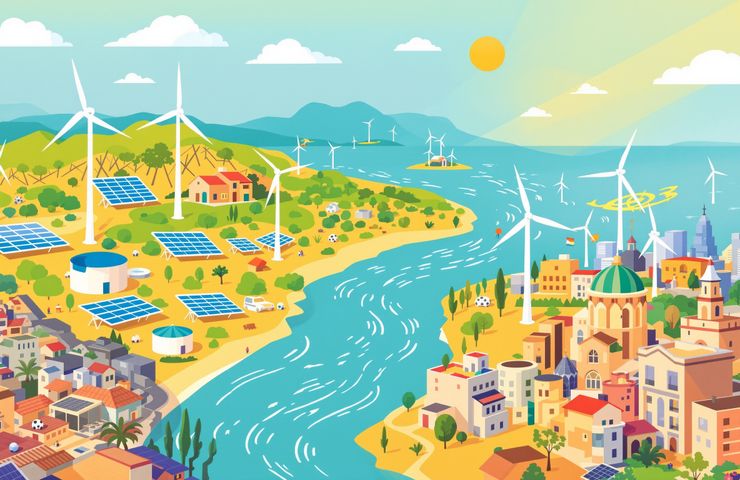
The European Commission has recently unveiled the T-MED Investment Platform, an initiative intended to streamline and strengthen investment in renewable energy across the Mediterranean. It aims to bring together EU institutions, private investors and project developers and offers up to €4.5 billion in guarantee capacity through the European Fund for Sustainable Development Plus. The guarantees are designed to change how projects are financed. They will lower perceived risks for banks and other lenders. And they are central to T-MED’s case for attracting private capital to the region.
At its core, the platform targets large-scale deployments in several interconnected fields: renewable electricity, renewable hydrogen and supporting energy infrastructure. Those areas are not separate pieces but parts of a single system that must be planned together. For example, building electrolysis capacity for hydrogen depends on steady supplies of renewable power. Likewise, hydrogen output can feed downstream industries, including the production of green ammonia.
Understanding the Technical Landscape
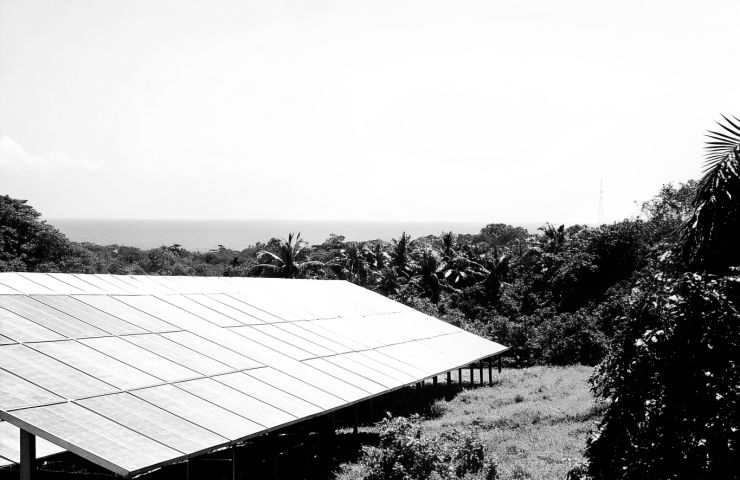
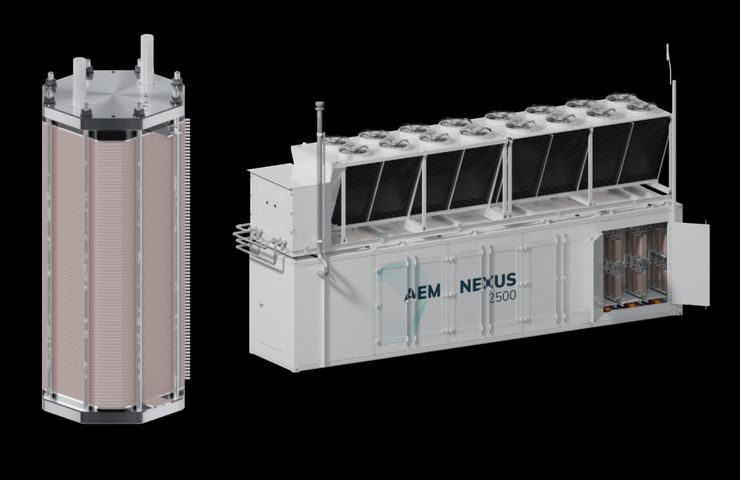
T-MED identifies specific technologies that will form the backbone of planned projects. Solar photovoltaic arrays and onshore wind power installations appear prominently in its technical mix. Alongside those generation assets, the platform highlights advances in hydrogen production and the role of electrolysis equipment in converting electricity into hydrogen. Planning for these elements, T-MED argues, requires coordinated grid connections, storage solutions and transmission upgrades—assets that must be sequenced and financed together.
The platform’s material also links hydrogen to industrial uses. It notes that hydrogen produced by electrolysis can be routed into applications such as green ammonia manufacturing. That linkage creates demand-pull for renewable power while opening potential export or domestic industrial pathways for newly produced hydrogen. In short: generation, conversion and end use are mutually dependent.
Strategic Implications and Market Potential
Beyond the technical aims, T-MED carries a geopolitical and economic intent. It sits within the broader Pact for the Mediterranean, the framework launched to deepen cooperation with Southern Mediterranean partners. The platform is framed as a tool to enhance energy security for the EU while strengthening trade and investment ties across the Mediterranean basin.
Specific national opportunities are already being identified. Egypt, for instance, is set to benefit significantly through initiatives such as the €1.6 billion electricity grid modernization and expansion project, which is intended to improve integration of renewable energy sources. Tunisia is also cited as a regional partner in the broader effort to scale up cross-border energy projects and commercial ties.
Private capital mobilization is central to T-MED’s logic. The platform’s guarantee capacity is designed to change risk perceptions and improve financing conditions, with the explicit aim of attracting additional private investment. That, in turn, is expected to multiply the initial public support into larger project portfolios across the region.
Impact on Sustainability and Employment
Officials behind the platform set concrete investment targets. T-MED aims to mobilize up to €25 billion in investments by 2035 and to support training and upskilling of workers in renewable energy sectors. Those figures underscore the platform’s twin objectives: accelerate decarbonization while delivering socio-economic benefits in partner countries.
Investment at that scale would be intended to do more than increase clean energy output. It is expected to strengthen local supply chains, create jobs in construction and operations, and encourage technology transfer. Training and workforce development are highlighted as necessary to translate capital into lasting local capacity rather than temporary project-related employment.
Challenges Ahead
T-MED’s ambitions face a series of well-known hurdles. Regulatory fragmentation and permitting delays are flagged as likely barriers. Market uncertainty around future hydrogen demand is another key concern. Without clear and bankable offtake arrangements, projects may struggle to secure the long-term revenues that financiers require.
To succeed, the platform will need transparent procurement processes, meaningful local engagement and credible offtake contracts that lenders can rely on. Those elements are not procedural niceties. They are prerequisites for converting guarantee capacity into tangible projects on the ground. In their absence, guaranteed amounts alone may not be sufficient to bridge project finance gaps.
Governance and environmental safeguards are likewise important. T-MED explicitly links its technical and financial tools to standards for environmental and local governance. Adhering to those standards is presented as a condition for the platform to deliver the longer-term benefits it sets out—ranging from energy security for the EU to sustainable economic development within partner countries.
In sum, the T-MED Investment Platform represents a coordinated attempt to align technical planning, public guarantees and private investment in pursuit of renewable electricity, renewable hydrogen and related infrastructure across the Mediterranean. Its promise rests on combining guarantee capacity, targeted projects such as the €1.6 billion Egyptian grid upgrade, and a broader investment mobilization goal of up to €25 billion by 2035. The outcome, however, will depend on how well stakeholders manage regulatory, market and governance challenges—and on their ability to turn financial backing into bankable projects that operate at scale.