Green Hydrogen Electrolyzer Projects Get €65M Boost from Bavaria
Bavaria awards €65 million to 11 companies developing large-scale electrolyzer projects, fueling its regional hydrogen economy and boosting Germany’s decarbonization goals.
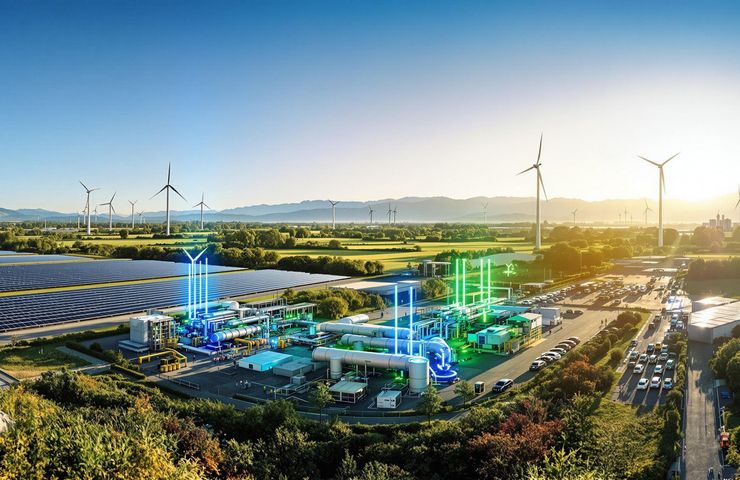
Bavaria is making some big moves to get ahead in the race for a greener future. In a serious show of commitment, the Bavarian State Ministry of Economic Affairs and Energy is putting down €65 million to support eleven businesses developing large-scale green hydrogen projects powered by electrolysis. Each of these projects will use systems with over one megawatt of capacity, signaling a shift from small experiments to serious infrastructure—and a not-so-subtle goodbye to fossil fuels.
Jumpstarting Bavaria’s Hydrogen Future
These funds, set to be deployed starting April 2025, come through the Bavarian Electrolyzer Funding Program, with VDI Technologiezentrum GmbH overseeing the process. The idea? Back projects that use electrolysis to turn water and renewable electricity into pure hydrogen—no emissions, no fossil fuels, just clean energy with serious staying power.
What’s exciting here is the range of industries getting on board. On one end, you’ve got steel giants like Steelworks Annahütte Max Aicher GmbH & Co. trying to kick carbon out of heavy industry. On the other, firms like Fahrner Energy GmbH and ESB Renewable Energies GmbH are laser-focused on renewables. Then there’s the support crew—utilities like Energie Schwaben GmbH and infrastructure experts such as Tyczka Hydrogen GmbH—working to build out the hydrogen infrastructure that’ll make the whole system run smoothly. From production to delivery, every link in the chain is getting a boost.
Think Local, Act Global
Germany has laid out some pretty bold targets to cut its industrial emissions, with green hydrogen playing a starring role. While the federal strategy sets the tone, Bavaria’s not waiting around—it’s putting that plan into action. This isn’t Bavaria’s first dabble in the hydrogen space, but it’s easily the most ambitious. By focusing on mid-to-large-scale electrolyzers, they’re moving past small demos and pushing toward commercial viability.
The mission is clear: build local capacity for hydrogen production, boost economic independence, and create jobs that don’t come at the planet’s expense. This approach doesn’t just make sense—it gives Bavaria a heads-up advantage in the new energy economy.
Hydrogen In Heavy Industry—A Steelmaker’s Pivot
Let’s talk about Steelworks Annahütte. This longtime player in the steel world is shaking things up by swapping out high-carbon coking coal with hydrogen. By applying hydrogen produced through electrolysis to its heat processes, it’s cutting a huge chunk of emissions out of the steelmaking equation. It’s not just a cleaner alternative—it’s a smarter one for industries looking to decarbonize tough sectors.
Other funded projects include Airport Energy Management GmbH, which is looking to trim emissions in aviation infrastructure, and hy.1 GmbH & Co. KG/GP Joule, a partnership that already knows a thing or two about renewable power and hydrogen tech. And here’s the kicker: these companies aren’t going it alone. They’re forming local micro-ecosystems—hydrogen hubs tapping into shared resources, shared infrastructure, and shared vision.
No Free Rides—Only Smart, Scalable Projects
This funding program wasn’t just handing out checks. To get support, companies had to prove they had solid, workable plans. That meant everything from demonstrating how much hydrogen production was possible, to explaining exactly how and where it would be used. Projects had to align with Bavaria’s climate game plan—and deliver real value for the region.
The one-megawatt minimum wasn’t just a nice round number, either. It sets a high enough bar to weed out half-baked or overly tiny concepts. With German engineering in the mix, chances are good these projects will turn into actual, functioning systems—not just press release material.
Building a Cleaner Industrial Backbone
Germany isn’t messing around when it comes to industrial decarbonization. The country is banking on hydrogen to clean up major emissions sources across transport, heating, and manufacturing. But to pull that off, electrolyzer capacity has to scale fast—from kilowatts today to megawatts and even gigawatts tomorrow. Bavaria’s funding program is exactly the kind of move needed to make that leap.
Luckily, the tech is keeping pace. Electrolysis is getting better—more efficient, cheaper to build, and easier to tie into wind and solar setups. Even better, the projects getting funding here span the entire value chain: production, storage, and end-use, whether it's powering trucks, factories, or supporting power grids. It’s a regional play, sure—but with eyes set on national impact and even cross-border partnerships.
As energy systems continue to decentralize and emissions limits tighten further, don’t be surprised if Bavaria starts grabbing more headlines. With the cash, the tech, and the companies to back it up, this region is charging ahead—and it’s not slowing down.