Green Hydrogen Infrastructure Advances as H2APEX Secures Lubmin PMC Win
H2APEX’s Q1 revenue jumped to €3.5 million on the back of a PMC contract for the IPCEI-backed WAL hydrogen plant and early electrolyser output, as it confirms a €14–16 million forecast and advances its 600 MW Lubmin hub.
H2APEX Group SCA has kicked off the year with quite a bang, reporting a remarkable 65% jump in Q1 revenue, hitting €3.5 million. This surge has been largely driven by their recent Project Management Consultancy win for the impressive 100 MW IPCEI-backed WAL – Hydrogen from Lubmin plant and some early sales from their own electrolyser assets. Now, even though they’re still grappling with a negative EBITDA of €7.1 million, the company is holding steady on their full-year revenue expectations, projecting between €14 and €16 million. This move marks a significant pivot from their traditional engineering focus to developing and operating large-scale green hydrogen projects.
Locking in Predictable Revenue
This quarter’s standout moment came from a contract with project company GHS2, which tapped H2APEX to provide project management consultancy for the first 100 MW phase of a broader hydrogen hub at Lubmin. What’s great about this gig is that it locks in steady, fee-based revenues through planning, procurement, and construction oversight. This really helps smooth out the ups and downs that come with one-off engineering contracts. Adding to the good news, H2APEX has already produced 17 tonnes of hydrogen from its proprietary electrolyser plant, which adds to their growing stream of operational income.
They’re seeing a shift in their order intake, with a significant portion of their €23.7 million order book now tied to PMC assignments. That’s up from €22.6 million at the end of last year! Plus, their workforce has expanded to 155 employees, reflecting the growth of in-house expertise across project management, permitting, and operations roles. The folks over at H2APEX believe that combining consultancy fees, supplying modular equipment, and ramping up production volumes is the key to generating predictable revenues going forward.
Strategic Pivot to Owned Assets
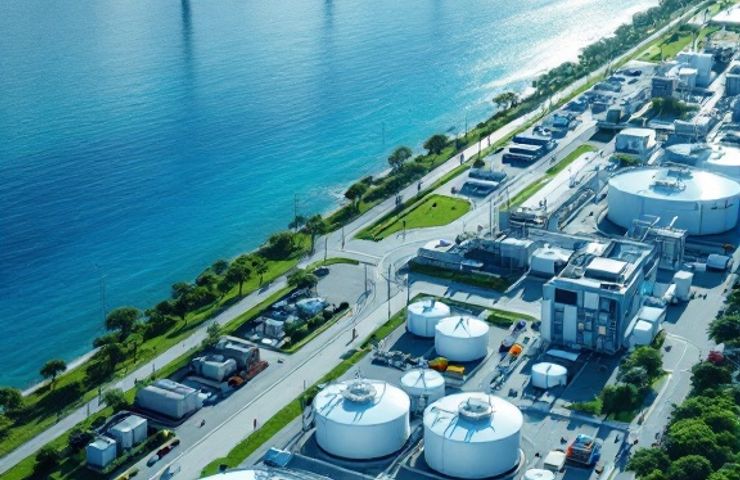
Since last year, H2APEX has aggressively moved away from EPC-heavy third-party contracts, focusing instead on owning and managing their own hydrogen projects. They recently snagged the HH2E Lubmin site, which gives them control over pipeline landings and grid connections that were originally set up for natural gas imports. This acquisition is a major leap toward their ambitious 600 MW Hydrogen Hub Lubmin, with the IPCEI-backed 100 MW WAL stage serving as the first step.
To support these plans, the company secured around €35 million in financing through a mix of shareholder loans, institutional debt, and grants connected to significant projects of common European interest. In a show of confidence, institutional capital from Copenhagen Infrastructure Partners is looking to co-invest about €15 million into the initial electrolysis plant, which not only reduces execution risks but also indicates a healthy investor appetite.
This strategic shift mirrors a broader trend in the industry, with developers increasingly moving from pure EPC frameworks to integrated asset ownership to secure long-term cash flows. H2APEX is now eyeing a project pipeline that targets up to 1.6 GW of capacity in Germany, with Lubmin positioned as the key site.
Policy Tailwinds and Market Implications
The financing for the WAL project is underpinned by Europe’s IPCEI framework, which gives beneficiaries access to state and federal support while adhering to stringent innovation and environmental impact milestones. On another front, Germany’s tightening greenhouse gas reduction targets for transportation are expected to boost demand for low-carbon hydrogen and synthetic fuels, opening up exciting new opportunities across road, rail, and aviation sectors.
Policymakers in Mecklenburg-Vorpommern have also prioritized repurposing old gas infrastructure for renewable-based chemicals and fuels, incorporating hydrogen hubs into regional structural change plans. With high-voltage connections and close proximity to offshore wind resources, Lubmin is shaping up to be a prime candidate as a green hydrogen export gateway, not just for local industries but for wider European markets too.
As both public and private stakeholders rally around the need to decarbonize sectors like steel, chemicals, and cement, early movers like H2APEX stand to gain from more streamlined permitting processes, cross-border pipeline corridors, and evolving standards for renewable hydrogen certification.
Electrolysis at Scale
A critical part of H2APEX’s game plan is deploying reliable electrolysis technologies—both alkaline and polymer electrolyte membranes (PEM)—that come in modular units capable of stacking up to hundreds of megawatts. They plan to stage capacity in increments of 50–100 MW, which allows them to stay flexible and adapt to changing demand and technological advancements without needing to build out oversized plants.
Here’s a quick overview of the process:
- Renewable electricity from both onshore and offshore wind is channeled through high-voltage lines into the plant’s substation.
- Water is purified on-site before it enters the electrolysis stacks.
- The electric current splits H₂O into oxygen, which gets released as a byproduct, and hydrogen gas, captured at the cathode.
- The hydrogen produced is compressed to 35–50 bars, purified, and stored in high-pressure tanks or underground caverns for hydrogen storage.
- Distribution methods include pipelines, tube trailers, or direct injection into industrial customers or fueling stations.
This integrated approach not only allows for flexible scaling but also provides additional grid services, such as balancing variable renewable input and offering reserve capacity during peak demand times.
Outlook and Risks
With a confirmed revenue target of €14–16 million and a growing order book positively influenced by PMC contracts and early production fees, H2APEX expects to maintain momentum on the revenue front. However, their ongoing negative EBITDA—still at €7.1 million this quarter—highlights the hefty initial investments needed for expanding their electrolysis capacity and preparing the sites.
That said, there are some risks to keep an eye on:
- Permitting delays could result from the complexities of environmental and grid-connection approvals, potentially stretching out construction timelines.
- Cost inflation could squeeze margins as prices for electrolyser stacks, electrical components, and civil works rise.
- Grid constraints need addressing since Lubmin's local transmission capacity has to be upgraded to accommodate high renewable power inputs and significant electrolyser demands.
- Long-term hydrogen sales agreements are crucial for securing financing and mitigating revenue risks.
On a positive note, partnerships with institutional players and backing from IPCEI provide some risk mitigation. Plus, their phased implementation model helps spread capital needs over several funding rounds, making it easier on the wallet. Successfully delivering the first 100 MW stage on schedule and on budget will be key in determining how quickly they can move forward with the additional 500 MW expansions.
As H2APEX embarks on building out the first stage of the 600 MW Hydrogen Hub Lubmin, this quarter’s results really mark a pivotal shift for them as they go from being primarily a developer to an operator in Europe’s green hydrogen landscape. By mixing consultancy revenues with their in-house production, they aim to create smoother cash flows while also working towards ambitious decarbonization goals. In the coming months, everyone will be watching Lubmin closely since how well they execute their plans could very well spark a new chapter in hydrogen infrastructure across Germany and beyond.