Green Hydrogen News: H2Pro’s Decoupled Water Electrolysis Moves from Israeli Pilot to Spanish Demonstrations
H2Pro is transitioning its membrane-less Decoupled Water Electrolysis technology from a 0.5 MW Israeli pilot to planned 5 MW and 25 MW demonstrations in Spain, aiming to prove flexible, low-cost green hydrogen production under intermittent solar power.
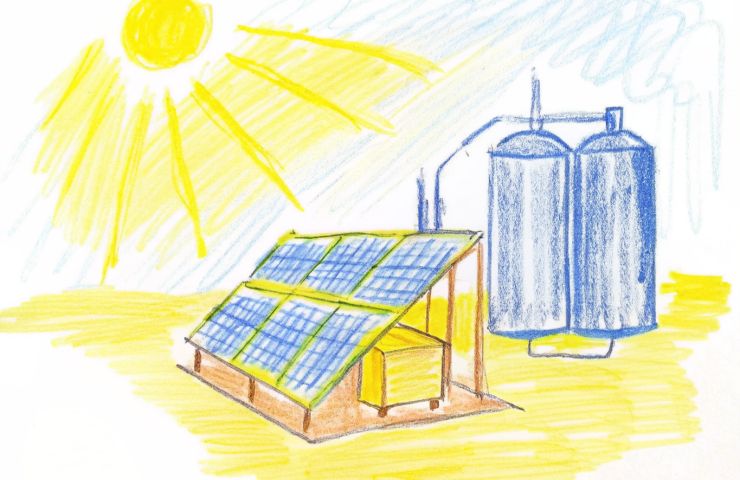
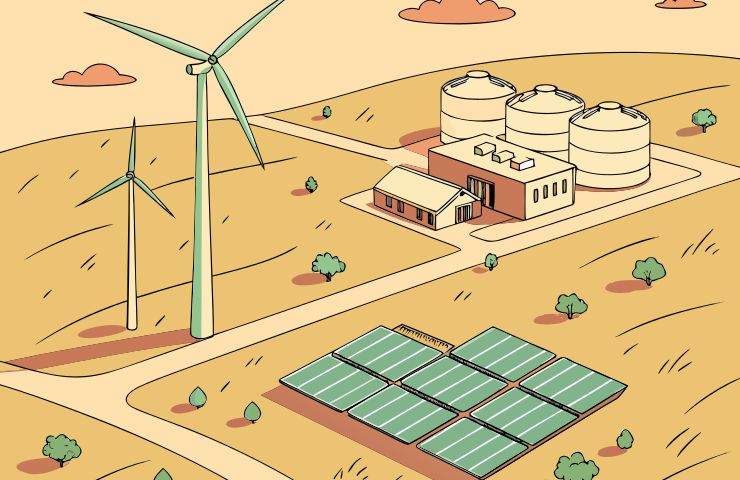
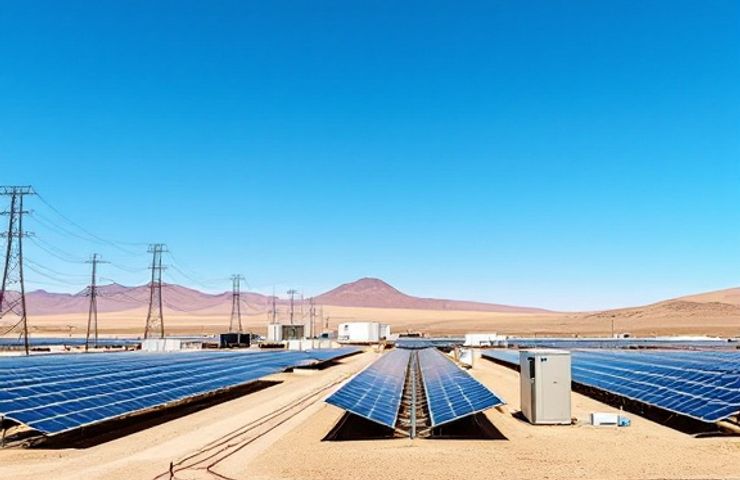
H2Pro has just set up a 0.5 MW Decoupled Water Electrolysis (DWE) module, powered by solar panels, right in the Tziporit industrial zone in northern Israel. This marks the company's first pilot aimed at turning intermittent solar energy directly into green hydrogen. According to them, this innovative membraneless system can churn out about 200 kg of hydrogen daily for mixing with industrial gases. At the same time, H2Pro is moving ahead with plans to build a 5 MW and a 25 MW DWE plant in Spain’s Extremadura and Tarragona regions, with ambitious expansions in mind to 50 MW and 150 MW respectively. These steps show a significant shift from their earlier proof-of-concept developed by researchers at Technion, as they transition toward larger, multi-megawatt demonstrations. The goal? To validate how flexible, cost-effective, and durable this technology can be under real-world renewable power conditions.
This move comes at a critical time for the hydrogen industry, which is figuring out how to match electrolyzers—typically built for steady grid power—with the less reliable wind and solar resources. Conventional systems like alkaline and proton-exchange membrane (PEM) electrolyzers require separators or membranes to keep hydrogen and oxygen apart while they’re being produced simultaneously. This setup can get pretty pricey and complicated, not to mention it can lose efficiency when demand wavers. H2Pro’s DWE platform, however, has been designed to sync up with renewable energy output directly, toggling on and off as solar energy fluctuates, and making gas management much simpler.
How does Decoupled Water Electrolysis tame intermittent renewables?
So, here’s the deal with DWE: instead of splitting water into hydrogen and oxygen simultaneously, it spaces the two reactions apart in time by utilizing a nickel-based redox electrode. When the electrochemical phase kicks in, voltage drives the hydrogen production at the cathode, while the anode changes from nickel hydroxide (Ni(OH)2) to nickel oxyhydroxide (NiOOH), allowing hydrogen to bubble up without producing any oxygen at the same time. In the following thermally activated phase, that charged anode oxidizes water to generate oxygen and returns to its original form. This timing twist not only eliminates the need for costly membranes but also lets the electrolyzer take a break when power runs low.
The concept originally came from the E-TAC (Electrochemical–Thermally Activated Chemical) research done at Technion, which showcased cell efficiencies reaching up to 98.7% in a lab environment—thanks to heat being used to push oxygen production without needing electricity. Transitioning this idea from a single cell to a multi-megawatt setup does bring its own set of challenges, like managing gas purging, keeping temperatures in check, and ensuring electrodes last long enough. That’s exactly what H2Pro is tackling in its pilot and proposed demonstrations.
From Technion Lab to Industry Spin-Off
The groundwork for DWE was laid in a peer-reviewed paper by Avner Rothschild, Gideon Grader, Hen Dotan, and Avigail Landman at Technion. Shortly after, they teamed up with entrepreneur Talmon Marco to kick off H2Pro and drive it toward real-world applications. Fast forward to today, and H2Pro has grown to over 100 employees and raised funds from notable climate-tech investors—including Breakthrough Energy Ventures, Temasek, ArcelorMittal, Sumitomo, and Yara Growth Ventures. While lab tests show remarkable efficiency and potential for limitless cycling, H2Pro is keen on validating these results through their pilot and demonstration systems.
Looking at the broader hydrogen production landscape, traditional electrolyzers, both alkaline and PEM, have found footing in commercial operations of tens of megawatts. However, they frequently run into issues operating efficiently at partial loads and encounter gas crossover problems. H2Pro's DWE approach joins a wave of innovative strategies that include spatial separation and redox-mediated cycles, but since no decoupled system has yet proven reliable over multiple years, the upcoming Spanish projects are crucial for building credibility.
Key benefits of DWE
- Lower capital costs by cutting out membranes and pressure-management gear.
- Grid independence because it can connect directly to solar or wind farms, lowering the dependency on grid electricity and battery systems.
- Improved partial-load efficiency as it operates only when renewable power is available, increasing hydrogen output per unit of renewable energy used.
- Simplified safety and gas management since hydrogen and oxygen are produced in separate phases.
- Modular scaling means smaller, distributed setups can be established closer to end-users or in off-grid areas.
These advantages could significantly reduce the levelized cost of green hydrogen and open the door for new project models. However, to claim full commercial readiness, H2Pro will need to prove the longevity of its electrodes, maintain precise thermal management, and ensure smooth phase switching over thousands of cycles.
What’s next for H2Pro?
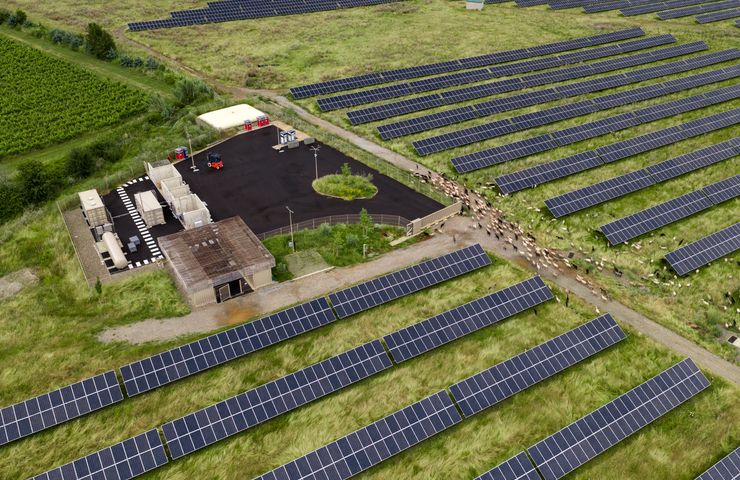
Building on its pilot in Israel, H2Pro is collaborating with Doral Hydrogen to set up a 5 MW off-grid solar-to-hydrogen facility in Extremadura. This site will be powered by 10 MWp of photovoltaic panels and has the potential to ramp up to 50 MW of electrolysis. The hydrogen generated here is intended for mixing into the national gas grid overseen by Enagás. Additionally, a separate agreement with Sun Systems Group is in the works for a 25 MW DWE facility in Tarragona, initially targeting around 1,250 tonnes a year with plans to scale up to 150 MW by 2032. Both projects are currently pending final financial approvals, permits, and offtake arrangements.
Looking down the road, success in Spain could open up possibilities for linking to the H2Med pipeline and attract additional EU demonstration grants aimed at renewable fuels. Industries that find it tough to cut emissions are paying close attention to these demonstrations for electrolyzer technologies that can capitalize on curtailed renewable energy and lower the costs of balancing plant operations.
As the world races to cut carbon emissions, technologies that can adapt to the ups and downs of solar and wind generation are becoming vital. Decoupled Water Electrolysis brings a fresh twist to a long-established process, and H2Pro’s journey from lab experiments through to pilot runs and envisioned megawatt-scale plants will be a significant test case. If they can establish longevity, competitive efficiency, and reduced setup costs, DWE might just reshape how we think about hydrogen production—especially in a future rich with renewable energy.
Beyond Spain, H2Pro is also eyeing opportunities in Asia and North America, where hydrogen projects driven by off-grid or curtailed renewables could benefit from DWE's modularity. Successful demonstrations could lead to offtake contracts and spark investments in electrolyzer manufacturing around the globe.